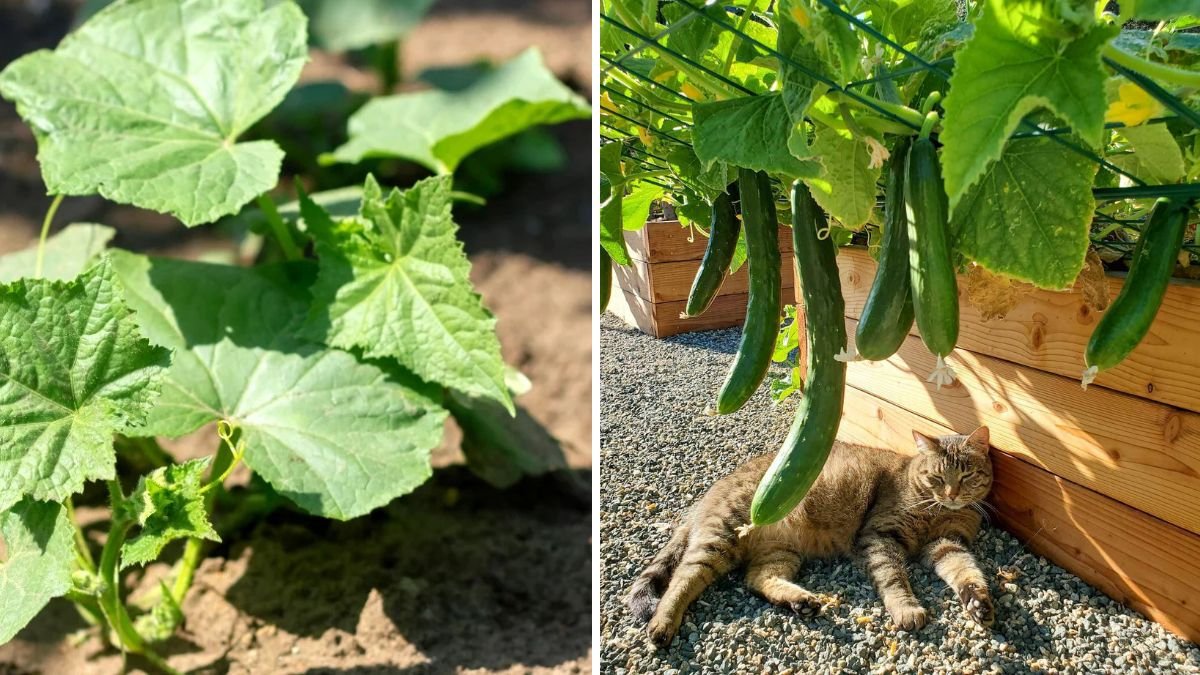
Cucumbers are one of the most refreshing, productive, and rewarding vegetables you can grow at home. Whether you have a small balcony, a terrace, or a backyard garden, cucumbers grow fast and produce heavily when given the right care. With just a few plants, you can harvest baskets of fresh, crunchy cucumbers throughout the season.
This complete guide will teach you how to grow lots of cucumbers at home, even if you’re short on space or new to gardening.
🥒 Why Grow Cucumbers at Home?

Growing cucumbers at home has many benefits:
✔ Fast-growing and high-yielding
Cucumber vines grow rapidly and produce continuously once they start fruiting.
✔ Ideal for small spaces
Grow them vertically to save space and increase productivity.
✔ Healthier and tastier
Homegrown cucumbers are crisp, juicy, and chemical-free.
✔ Great for beginners
Low-maintenance and forgiving plants.
🌱 Step 1: Choose the Right Cucumber Variety
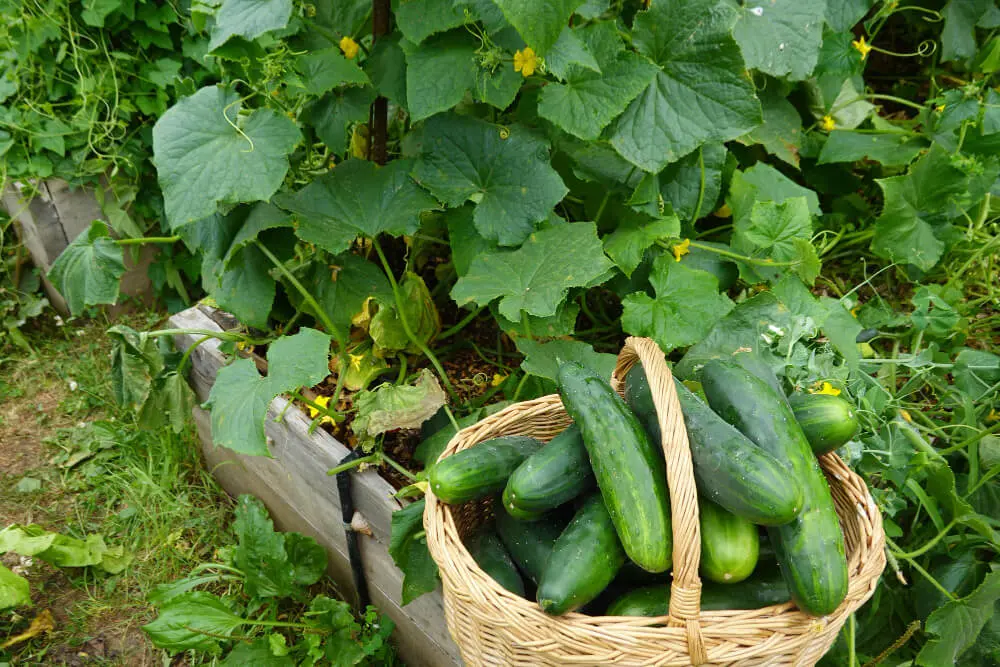
Choosing the right seed type is the first step toward big harvests.
Best Varieties for Home Gardening:
- Bush Cucumber – Ideal for containers
- Slicing Cucumber – Long, straight fruits
- Pickling Cucumber – Perfect for small, crispy cucumbers
- Japanese or Asian Cucumber – Slim, sweet, smooth skin
- Mini or Beit Alpha Cucumber – Very productive in small spaces
Look for seeds labeled high-yielding, disease-resistant, or early-maturing for best results.
🪴 Step 2: Prepare the Perfect Growing Container or Bed
Cucumbers can grow in:
- Pots (minimum 12–18 inches deep)
- Grow bags (20–30 liters)
- Raised beds
- Vertical towers
- Ground beds
Key Requirements:
- Good drainage
- Plenty of sunlight
- Space for vines to spread or climb
If growing in containers, make sure there are enough drainage holes to prevent root rot.
🌿 Step 3: Make the Perfect Soil Mix
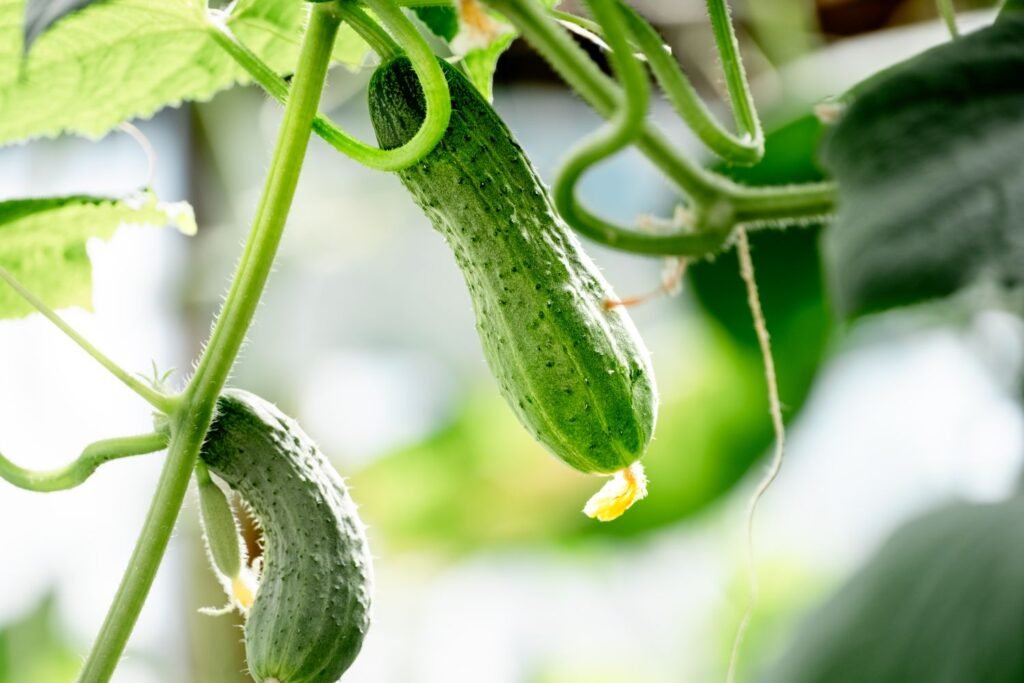
Cucumbers thrive in light, fertile, and well-draining soil.
Ideal Soil Mix Recipe:
- 40% garden soil
- 30% compost or cow dung
- 20% coco peat
- 10% sand
Optional Add-ons for Extra Growth:
- A handful of neem cake powder
- A handful of bone meal or rock phosphate
- A handful of vermicompost
Loose, nutrient-rich soil encourages deep roots and vigorous vine growth.
🌱 Step 4: Planting the Cucumber Seeds
Cucumber seeds germinate quickly and easily.
How to Plant:
- Make holes 1 inch deep.
- Place 1–2 seeds per hole.
- Cover lightly with soil.
- Water gently.
Spacing:
- Ground soil: 1.5–2 feet between plants
- Containers: 1 plant per pot or 2 per grow bag
Germination Time:
Usually 4–10 days
Keep the soil moist during germination—never let it dry out.
🌞 Step 5: Provide the Best Growing Conditions
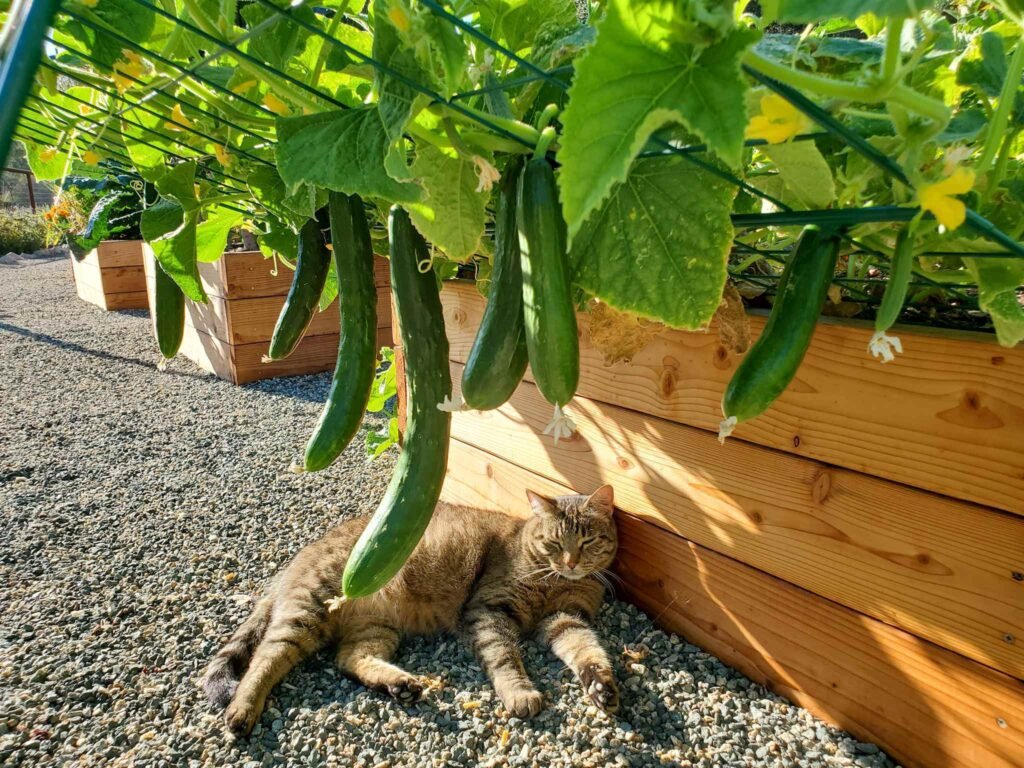
Cucumbers love warm, sunny weather.
Sunlight:
Minimum 6–8 hours of direct sun daily.
Temperature:
Best growth at 20°C to 30°C.
Watering:
- Water deeply every 1–2 days
- Keep soil moist but not waterlogged
- Water at the base, not on leaves
Mulching:
Add dry leaves, straw, or coco peat to retain moisture and reduce weeds.
🪴 Step 6: Use a Trellis for Maximum Yield
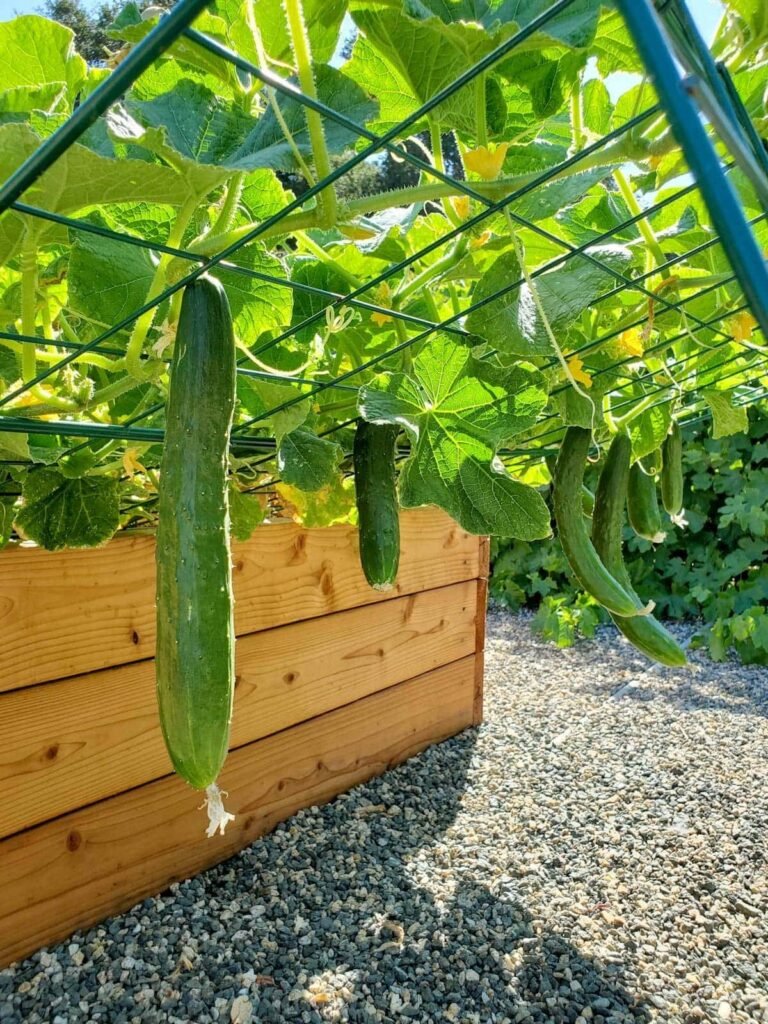
One of the secrets to growing lots of cucumbers is vertical gardening.
Advantages of a Trellis:
- Better airflow
- Fewer diseases
- Straighter cucumbers
- More fruits
- Saves space
Use bamboo poles, ropes, nets, or a simple DIY trellis. Train the vine to climb as it grows.
🌼 Step 7: Flowering and Pollination
Cucumbers have male and female flowers.
Male Flowers:
- Appear first
- Thin stem
- No mini fruit
Female Flowers:
- Have a small baby cucumber behind the flower
- Produce fruit after pollination
🐝 Pollination Tips:
- Bees and butterflies help pollinate
- If fruits are deformed or falling off, hand pollinate
- Hand pollination: transfer pollen from male to female using a soft brush
Proper pollination = lots of healthy cucumbers.
🌱 Step 8: Fertilizing for Massive Harvests
Cucumbers are heavy feeders. Regular feeding boosts plant health and fruit production.
Best Organic Fertilizers:
- Vermicompost
- Cow dung compost
- Seaweed extract
- Mustard cake liquid
- Banana peel fertilizer
- Potash-rich soil boosters
Feeding Schedule:
- Start feeding 12–15 days after planting
- Repeat every 10–12 days
- More potassium during flowering and fruiting
Avoid too much nitrogen—it produces large leaves but fewer cucumbers.
🐛 Step 9: Preventing Pests and Diseases
Cucumbers can be affected by common garden pests.
Common Pests:
- Aphids
- Whiteflies
- Thrips
- Spider mites
Organic Pest Control:
- Neem oil spray (5 ml per liter)
- Soap water spray
- Garlic-chili homemade spray
- Yellow sticky traps
Common Diseases:
- Powdery mildew
- Downy mildew
- Leaf spot
Prevention:
- Good airflow
- Avoid overhead watering
- Keep leaves dry
- Remove infected leaves quickly
Healthy plants produce more cucumbers.
🥒 Step 10: Fruit Production and Care
Once fruits start forming:
✔ Provide consistent water
Cucumbers are mostly water—dry soil leads to bitter taste.
✔ Add potash fertilizer
Potassium helps produce more fruits.
✔ Support fruits
Let them hang freely on the trellis.
✔ Harvest regularly
The more you pick, the more the plant produces.
🍃 Step 11: Harvesting Cucumbers
You can start harvesting in 45–60 days depending on variety.
Signs of Ready-to-Pick Cucumbers:
- Firm and bright green
- Medium size
- Skin slightly glossy
- Not overly large or yellow
Harvest Method:
Use scissors or pruning shears to avoid damaging the vine.
Frequency:
Check plants daily—cucumbers grow FAST!
🌟 Pro Tips to Grow LOTS of Cucumbers
Here are the secrets used by expert gardeners:
✔ Use vertical trellising
Prevents disease and increases yield.
✔ Keep soil consistently moist
Dry soil = bitter cucumbers.
✔ Feed with potassium-rich fertilizer
Helps in heavy fruiting.
✔ Remove yellowing leaves
Increases airflow and energy for fruits.
✔ Hand pollinate if needed
Boosts fruit set dramatically.
✔ Grow companion plants
Marigold and basil keep pests away.
🍃 Why Your Cucumber Plants May Not Be Producing
If you’re not getting enough cucumbers, common reasons include:
- Poor pollination
- Too much nitrogen
- Lack of sunlight
- Irregular watering
- Pest or fungal attack
- Weak soil nutrition
Fix these, and yields will improve quickly.
🏡 Final Thoughts: Enjoy Your Homegrown Cucumber Harvest!
Growing cucumbers at home is one of the easiest and most rewarding gardening experiences. With the right care—sunlight, nutrition, and trellising—you can harvest lots of fresh cucumbers continuously throughout the season.
Whether you’re a beginner or an experienced gardener, cucumbers offer a satisfying way to enjoy homegrown vegetables with minimal effort.
Start planting today, build your trellis, and get ready to enjoy a season full of fresh, crunchy cucumbers from your own home garden!