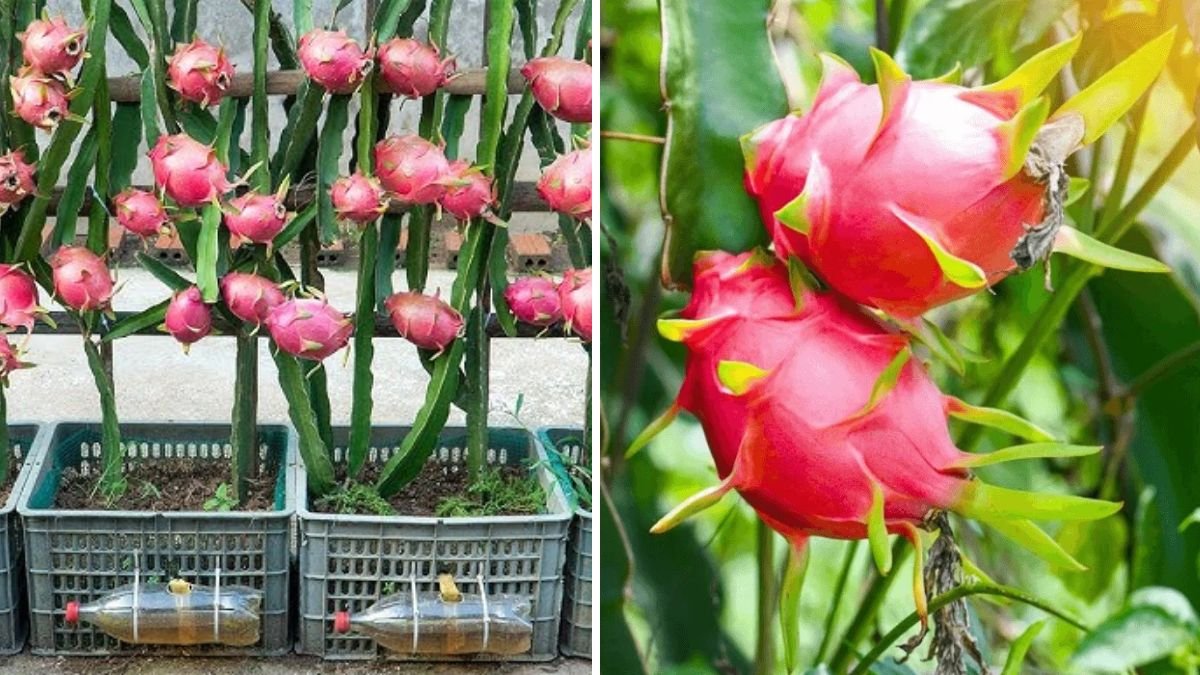
Dragon fruit—also known as pitaya—is one of the most exotic, nutritious, and eye-catching fruits you can grow right at home. Its vibrant pink skin, speckled interior, and refreshing flavor make it a favorite among gardeners and fruit lovers. The best part? Dragon fruit is surprisingly easy to grow, even if you have limited space.
In this complete 1200-word guide, you’ll learn everything you need to successfully grow dragon fruit at home—from choosing the right variety to harvesting your first juicy fruits. Whether you’re a beginner or an experienced gardener, this article will help you grow healthier, faster, and more productive dragon fruit plants.
🌱 What Makes Dragon Fruit Perfect for Home Growing?
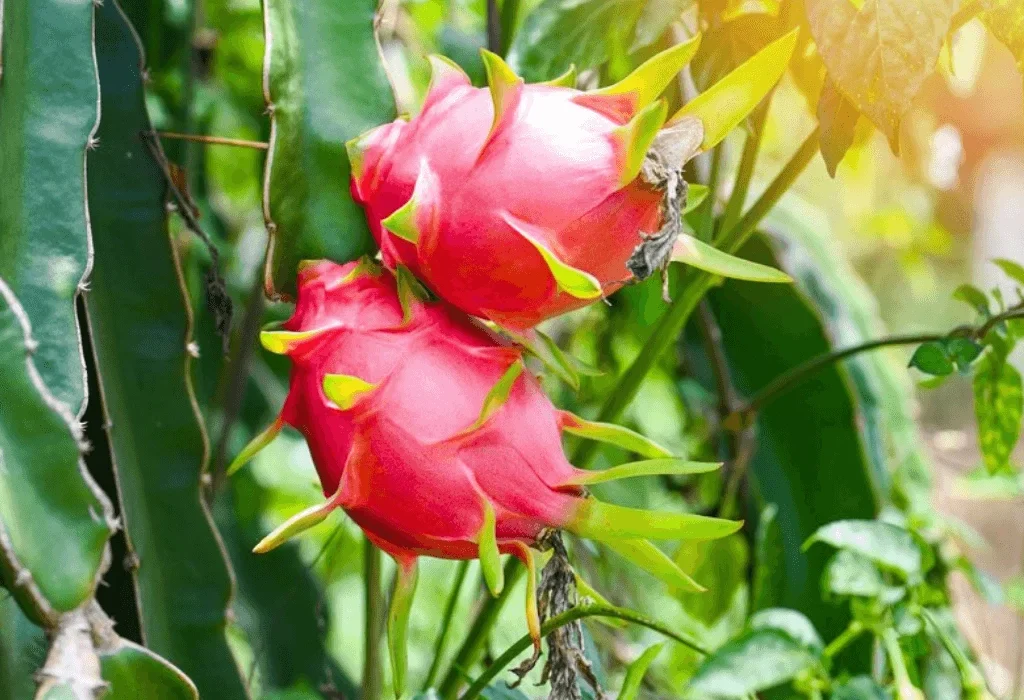
Dragon fruit belongs to the cactus family, which means it naturally thrives in dry, hot climates and does not demand constant attention. Unlike many fruit trees, dragon fruit:
- Grows fast
- Produces fruit within 1–2 years
- Can be grown in pots
- Requires minimal watering
- Looks beautiful as a decorative plant
- Attracts pollinators like bees and moths
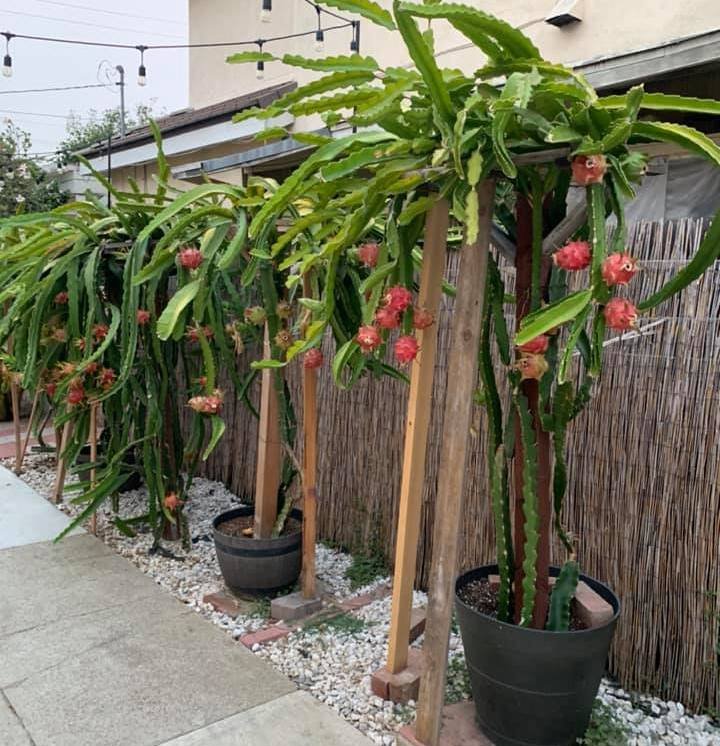
With proper care and support structure, a single dragon fruit plant can produce up to 200 fruits every year once mature.
🌵 1. Choosing the Right Dragon Fruit Variety
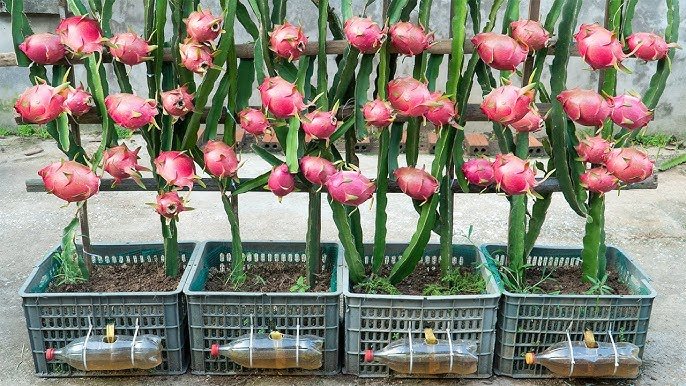
Before planting, it’s important to select a variety suitable for your climate and taste preferences. The three main types are:
⭐ 1. White-Fleshed Dragon Fruit (Hylocereus undatus)
- Pink skin, white flesh
- Mild flavor
- Fastest-growing
- Most suitable for beginners
⭐ 2. Red-Fleshed Dragon Fruit (Hylocereus costaricensis)
- Red skin, deep red flesh
- Sweeter than white varieties
- Highly attractive fruit
⭐ 3. Yellow-Skinned Dragon Fruit (Selenicereus megalanthus)
- Yellow skin, white flesh
- Very sweet
- Needs more care and a warmer climate
If you live in warm regions (India, Southeast Asia, South America), all varieties thrive. In cooler regions, choose the white or red types and grow them in pots to move indoors during winter.
🍀 2. Best Ways to Grow Dragon Fruit at Home
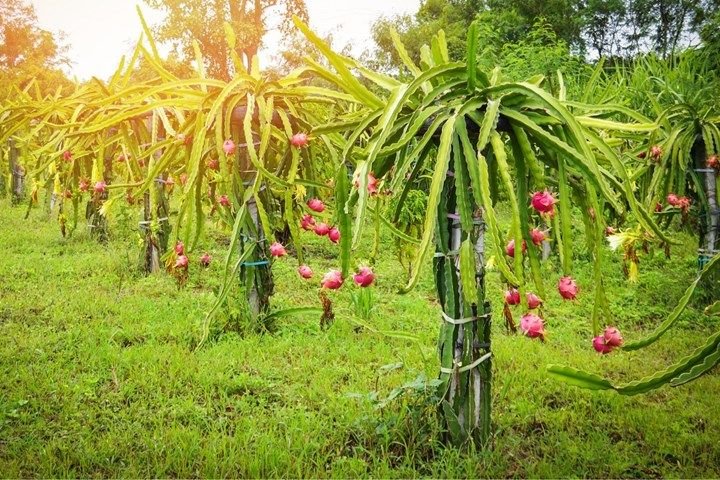
You can grow dragon fruit from:
✔ Cuttings (Best and Fastest Method)
A 12–15 inch cutting from a healthy plant grows roots within 2–3 weeks and produces fruit in 6–12 months.
✔ Seeds (Slowest Method)
Seeds take 2–3 years to fruit. Choose this only if you enjoy the process of seed germination.
🪴 3. How to Plant Dragon Fruit Cuttings
Follow these steps for healthy and fast growth:
Step 1: Let the Cutting Dry
After taking the cutting, leave it in shade for 2–3 days until the cut end forms a callus.
This prevents fungal infection.
Step 2: Prepare a Well-Draining Soil Mix
Dragon fruit hates waterlogging. The ideal mix is:
- 40% garden soil
- 40% sand or perlite
- 20% compost or cocopeat
- A handful of crushed eggshells (optional calcium boost)
Step 3: Use a Deep Pot
Choose a pot at least 12–16 inches deep with drainage holes.
Step 4: Plant the Cutting Vertically
Insert 2–3 inches of the cutting into the soil and firm it gently.
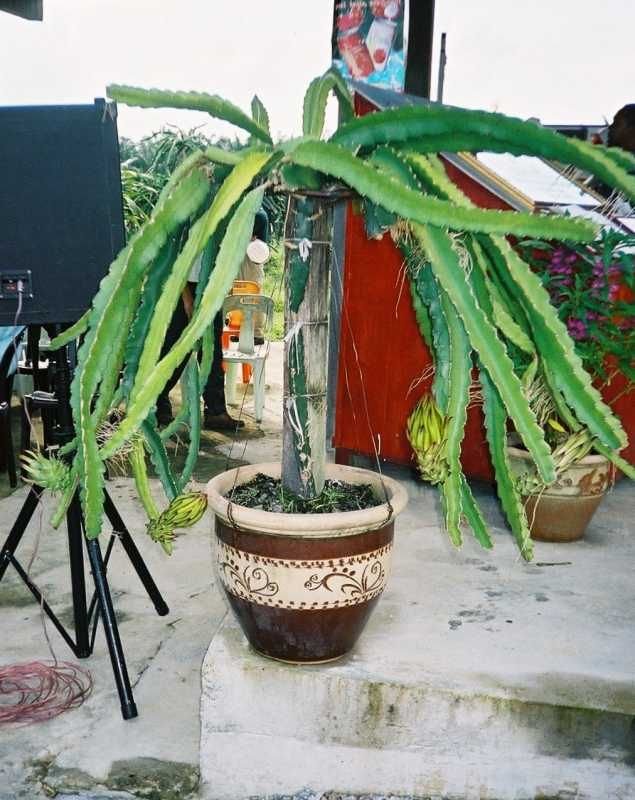
Step 5: Provide Support
Dragon fruit is a climbing cactus. Use:
- A wooden post
- Concrete pole
- Bamboo stick
- Round trellis
Tie the plant loosely as it grows upwards.
🌤 4. Light, Water, and Temperature Requirements
☀ Sunlight
Dragon fruit loves sunshine!
Give it 6–8 hours of direct sunlight daily for faster growth and more fruit.
💧 Watering
Water only when the top 2 inches of soil feel dry.
- Summer: 2–3 times per week
- Winter: Once a week or even less
❗ Overwatering leads to root rot—its number one killer.
🌡 Temperature
Best temperature range: 20°C – 32°C
Protect from frost.
🌱 5. Fertilizing for Faster Growth
Dragon fruit is not a heavy feeder, but giving nutrients speed up growth and flowering.
Best Fertilizers:
- Cow dung compost
- Vermicompost
- Mustard cake fertilizer
- Banana peel fertilizer
- Seaweed solution
Feeding Schedule:
- Every Month: Light organic compost
- During Flowering: Add a potassium-rich fertilizer
- During Fruit Development: Water with diluted seaweed solution
🌺 6. Flowering and Pollination
Dragon fruit produces large, fragrant, night-blooming flowers. They open late evening and close by morning.
Self-Pollinating Varieties
Most types can self-pollinate, but some need help.
Hand Pollination (For More Fruits)
Use a small brush and transfer pollen from one flower to another.
Do this between 9 PM and 2 AM when the flowers are open.
🍉 7. How to Care for Dragon Fruit Plant
Pruning
Remove:
- Weak stems
- Rotted branches
- Overcrowded growth
Pruning helps redirect energy to fruit production.
Support Structure Maintenance
As the plant becomes heavy, ensure the pole or trellis is stable.
Pest Control
Common pests:
- Mealybugs
- Ants
- Snails
- Whiteflies
Use neem oil spray weekly to prevent infestations.
🍈 8. Harvesting Dragon Fruit
Dragon fruits are ready to harvest 30–35 days after flowering.
Signs of Ripeness:
- Skin color changes from green to bright pink or yellow
- Scales turn slightly brown at tips
- Fruit gives a slight softness when pressed
Use a sharp knife or pruning shears to cut the fruit from the stem.
🥣 9. How to Grow Dragon Fruit in Small Spaces
Even if you live in an apartment, you can grow dragon fruit on:
- Terraces
- Balconies
- Window sides
- Rooftops
Just ensure:
- Good sunlight
- Proper pot size
- Strong support
One pot is enough to grow a full fruiting plant!
🌟 10. Common Mistakes to Avoid
❌ Overwatering the plant
❌ Using clayey, compact soil
❌ No support for climbing
❌ Planting in low-light areas
❌ Ignoring pests
❌ Leaving the plant waterlogged during rains
Avoid these mistakes and your plant will thrive.
🌿 Conclusion
Growing dragon fruit at home is not just fun—it’s rewarding. With minimal care, a simple pot, and the right support system, you can enjoy fresh, homegrown dragon fruits packed with antioxidants, vitamins, and flavor.
Whether you’re decorating your garden or aiming for fruit production, dragon fruit is one of the easiest exotic plants you’ll ever grow.
Would you like a YouTube-friendly script, SEO-optimized blog, or thumbnail text ideas for this article?