
Orange trees are among the most rewarding fruit trees you can grow—beautiful, fragrant, evergreen, and generous with their delicious harvest. Whether you grow them in your backyard, balcony, rooftop, or even indoors, orange trees can thrive with the right care. But many beginners struggle with issues like yellowing leaves, weak growth, pests, or no fruit at all.
This complete 1200-word guide will walk you through everything you need to know on how to care for orange trees and grow them successfully, even if you’re a beginner.
🍊 Introduction: Why Growing Orange Trees Is So Rewarding
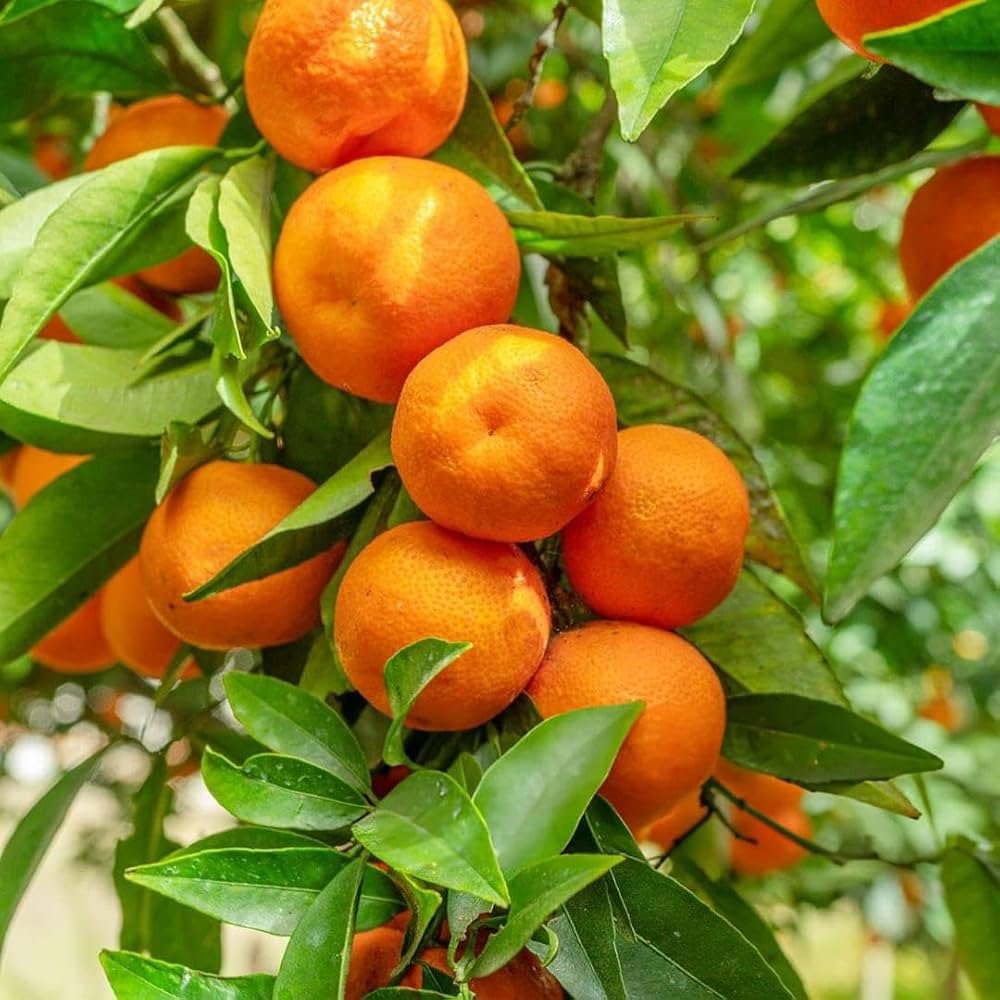
Orange trees are hardy, adaptable, and incredibly productive. Once established, a single tree can produce dozens—or even hundreds—of juicy fruits every year. Their glossy green leaves and sweet-smelling blossoms add beauty and fragrance to any space.
And the best part? You don’t need a large garden. Many orange varieties grow wonderfully in pots, making them perfect for urban gardeners.
But the secret to thriving orange trees lies in understanding their needs: sunlight, soil quality, watering balance, nutrition, pruning, and pest protection. When you master these elements, your orange tree practically grows itself.
🌞 1. Choose the Right Location: Sunshine Is the Key
Orange trees LOVE the sun. The more direct sunlight they get, the healthier and more productive they’ll be.
☀️ Sunlight Requirements
- 6–8 hours of direct sunlight daily
- Morning sunlight is ideal
- South or west-facing locations work best
If you grow your tree indoors, place it near a bright window or use a grow light.
Without enough sunlight, the tree will:
- Produce fewer flowers
- Develop weak branches
- Grow sparse foliage
- Fail to produce fruit
So step one is always: give your orange tree plenty of sunlight.
🌱 2. Soil: The Foundation of a Healthy Orange Tree
Citrus trees do not like “wet feet.” They prefer loose, well-draining soil that allows air to reach the roots.
Best Soil Mix
A perfect citrus soil mixture includes:
- 40% garden soil
- 40% compost or well-rotted cow dung
- 20% sand or perlite for drainage
Optional boosters:
- A handful of neem cake
- A handful of bone meal
- Cocopeat for moisture balance
pH Level
Citrus trees prefer slightly acidic to neutral soil: pH 6.0–7.0
Avoid heavy clay soils—they suffocate the roots and cause root rot.
💧 3. Watering: The Right Balance Matters
Watering is where most orange tree problems begin. Both overwatering and underwatering can harm your plant.
How Often to Water
- Summer: every 2–3 days
- Winter: once every 5–7 days
- Rainy season: rarely, unless the soil dries
Always water deeply so moisture reaches the lower roots but avoid keeping the soil soggy.
The Finger Test
Insert your finger 2 inches into the soil.
If it feels dry → water.
If slightly moist or wet → do not water yet.
Signs of Improper Watering
- Overwatering: yellow leaves, root rot, fungus
- Underwatering: curling leaves, premature fruit drop
Master watering—and your orange tree will reward you.
🍃 4. Fertilizing: Feed Your Orange Tree for Heavy Fruiting
Orange trees are heavy feeders. They need regular nutrition for strong growth and fruit production.
Best Fertilizers for Oranges
- Organic compost
- Cow dung
- Vermicompost
- Mustard cake fertilizer
- Banana peel fertilizer
- Epsom salt (magnesium)
- NPK 19-19-19 or 10-26-26 (if using chemical fertilizers)
Feeding Schedule
- February–March – Growth season starts
- Add compost, NPK, micronutrients
- June–July – Monsoon nutrition boost
- Add vermicompost + banana peel fertilizer
- September–October – Flower and fruit setting
- Add phosphorus & potassium (bone meal, potash)
- December – Winter maintenance
- Add light compost + Epsom salt
❗ Important:
Avoid heavy nitrogen during fruiting—it may cause flowers and fruits to drop.
🌸 5. Flowering & Fruiting: How to Maximize Your Harvest
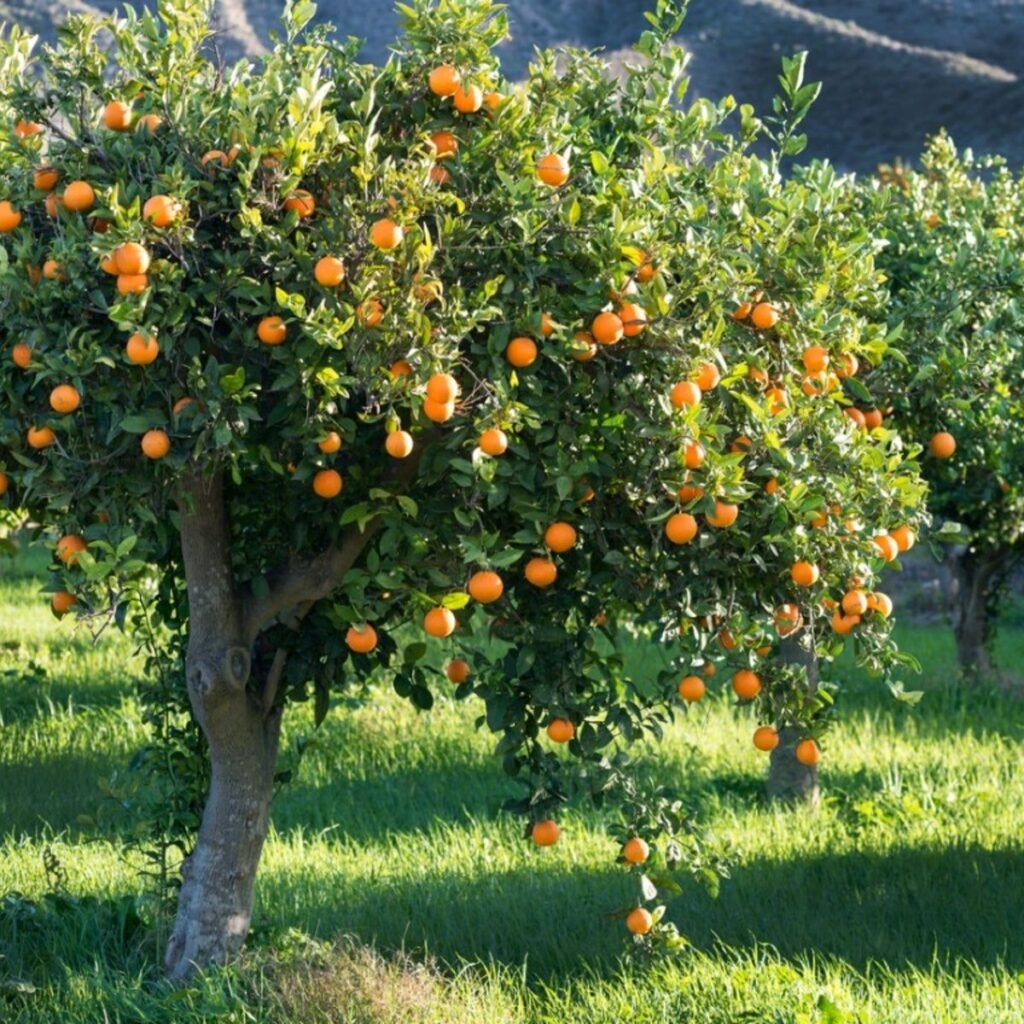
Orange trees bloom with fragrant white flowers—these become orange fruits after pollination.
To Encourage Flowering:
- Reduce watering slightly before blooming season
- Increase sunlight exposure
- Add phosphorus-rich fertilizers
- Avoid pruning during flowering
- Protect flowers from strong winds
Why Fruit Falls Prematurely
- Sudden change in watering
- Lack of sunlight
- Nutrient deficiency
- Pest infestation
- Young trees (below 3 years) naturally drop some fruit
Be patient—fruiting improves as the tree matures.
✂️ 6. Pruning: Shape Your Tree and Promote Growth
Pruning improves air circulation, sunlight penetration, and fruit quality.
Best Time to Prune
Late winter or early spring.
What to Prune
- Dry or damaged branches
- Suckers near the base
- Crossing branches
- Dense inner branches
Do NOT prune heavily during flowering or fruiting.
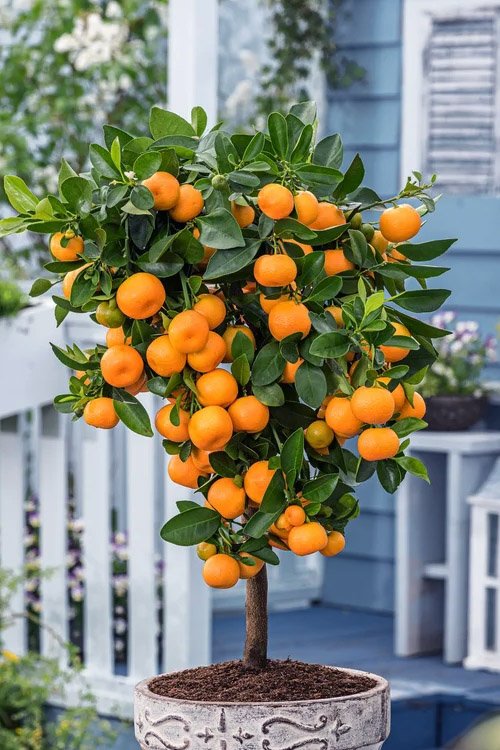
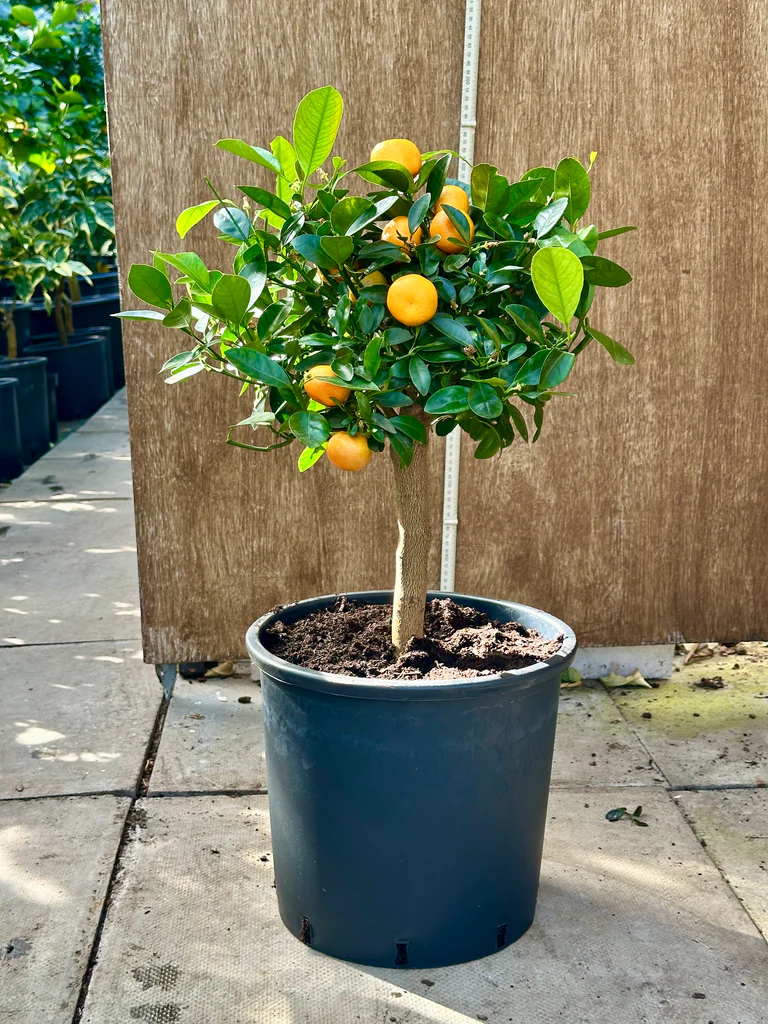
🪴 7. Growing Orange Trees in Pots
Potted orange trees are excellent for balconies, patios, or small gardens.
Pot Requirements
- Minimum 16–18 inches wide
- With 5+ drainage holes
- Use clay or plastic pots
Care Tips for Potted Trees
- They dry out faster → water more frequently
- Feed every 30–45 days
- Rotate the pot every month for even sunlight
- Repot every 2–3 years into a bigger pot
🐛 8. Common Pests & Diseases (and How to Fix Them)
Citrus trees attract several pests, but simple organic methods can control them.
Common Pests
- Aphids
- Mealybugs
- Spider mites
- Leaf miners
- Scale insects
Organic Solutions
- Neem oil spray (weekly)
- Soap water spray
- Garlic + chilli spray
- Sticky yellow traps
Diseases
- Root rot → caused by overwatering
- Citrus canker → prune infected branches
- Sooty mold → treat mealybugs/aphids first
Healthy trees resist diseases better—keep the plant strong.
❄️ 9. Weather Protection
Orange trees love warm climates (15°C–35°C), but they can tolerate mild cold.
Protect from Extreme Cold
- Move potted trees indoors
- Mulch the base with straw
- Cover young trees with cloth at night
- Avoid watering during frost
Protect from Extreme Heat
- Provide afternoon shade
- Water more frequently
- Mulch to retain moisture
🌱 10. How Long Until Orange Trees Produce Fruit?
Depending on the variety:
- Seed-grown trees: 5–7 years
- Grafted trees: 2–3 years
- Dwarf varieties in pots: 1–2 years
Grafted orange trees give the fastest and best results.
🍊 Conclusion: Growing Orange Trees Made Easy
Caring for an orange tree is a journey filled with fragrance, beauty, and delicious rewards. With proper sunlight, the right soil mix, balanced watering, regular feeding, pruning, and pest control, your orange tree can thrive anywhere—from backyard gardens to tiny balconies.
Once you master the basics, your tree will flourish with lush green leaves, healthy branches, and vibrant, juicy fruits that taste sweeter because you grew them yourself.
Whether you’re a beginner or an experienced gardener, orange trees offer the perfect combination of beauty and productivity. Start today, follow this guide, and soon you’ll enjoy your very own homegrown oranges.