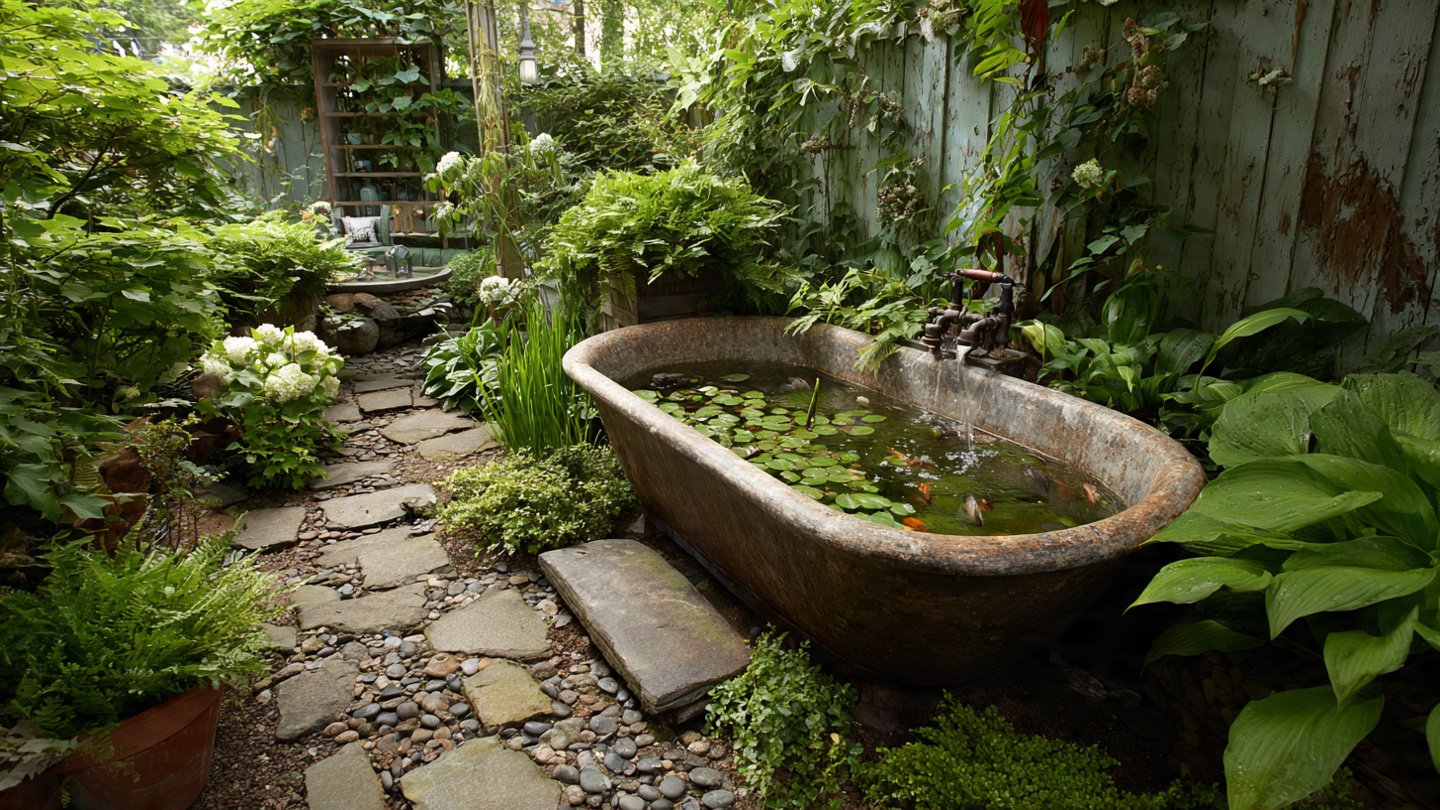
Transforming an old bathtub into a stunning garden pond is a delightful project that adds beauty and tranquility to your outdoor space. An unused bathtub can become a unique focal point in your garden, providing a habitat for various wildlife while enhancing the overall aesthetics of your yard. Below, we’ll outline the steps to create a beautiful garden pond from an old bathtub, covering everything from planning and preparation to planting and maintenance.
1. Planning Your Pond
Before you get started, it’s essential to plan your garden pond. Consider the following aspects:
- Location: Choose a spot that receives partial sunlight. Too much direct sunlight can lead to excessive algae growth, while too much shade may hinder plant growth.
- Size: Make sure the bathtub is large enough to accommodate the plants and any fish you might want to introduce.
- Accessibility: Ensure that the pond is easily accessible for maintenance, such as cleaning and refilling.
2. Preparing the Bathtub
Once you have selected the ideal location, preparing the bathtub is the next crucial step. Follow these steps:
- Cleaning: Thoroughly clean the bathtub to remove any soap residue or grime. You can use a mixture of vinegar and water or a mild detergent.
- Sealing: If the bathtub has any cracks or imperfections, you should seal them with an appropriate waterproof sealant. Ensure complete drying before proceeding.
- Drilling Drainage Holes: To prevent overfilling, consider drilling small drainage holes at the bottom of the bathtub. This will help manage water levels during heavy rain.
3. Setting Up the Base
Creating a sturdy base is essential for the longevity of your garden pond. Consider these steps:
- Leveling: Make sure the ground where you place the bathtub is level. Uneven surfaces can cause water to pool and may damage the bathtub.
- Adding Stones: Place a layer of small stones or gravel at the bottom of the bathtub to create a natural-looking base and aid drainage.
4. Filling the Bathtub
Once the base is set, you can fill the bathtub with water. It’s advisable to use dechlorinated or rainwater, as excessive chlorine can harm aquatic life. Allow the water to sit for a day or two before introducing any plants or animals.
5. Choosing the Right Plants
Plants play a crucial role in your garden pond by providing oxygen and creating shelter for fish and other wildlife. Here are some suitable plants:
- Water Lilies: These float on the surface, adding beauty and shade.
- Hornwort: A submerged plant that helps oxygenate the water.
- Cat Tails: Adding vertical elements to your pond, they provide habitat for wildlife.
- Water Hyacinth: This floating plant can help absorb excess nutrients.
6. Adding Fish and Other Wildlife
Once your plants are established, you can introduce fish or other wildlife. Here are some tips:
- Choosing Fish: Goldfish or small koi are great choices as they are hardy and will thrive in smaller ponds.
- Introducing Fish: Allow the fish to acclimatize to the pond water by floating their sealed bag in the water for about 30 minutes before releasing them.
7. Maintenance and Care
To keep your garden pond thriving, regular maintenance is crucial. Consider the following:
- Cleaning: Regularly remove debris and fallen leaves to prevent algae growth.
- Water Quality: Use a water testing kit to monitor pH and nutrient levels, ensuring a healthy environment for plants and fish.
- Seasonal Care: In colder months, consider using a pond heater or aerator to keep the water from freezing.
8. Adding Decorative Elements
Enhance the beauty of your garden pond by incorporating decorative features:
- Lighting: Use solar or LED lights to illuminate the pond at night, creating a magical ambiance.
- Rock Features: Arrange rocks or pebbles around the pond’s edge for a natural look.
- Garden Statues: Adding statues can give a unique flair and can serve as a focal point.
Conclusion
Transforming an old bathtub into a stunning garden pond is a rewarding project that can enhance your outdoor space’s beauty while providing a habitat for wildlife. With careful planning and maintenance, your new pond can become a thriving ecosystem that invites peace and tranquility into your home. Whether you choose to add fish, plants, or decorative features, each aspect contributes to the charm and character of your garden. So gather your supplies, roll up your sleeves, and embark on this creative journey!
FAQs
1. Can I keep fish in my bathtub pond?
Yes, you can keep small fish like goldfish or koi. Just ensure your pond is large enough to support them and monitor water quality regularly.
2. How do I prevent algae growth in my pond?
To prevent algae, maintain a healthy balance of plants and fish, avoid overfeeding fish, and regularly clean the pond to remove debris.
3. What type of plants work best in a bathtub pond?
Water lilies, hornwort, cat tails, and water hyacinth are excellent choices for a bathtub pond as they adapt well to smaller environments.
4. How often should I change the water in my pond?
It’s unnecessary to change all the water regularly; however, topping off with fresh water as needed and replacing about 10% of the water monthly can maintain quality.
5. Do I need a filter for my bathtub pond?
The necessity of a filter depends on the size of your pond and the number of fish. A simple filtration system can help maintain water clarity and quality.