Introduction: Growing Almond Trees at Home
Almond trees are not only beautiful but also highly nutritious. Home gardeners can enjoy fresh almonds without buying from stores. Growing almonds provides aesthetic appeal with spring blossoms and edible benefits. Almonds thrive in warm climates but can adapt to home gardens in containers or backyard plots. Understanding planting methods ensures success. Proper care results in healthy trees and abundant nuts. Almond cultivation at home reduces dependency on commercial produce. It also encourages sustainable gardening practices. With attention to soil, water, and sunlight, anyone can grow almonds. The process is both rewarding and educational.
Almond Tree Basics
Almond trees are deciduous and belong to the rose family. They prefer full sun and well-draining soil. Almond trees grow best in temperate climates. They require moderate watering and annual pruning. Flowers appear in early spring, followed by nuts in late summer. Almond trees can be grown from seeds or saplings. Understanding tree characteristics improves growth outcomes. Container cultivation is suitable for urban gardeners. Soil quality and sun exposure directly affect fruit yield. Proper knowledge prevents planting failures.
Method 1: Growing Almond Trees from Seeds
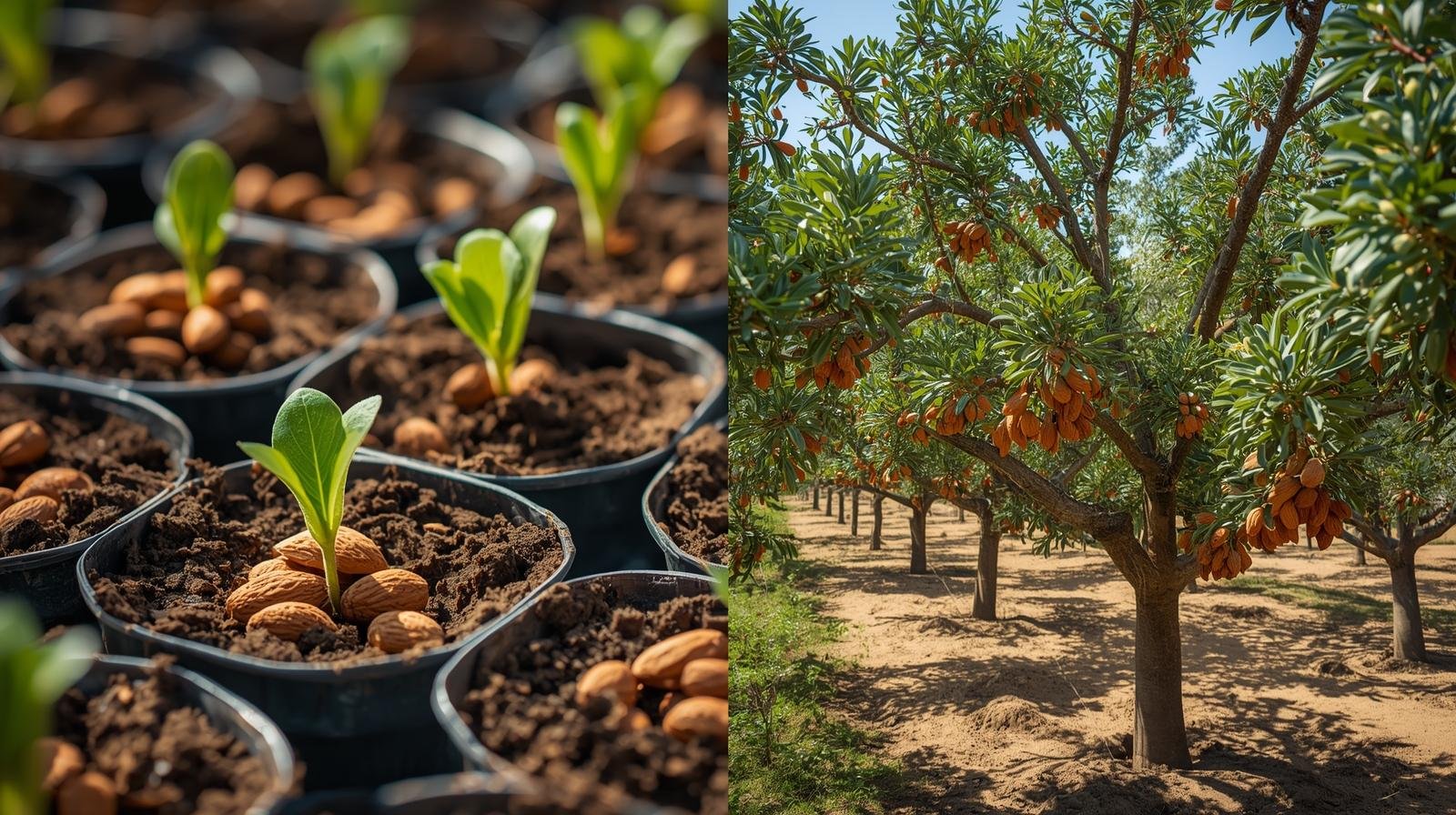
Growing from seeds is cost-effective and educational. Start with fresh, raw almonds. Soak seeds in water for twenty-four hours before planting. Plant seeds in deep pots with well-draining soil. Keep soil moist but not waterlogged. Germination takes several weeks depending on conditions. Once seedlings develop, transplant to larger containers or garden beds. Seedlings require consistent sunlight and protection from frost. Monitor for pests and diseases. Proper care ensures successful seed growth.
Preparing Seeds for Planting
Select plump, unroasted almonds. Remove shells if needed for faster germination. Use sterile potting mix to avoid fungal infections. Maintain temperature around seventy-five degrees Fahrenheit for optimal sprouting. Label pots to track growth. Avoid overwatering to prevent rot. Provide indirect sunlight during early stages. Seed preparation sets the foundation for strong almond trees.
Method 2: Planting Young Saplings
Saplings provide quicker results than seeds. Choose healthy one-year-old plants from nurseries. Plant in large containers or garden beds with good drainage. Dig a hole slightly larger than the root ball. Place the sapling and cover roots with soil. Water thoroughly after planting. Support young trees with stakes if necessary. Regular care ensures proper establishment. Saplings flower earlier than seed-grown trees. This method suits gardeners seeking faster harvests.
Soil Preparation for Saplings
Almond trees require sandy loam with organic matter. Ensure soil pH ranges between six and seven. Mix compost to enhance fertility. Avoid heavy clay or poorly drained soil. Soil aeration encourages deep root development. Fertilized soil supports flower and nut production. Proper preparation improves long-term health. Saplings adapt better to prepared soil. Healthy soil reduces pest and disease incidence.
Sunlight and Temperature Requirements
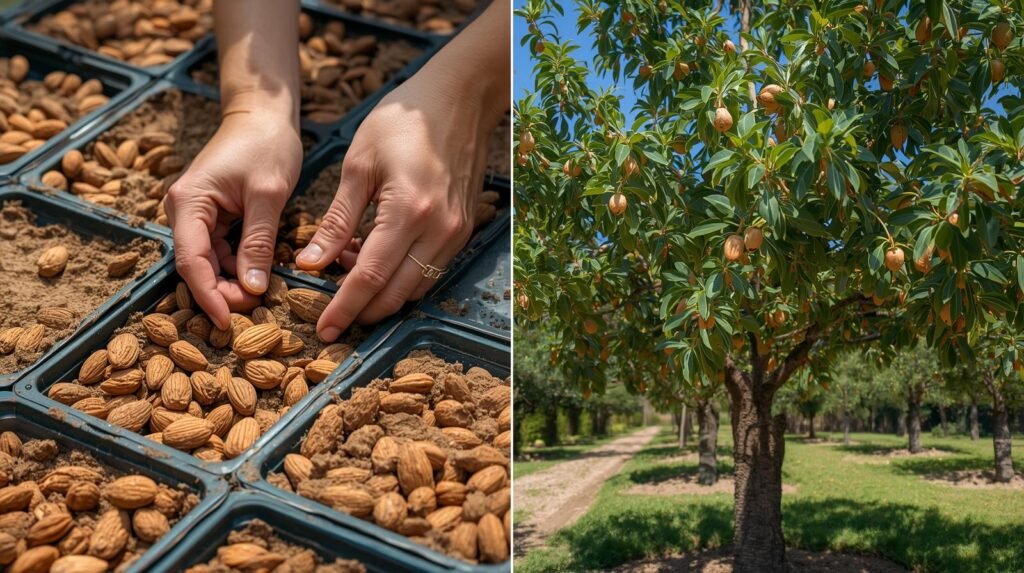
Almond trees need full sun for optimal growth. Place containers or plant beds where sunlight lasts six to eight hours daily. Temperatures between sixty-five and eighty-five degrees Fahrenheit are ideal. Avoid prolonged frost exposure, especially for young plants. Sunlight promotes flowering and nut development. Indoor containers may require grow lights. Monitor leaves for sunburn or discoloration. Balanced sunlight ensures healthy growth. Proper light management improves yield quality.
Watering and Humidity Management
Almond trees require regular watering, especially in dry periods. Avoid waterlogging as it causes root rot. Container trees dry faster than in-ground ones. Water deeply every few days in summer. Increase frequency during flowering and fruit set. Maintain moderate humidity around seedlings. Mulch helps retain soil moisture. Proper watering ensures strong branches and healthy nuts. Monitor soil moisture consistently.
Fertilizing Almond Trees
Almond trees benefit from balanced fertilizers. Use nitrogen, phosphorus, and potassium blends. Apply fertilizers monthly during growth season. Organic compost or manure is also effective. Avoid over-fertilizing, which promotes foliage over nuts. Container trees need more frequent feeding. Fertilizers support flowering, leaf growth, and nut production. Monitor tree response and adjust quantities. Proper nutrition ensures strong, productive trees.
Pruning for Shape and Fruit
Prune almond trees annually after harvest. Remove dead, diseased, or overcrowded branches. Maintain open canopy for airflow and sunlight. Pruning encourages stronger branches and more nuts. Container trees require careful pruning to manage height. Thin out weak shoots to focus energy. Pruning improves aesthetics and health. Monitor regrowth for proper development. Healthy trees produce larger, quality nuts.
Pest and Disease Control
Common pests include aphids, mites, and caterpillars. Use organic solutions like neem oil or insecticidal soap. Inspect trees regularly for infestation. Diseases include root rot and leaf blight. Ensure proper drainage and airflow. Remove affected leaves promptly. Container trees allow easier monitoring and treatment. Preventive care reduces losses. Healthy almond trees yield higher nut quality.
Harvesting Almonds
Almonds mature in late summer. Nuts are ready when shells split naturally. Collect nuts from the ground or shake gently from branches. Dry nuts in a cool, shaded area. Shell and store properly to prevent mold. Container-grown trees may produce fewer nuts but high quality. Harvesting at the right time ensures maximum flavor. Monitor tree health during fruiting. Harvesting is both practical and enjoyable.
Almond Tree Care Table
Aspect
Recommended Practice
Planting Method
Seeds or saplings
Soil Type
Sandy loam with organic matter
Sunlight
Six to eight hours daily
Watering
Deep but not waterlogged
Fertilizer
Balanced nitrogen phosphorus potassium feed
Pruning
Annually after harvest
Conclusion on Growing Almond Trees at Home
Almond trees thrive at home with proper planning. Both seeds and saplings offer viable planting methods. Sunlight, water, and fertilization are key factors. Pruning and pest management ensure healthy growth. Container or garden planting is flexible. Harvest yields nutritious and fresh nuts. Home almond trees add ornamental and edible value. Sustainable gardening practices are encouraged. Success comes from attention to detail and care.