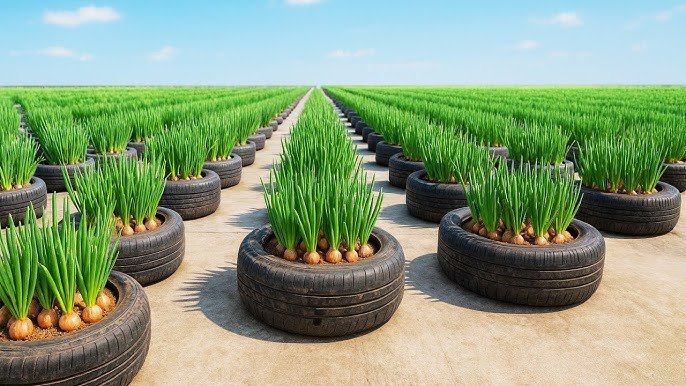
Old tires are often seen as waste, sitting unused and taking up space. But what if these discarded tires could be repurposed into productive, onion-growing containers? This surprisingly effective method allows you to grow large, healthy onions at home while recycling old materials and saving money.
Using tires for gardening is not only eco-friendly but also creates a self-contained, nutrient-rich environment for your onions to thrive. This guide will show you step-by-step how to grow onions in old tires, the benefits of this method, and tips to maximize yield.
Why Grow Onions in Tires?
Growing onions in old tires offers several advantages:
- Cost-Effective: Reuse materials you already have
- Space-Saving: Stack tires or use them in compact spaces
- Controlled Soil Environment: Prevents weeds and retains moisture
- Better Root Growth: Tires provide insulation and allow deep rooting
- Sustainable: Reduces waste by recycling old tires
With this method, you can grow large, flavorful onions without traditional garden beds.
Step 1: Choosing the Right Onion Variety
Selecting the right onion variety is key to success:
- Red Onions: Mild flavor, ideal for salads and cooking
- White Onions: Crisp, versatile, great for long storage
- Yellow/Brown Onions: Classic choice, robust growth
- Green Onions (Spring Onions): Quick-growing, suitable for small tires
Choosing the appropriate variety ensures healthy growth and a high-yield harvest.
Step 2: Preparing Old Tires for Planting
Before planting, tires need to be cleaned and modified for gardening:
Materials Needed
- Old tires (car or truck tires work well)
- Sharp knife or cutting tool
- Drill or nail for drainage holes
- Sandpaper (optional, to smooth rough edges)
Steps
- Wash tires thoroughly to remove dirt and residues
- Drill 4–6 drainage holes in the bottom to prevent waterlogging
- Optionally, paint tires with non-toxic paint to improve aesthetics
- Stack tires if growing vertically or use individually
Proper preparation ensures good drainage, healthy soil, and safe plant growth.
Step 3: Preparing the Soil Mix
Onions grow best in loose, nutrient-rich soil. Tires make excellent containers, but the soil must be well-prepared.
Soil Mix
- 50% garden soil or topsoil
- 30% compost or vermicompost for nutrients
- 20% sand or cocopeat for aeration and drainage
Tips
- Fill the tire ¾ full to leave space for watering
- Lightly press soil to remove large air pockets
- Avoid compacting soil too much, allowing onion roots to expand
This soil combination supports strong root growth and large onion bulbs.
Step 4: Planting Onions in Tires
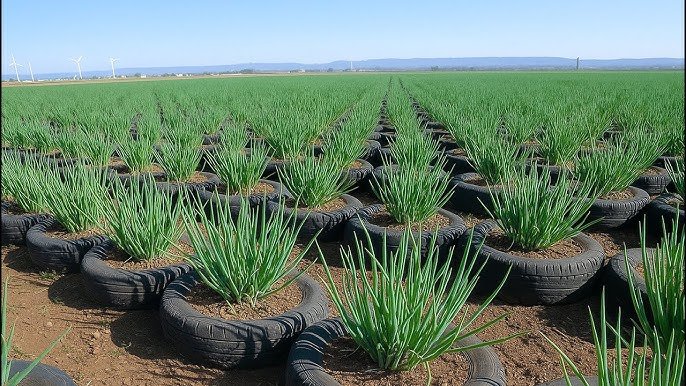
Onions can be grown from seeds, sets, or small seedlings:
Planting Steps
- Seeds: Plant ½ inch deep, cover lightly with soil
- Sets: Place small bulbs 1–2 inches deep, spacing 3–4 inches apart
- Seedlings: Make a small hole slightly larger than the roots, place the seedling, and cover with soil
- Water gently to settle soil
Correct planting ensures healthy root development and strong plants.
Step 5: Watering and Moisture Management
Tires dry out faster than garden beds, so consistent watering is essential:
- Water immediately after planting
- Keep soil evenly moist, not waterlogged
- Mulch with straw or dried leaves to retain moisture and reduce evaporation
- Reduce watering slightly as onions mature to prevent rot
Proper watering ensures large, juicy onion bulbs.
Step 6: Sunlight and Location
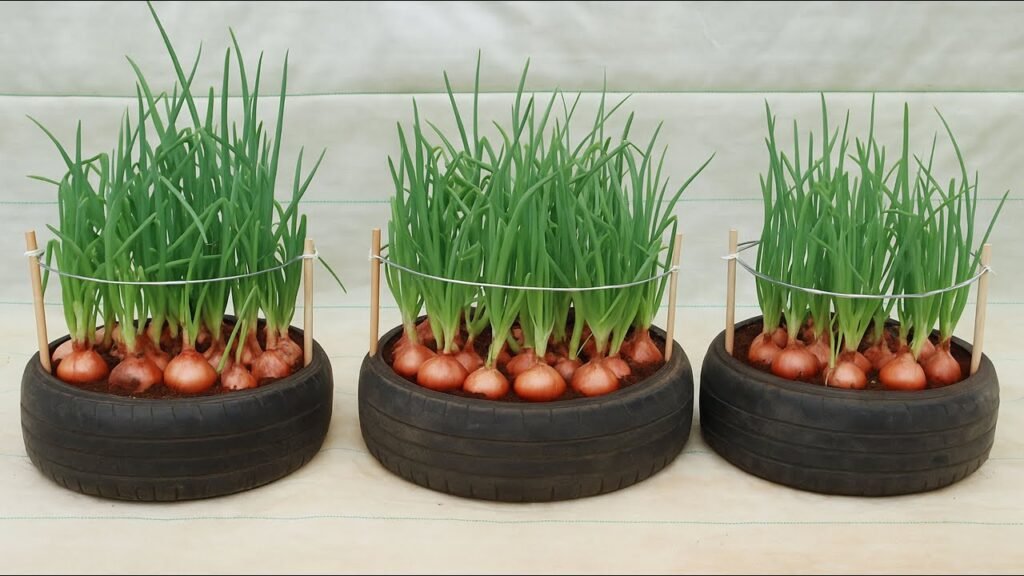
Onions need plenty of sunlight to grow big and flavorful:
- Place tires in a sunny spot with at least 6–8 hours of sunlight daily
- Ensure good air circulation to prevent fungal infections
- Rotate stacked tires occasionally for even sunlight exposure
Sunlight promotes strong stems, healthy leaves, and optimal bulb development.
Step 7: Fertilization and Nutrient Care
While soil in tires is nutrient-rich, onions benefit from additional feeding:
- Apply organic fertilizers such as compost tea or diluted liquid fertilizer every 2–3 weeks
- Use slow-release fertilizer for continuous nutrient supply
- Avoid excessive nitrogen late in growth, which encourages leafy growth over bulb development
Proper fertilization leads to larger, healthier onions.
Step 8: Weed and Pest Management
Tires reduce weeds but don’t eliminate all challenges:
- Remove any weeds promptly to prevent competition for nutrients
- Common pests include onion thrips and aphids
- Organic pest solutions: neem oil, garlic spray, or insecticidal soap
- Ensure airflow to reduce fungal diseases
Regular monitoring keeps your onion crop strong and productive.
Step 9: Harvesting Onions
Knowing when and how to harvest ensures maximum flavor and storage life:
Harvesting Tips
- Green onions: Harvest when tops are 6–8 inches long
- Bulb onions: Harvest when leaves start yellowing and falling over
- Carefully lift bulbs from the soil to avoid damage
- Cure onions in a shaded, ventilated area for 1–2 weeks before storage
With proper care, tires can yield large, high-quality onions.
Step 10: Creative Tire Gardening Ideas
- Stacked Tire Onion Garden: Stack tires to grow more in limited space
- Vertical Tire Planters: Mount tires on walls or fences for a space-saving setup
- Decorative Painted Tires: Add color to your garden while growing onions
- Mixed Vegetable Garden: Plant companion plants like carrots, radishes, or herbs in stacked layers
Tires allow flexible, creative gardening even in small spaces.
Benefits of Growing Onions in Tires
- Recycling: Turns old tires into productive garden tools
- Cost-Effective: No need to buy new pots
- Space-Saving: Ideal for terraces, balconies, and small gardens
- Better Soil Control: Prevents weeds and retains moisture
- Higher Yield: Controlled environment promotes larger bulbs
Growing onions in tires proves that waste materials can become valuable gardening resources.
Final Thoughts: From Old Tires to Abundant Onions
Old tires are more than trash—they can be productive, eco-friendly containers for growing onions. By following these steps—preparing tires, planting correctly, managing water and nutrients, and supporting growth—you can enjoy fresh, large, and flavorful onions all year round.
Whether for cooking, garnishing, or storing, onions grown in tires are cost-effective, sustainable, and easy to manage. With this method, you turn waste into a thriving garden, proving that even discarded tires can yield bountiful results in your home garden.