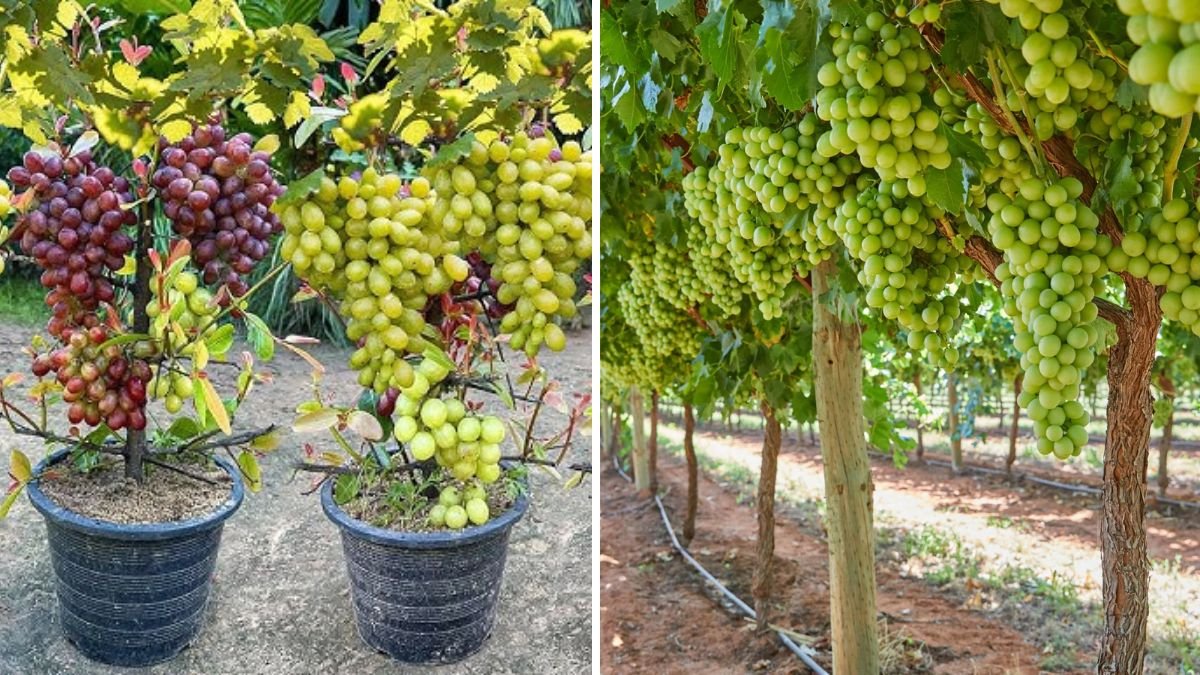
Growing grapes at home is a dream for many gardeners. But what if there was a simple, low-cost, and highly effective trick to boost grape growth and dramatically increase fruit yield? Yes — there is! It’s called egg grafting, a surprisingly easy technique that uses the natural nutrients inside an egg to help young grape cuttings establish faster, grow healthier, and produce more fruit.
In this article, you’ll discover what egg grafting is, why it works so well, step-by-step instructions, common mistakes to avoid, and professional-level tips to take your grape harvest to the next level. By the end, you’ll feel confident enough to try this method in your garden and enjoy bunches of juicy grapes right at home.
🍇 What Is Egg Grafting and Why Gardeners Love It?

Egg grafting is a simple propagation technique where the base of a grape cutting is inserted into a raw egg, using the egg as a natural fertilizer chamber. As the cutting grows, the egg slowly decomposes, releasing nutrients like:
- Calcium
- Phosphorus
- Nitrogen
- Minerals
These nutrients strengthen root growth, increase stem thickness, and help the plant absorb water more efficiently — all crucial factors for heavy fruiting.
Gardeners around the world love this method because:
✔ It’s budget-friendly
✔ Uses natural materials
✔ Boosts root strength
✔ Helps produce MORE and BIGGER grapes
✔ Ideal for beginners
And best of all — you need no special tools or expertise.

🥚🍇 Why an Egg Works So Well for Grafting Grapes
A raw egg is like a tiny organic fertilizer capsule. When buried in the soil, it breaks down and releases nutrients slowly over time. Here’s why this method works wonders:
1. Calcium Strengthens Cell Walls
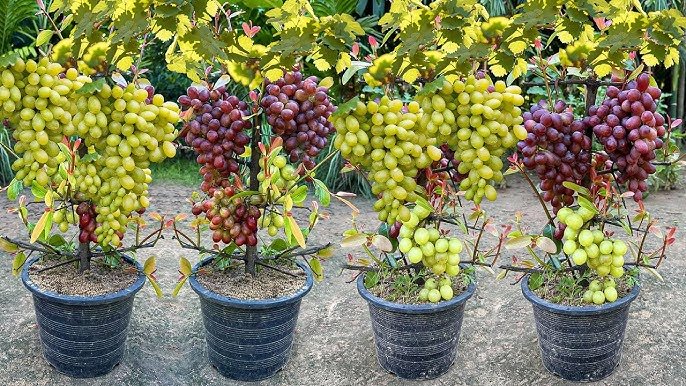
This helps the young cutting develop a strong, disease-resistant structure.
2. Nutrient-Rich Medium for Rooting
The egg provides a moist, nutrient-rich environment that encourages fast root formation.
3. Natural Soil Amendment
As the egg decomposes, it improves soil texture and microbial activity.
4. Long-Lasting Nutrition
Unlike synthetic fertilizers that wash away quickly, an egg feeds the plant for months.
5. Enhanced Fruit Production
Strong roots produce more shoots…
More shoots produce more flowers…
More flowers produce more grapes!
🏡 What You’ll Need

To perform grape egg grafting at home, gather these simple materials:
- 1 raw egg
- 1 healthy grape cutting (6–8 inches long)
- A sharp knife or pruning shears
- Pot or planting bag
- Rich potting soil
- Watering can
Optional:
- Cinnamon powder (natural antifungal solution)
- Rooting hormone (for faster rooting)
🍇📌 Step-by-Step Guide: Easy Grafting Grape in an Egg
Follow these steps to ensure a successful graft:
⭐ Step 1: Choose the Right Grape Cutting
Select a cutting that has:
- A pencil-thick stem
- 3–4 nodes
- Healthy green bark
- No pests or dryness
Make a clean diagonal cut at the base. This increases the surface area for rooting.
⭐ Step 2: Prepare the Egg

Take a raw egg and:
- Make a small hole at the top using a spoon or knife.
- Remove a bit of the liquid so the cutting can fit inside.
- Don’t crack the shell completely — it must stay intact.
The hole should be just large enough to insert the cutting firmly.
⭐ Step 3: Insert the Cutting
Dip the base of the cutting in rooting hormone or sprinkle cinnamon powder.
Then gently:
- Insert the cutting into the egg
- Push it down until the base touches the egg liquid
This allows the nutrients to come into direct contact with the stem.
⭐ Step 4: Plant the Egg in Soil
Fill a pot with soft, well-draining soil. Make a small hole and bury the egg:
- Keep the top of the egg slightly exposed OR
- Cover lightly with soil (both methods work)
Press the soil gently around it.
⭐ Step 5: Water Carefully
Water the pot well until moisture reaches the egg. Keep the soil:
- Moist but not soggy
- Cool but not cold
- Slightly shaded for 10–14 days
Soon, tiny roots start forming inside the egg.
⭐ Step 6: Move to Full Sun
Once new leaves appear:
- Move the pot to full sunlight
- Water regularly
- Feed with compost tea or organic fertilizer monthly
After 6–8 weeks, the cutting becomes a strong, well-rooted grape plant.
🍇💡 How Egg Grafting Boosts Grape Yield
Using eggs for grafting doesn’t just ensure better growth — it significantly increases fruit production. Here’s how:
🌟 1. Bigger Root System
More roots = more nutrients absorbed = bigger clusters.
🌟 2. Stronger Vines
Calcium-rich eggshells create sturdy vines capable of supporting heavy fruit loads.
🌟 3. Improved Soil Fertility
Enhanced microbes support flowering and fruiting.
🌟 4. Longer Nutrient Availability
Grapes need steady feeding; the egg provides that.
🌟 5. Reduced Early Root Rot
Healthy roots mean better survival and more fruits.
🚫❌ Common Mistakes to Avoid
Even simple methods can fail if certain mistakes are made. Avoid these pitfalls:
❌ Using old or rotting eggs
They smell bad and slow down rooting.
❌ Poking a large hole
Cutting becomes unstable and wobbly.
❌ Overwatering
Soggy soil rots the egg before roots form.
❌ Placing in harsh sunlight too early
Young cuttings burn easily.
❌ Using weak/old cuttings
They won’t sprout well even with this trick.
🌿🍷 Pro Tips for Maximum Success
Want faster growth and even bigger grape yields? Try these:
⭐ Dust the cutting with cinnamon
Stops fungal infections naturally.
⭐ Add crushed eggshells to the soil
Provides extra calcium.
⭐ Mix compost with soil
Boosts microbial activity around the egg.
⭐ Use a transparent cup first
Lets you watch root growth (optional but exciting!).
⭐ Keep the soil warm
Grapes root faster in warm soil.
🍇🌞 Caring for Your Egg-Grafted Grape Plant
After successful rooting, grape vines need proper care:
✔ Sunlight: Minimum 6–7 hours daily
✔ Watering: Keep soil moist but not soaked
✔ Support: Add a trellis or stake early
✔ Pruning: Remove weak shoots
✔ Feeding: Compost tea every month
Within a year, your grapevine can grow several feet and start producing fruit clusters.
🍇🎉 Final Thoughts: A Simple Trick for Heavy Grape Harvests
Egg grafting is one of the easiest, most effective gardening hacks for grape growers. Whether you’re a beginner or an experienced gardener, this method can:
- Speed up growth
- Strengthen the vine
- Improve soil health
- Increase fruit yield
- Reduce plant stress
All using a simple egg — nature’s own fertilizer capsule!
If you’ve always wanted a grapevine full of sweet, juicy fruit, this technique is one you must try.