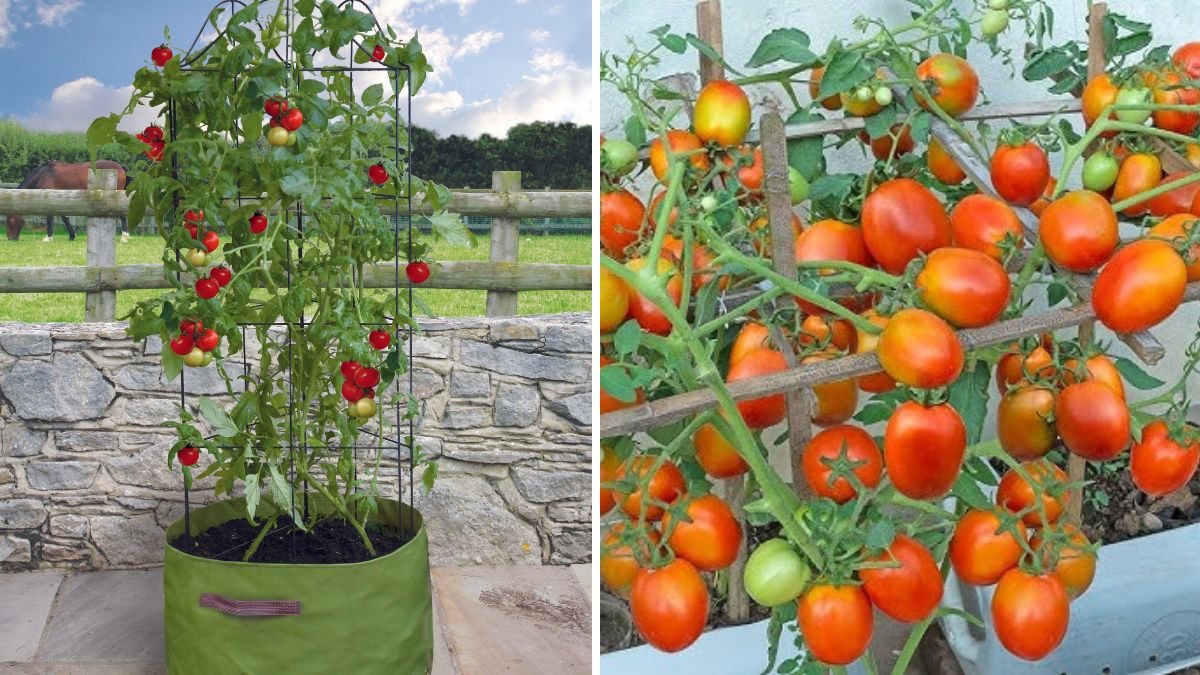
Tomatoes are one of the most popular and versatile vegetables grown at home. With the right techniques, you can cultivate fresh, juicy, and pesticide-free tomatoes even in small spaces using containers, pots, or tubs (“tob”). Home-grown tomatoes are not only tasty and nutritious but also a rewarding experience for gardening enthusiasts.
This guide explores tomato cultivation at home in containers, covering everything from selecting seeds, preparing soil, planting, care, and harvesting, so you can enjoy a bountiful crop right at your doorstep.
🌿 Why Grow Tomatoes at Home?
Growing tomatoes at home offers several advantages:
- Freshness and taste: Home-grown tomatoes are juicier and more flavorful than store-bought ones.
- Nutritional value: Rich in vitamins A, C, and K, antioxidants, and lycopene.
- Pesticide-free: Control over chemical use ensures safe, healthy produce.
- Cost-effective: Save money by growing multiple plants from seeds or cuttings.
- Gardening satisfaction: Growing your own food is therapeutic and rewarding.
Container cultivation is perfect for urban homes, balconies, terraces, or limited garden spaces.
🪴 Choosing the Right Tomato Variety
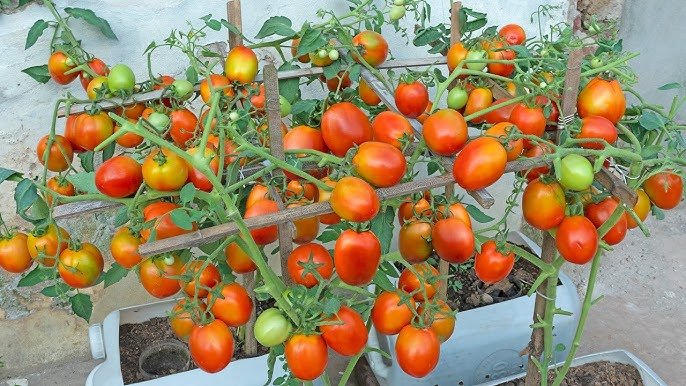
Select tomato varieties based on space, taste preference, and growth habit:
- Determinate (Bush types): Compact, grow 2–3 feet tall, good for containers. Example: Roma, Tiny Tim.
- Indeterminate (Vine types): Grow taller and require staking or support; produce continuously. Example: Cherry, Beefsteak.
- Cherry tomatoes: Small, sweet, ideal for containers and salads.
- Heirloom varieties: Unique flavor and colors; require careful care.
Pro Tip: For beginners, determinate or cherry varieties are easier to manage in containers.
🌱 Seed Selection and Preparation
- Choose high-quality, disease-resistant seeds from a trusted source.
- Soak seeds in warm water for 12–24 hours to improve germination rates.
- Use a seed tray or small pots with a seed-starting mix.
- Keep the soil moist and place in a warm, sunny location for germination.
- Seeds usually sprout within 7–14 days.
Pro Tip: Maintain temperature around 20–25°C for optimal germination.
✂️ Preparing Containers (Tob) for Tomato Cultivation
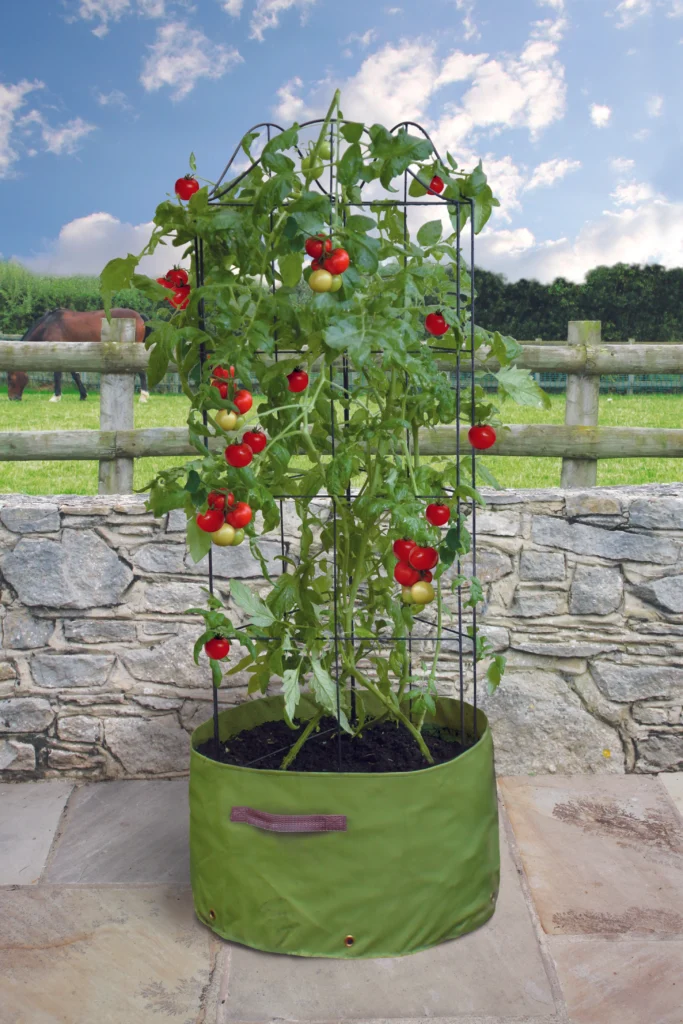
Container cultivation requires careful planning:
- Container size: Minimum 12–16 inches deep and wide for each tomato plant.
- Drainage: Ensure holes at the bottom for excess water.
- Material: Plastic, clay, or ceramic containers work well; plastic retains moisture better.
- Placement: Sunny location with 6–8 hours of sunlight daily.
Pro Tip: Use a tray under the container to catch excess water and prevent mess.
💧 Soil Preparation
Tomatoes thrive in fertile, well-draining soil:
- Mix garden soil, compost, and sand or cocopeat in a 2:1:1 ratio.
- Add organic fertilizers or vermicompost for nutrients.
- Soil should be loose, rich in organic matter, and slightly acidic to neutral (pH 6–7).
Pro Tip: Avoid heavy clay soils that retain excess water, which can cause root rot.
🪴 Planting Tomatoes in Containers
- Fill the container with prepared soil, leaving 2–3 inches from the top.
- Plant seedlings deep, covering two-thirds of the stem to encourage strong roots.
- Space determinate varieties 12–18 inches apart, and indeterminate 18–24 inches.
- Water lightly after planting and place in a sunny spot.
Pro Tip: Planting deep stems helps develop a robust root system, improving plant stability and nutrient uptake.
☀️ Sunlight and Temperature Requirements
- Sunlight: At least 6–8 hours of direct sunlight daily for healthy growth and flowering.
- Temperature: Ideal between 20°C–30°C; avoid extreme cold or heat.
- Indoor cultivation: Place near south-facing windows or use grow lights for adequate light.
Pro Tip: Rotate containers occasionally to ensure even sunlight exposure.
💧 Watering and Fertilization
- Water regularly to maintain consistent soil moisture but avoid waterlogging.
- Water at the base of the plant, keeping leaves dry to reduce fungal problems.
- Fertilize every 2–3 weeks with a balanced organic or NPK fertilizer.
- Foliar sprays of liquid seaweed or compost tea boost growth and flowering.
Pro Tip: Mulching helps retain soil moisture and regulate temperature, especially in summer.
🪴 Support and Pruning
Tomato plants, especially indeterminate varieties, need staking or support:
- Use stakes, trellises, or cages to prevent vines from sprawling.
- Prune suckers (side shoots) to focus energy on main stem and fruit production.
- Regular pruning improves air circulation, reduces disease, and enhances fruit quality.
Pro Tip: Tie stems loosely to supports using soft string or cloth strips to avoid damage.
🌸 Flowering and Fruit Development
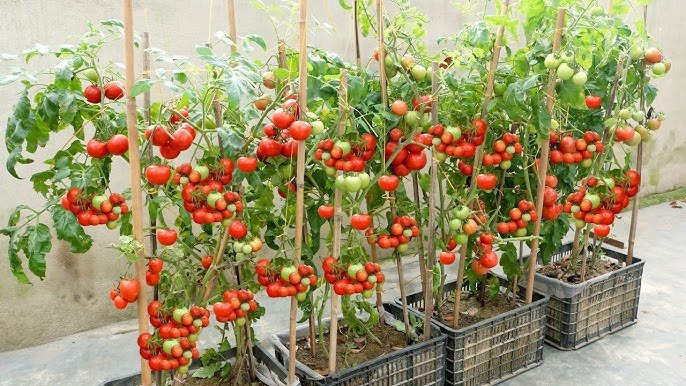
- Tomato plants start flowering 5–8 weeks after transplanting.
- Flowers are self-pollinating, but gentle shaking or wind helps improve fruit set.
- Fruits develop in clusters; harvest when fully colored according to the variety.
- Regular harvesting encourages more flowering and fruiting.
Pro Tip: Remove any diseased or damaged leaves to maintain plant health.
🐛 Pest and Disease Management
Tomatoes are prone to pests and diseases, but careful management ensures healthy plants:
Common Pests:
- Aphids: Spray neem oil or mild soap solution.
- Whiteflies: Yellow sticky traps or neem sprays.
- Fruit worms: Handpick or use organic insecticides.
Common Diseases:
- Early blight: Remove infected leaves and improve air circulation.
- Powdery mildew: Avoid overhead watering and ensure sunlight.
- Root rot: Ensure well-draining soil.
Pro Tip: Inspect plants weekly and act quickly to prevent spread.
🥗 Harvesting Tomatoes
- Harvest when fully ripe and colored for best taste.
- Use a sharp knife or scissors to avoid damaging stems.
- Store in a cool, dry place; home-grown tomatoes are fresh and flavorful.
- Frequent harvesting encourages continuous production.
Pro Tip: Avoid pulling fruits to prevent plant damage and reduced yield.
🔁 Creative Container Gardening Ideas
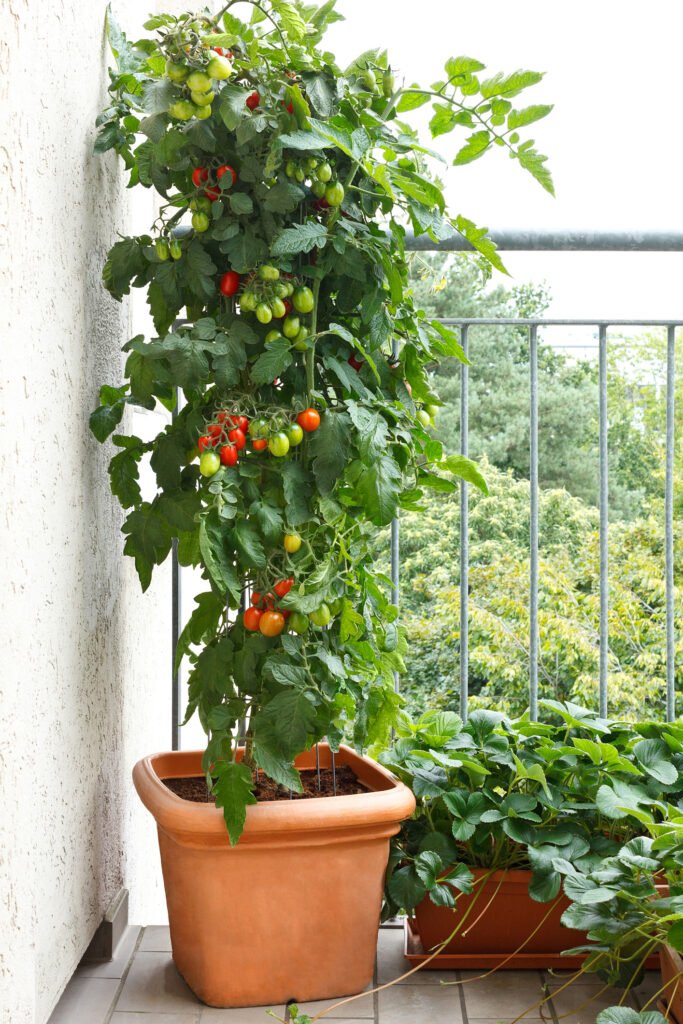
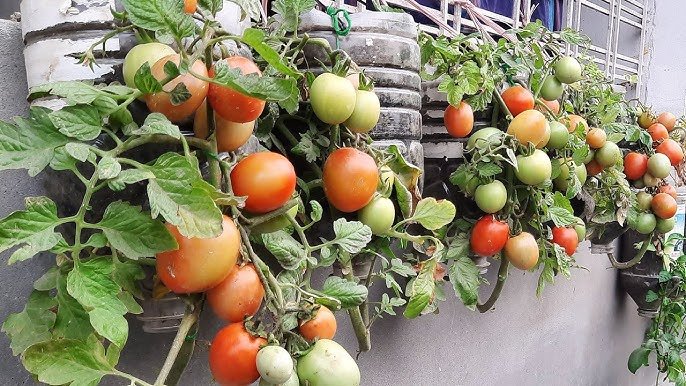
- Vertical tomato garden: Use stacked containers or hanging pots to save space.
- Mixed planting: Grow tomatoes alongside basil, mint, or marigold to repel pests.
- Balcony rail planters: Use railing planters to maximize sunlight.
- Themed garden: Combine tomatoes with colorful flowers for a functional and decorative display.
Pro Tip: Companion planting improves pest resistance and plant health.
🌿 Benefits of Growing Tomatoes at Home
- Fresh, pesticide-free produce for salads, cooking, and snacks.
- Nutritional benefits: Rich in lycopene, antioxidants, vitamins, and minerals.
- Cost savings: Grow multiple plants from seeds at minimal cost.
- Sustainable gardening: Reduces reliance on store-bought vegetables.
- Fun and rewarding: Perfect hobby for adults and children alike.
Container-grown tomatoes allow urban gardeners to enjoy farm-fresh produce even in limited spaces.
🌟 Final Thoughts
Growing tomatoes at home in containers or tubs is simple, rewarding, and highly productive. With the right variety, soil, sunlight, watering, and care, even beginners can enjoy juicy, flavorful, and pesticide-free tomatoes all year round.
From balcony planters to rooftop gardens, container tomato cultivation transforms small spaces into productive mini-gardens, offering taste, nutrition, and gardening satisfaction.
Fresh, vibrant, and home-grown—your tomatoes are just a seed and some soil away!