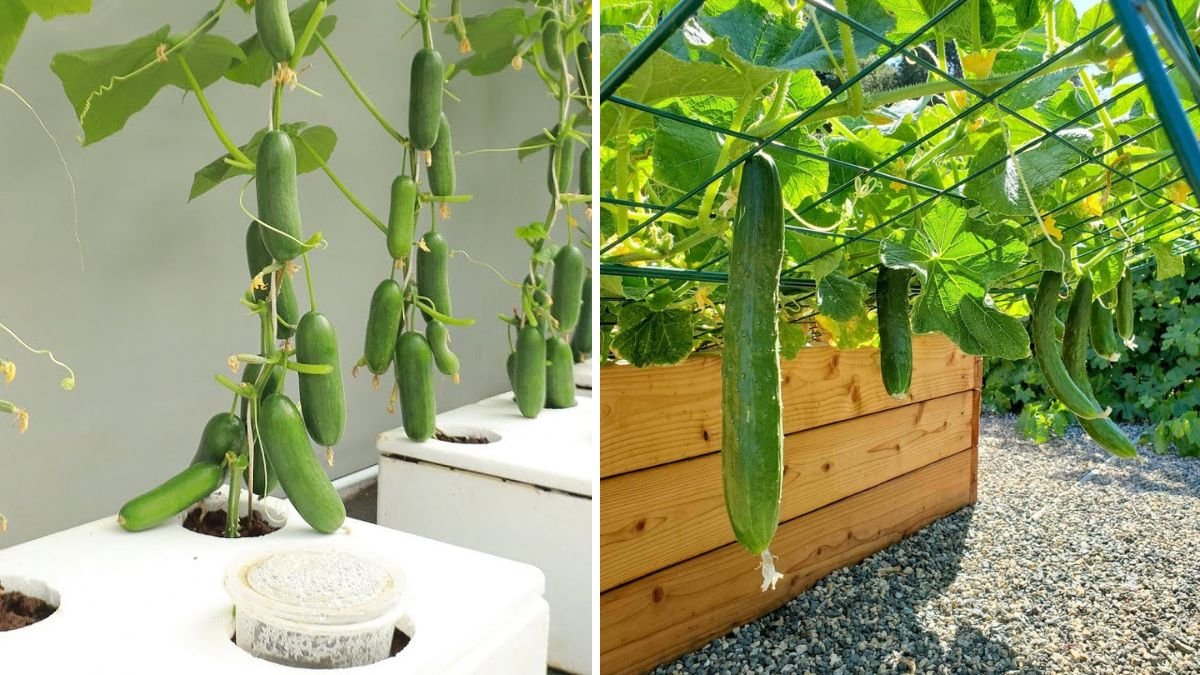
Growing cucumbers at home is one of the most rewarding gardening experiences—whether you have a spacious backyard, a small balcony, or just a sunny windowsill. Cucumbers grow quickly, thrive with minimal care, and reward you with crisp, juicy fruit that tastes far better than anything store-bought. If you’re dreaming of homemade salads, refreshing juices, or pickles straight from your garden, this guide will walk you through every step of growing cucumbers successfully right at home.
In this 1200-word guide, you’ll learn how to choose the right cucumber variety, prepare soil, plant seeds, care for vines, prevent common problems, and enjoy a heavy harvest throughout the season.
🥒 Why Grow Cucumbers at Home?
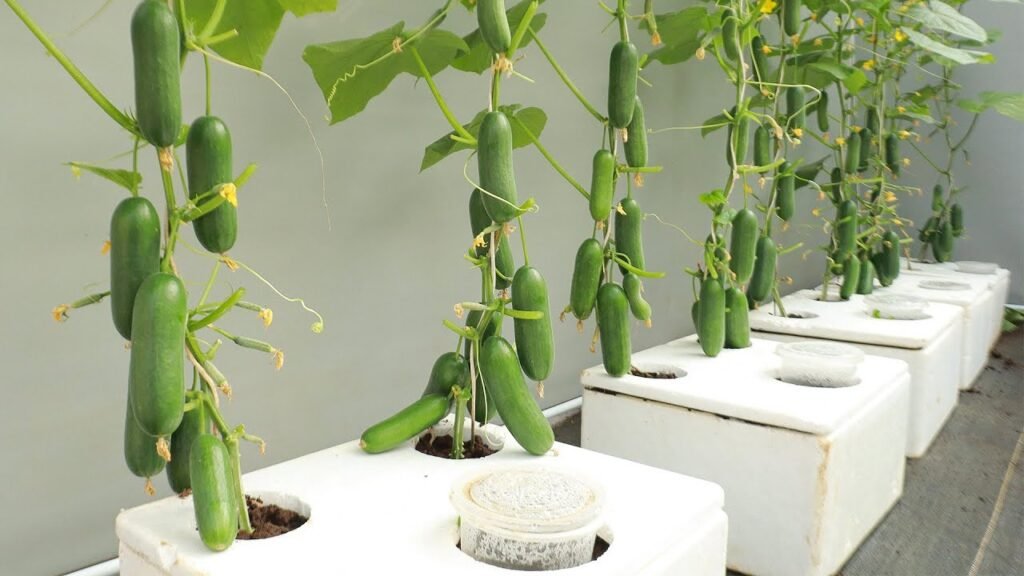
Cucumbers are one of the easiest vegetables to grow, especially for beginners. They grow fast, love warm weather, and need very little space if you use vertical growing methods. Home-grown cucumbers are:
- Fresher and sweeter
- Free from harmful chemicals
- Crunchier than store-bought
- Highly productive, even in small areas
One healthy plant can produce dozens of cucumbers, making them a highly efficient crop for home gardeners.
🌿 Step 1: Choosing the Right Cucumber Variety
Before planting, you need to know which type of cucumber suits your space and taste. Cucumbers fall into three main categories:
1. Slicing Cucumbers
Long, dark green varieties perfect for salads and eating fresh.
2. Pickling Cucumbers
Shorter, bumpier cucumbers ideal for pickles and fermentation.
3. Burpless/Japanese Cucumbers
Long, thin, tender-skinned, and extremely crisp—popular for fresh eating.
Best varieties for home gardens
- Poinsett 76 – disease resistant, heavy yield
- Ashley – great for containers
- Japanese Long – excellent flavor
- Kirby – famous for pickling
- Mini cucumbers – perfect for small spaces
Choose based on space, climate, and how you plan to use the cucumbers.
🪴 Step 2: Preparing the Soil
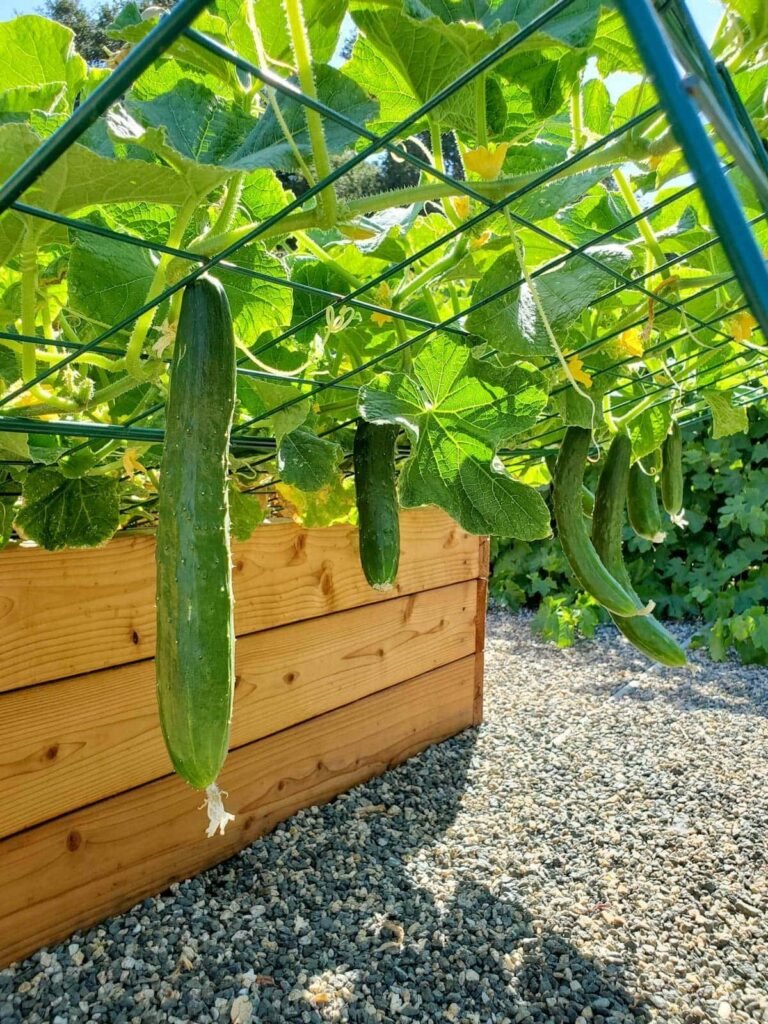
Cucumbers need soft, nutrient-rich soil with excellent drainage. They struggle in heavy, clay-like soil.
Ideal soil conditions
- pH: 6.0–7.0
- Texture: Loose, airy, well-draining
- Nutrients: High organic matter
How to prepare the soil
- Mix in compost or cow manure (2–3 kg per plant).
- Add coco peat for improving drainage.
- If using containers, choose pots at least 12–18 inches deep.
- Ensure good airflow and sunlight around the soil surface.
Healthy soil = healthy vines = high yield.
🌞 Step 3: Choosing the Right Location
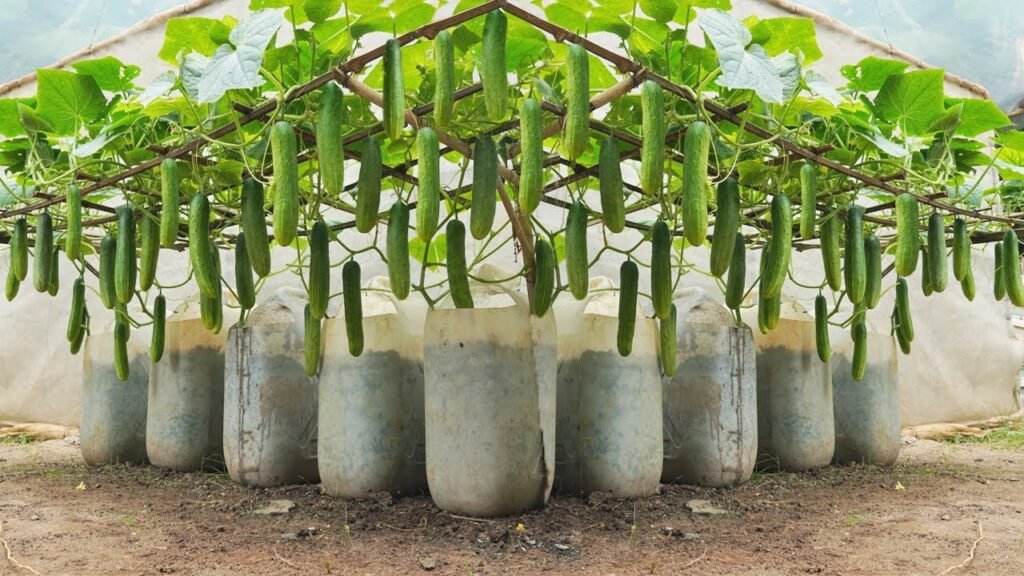
Cucumbers love sunlight. To thrive, they need:
- 6–8 hours of direct sunlight daily
- Warm temperatures above 20°C (68°F)
- A location protected from strong winds
If growing indoors or on a balcony, place them near a sunny wall, railing, or trellis.
🌱 Step 4: Planting Cucumber Seeds
You can start cucumbers from seed (best option) or seedlings. They sprout quickly in warm soil.
Sowing seeds directly
- Make holes about 1 inch deep.
- Plant 2–3 seeds per hole.
- Cover lightly with soil.
- Keep soil moist but not waterlogged.
- Seeds germinate within 3–7 days.
Once the seedlings grow to 3–4 inches, keep only the healthiest one, and gently remove the others.
Spacing
- Ground garden: 30–45 cm between plants
- Container: 1–2 plants per pot
- Vertical trellis setup: 1 plant per pole
💧 Step 5: Watering Correctly
Cucumbers love moisture but hate soggy roots. The trick is consistent watering.
Watering rules
- Water early in the morning.
- Keep soil evenly moist—not dry, not soaked.
- Water at the base, not on the leaves.
- Mulch the soil to prevent water evaporation.
Irregular watering leads to:
- Bitter cucumbers
- Curved or deformed fruits
- Poor flowering
Steady moisture = sweeter cucumbers.
🪜 Step 6: Training Vines & Using Support
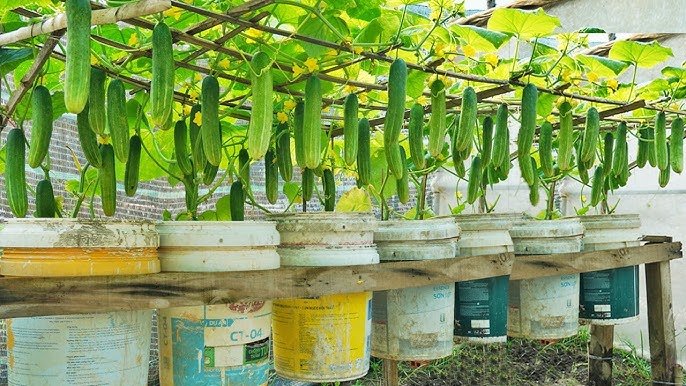
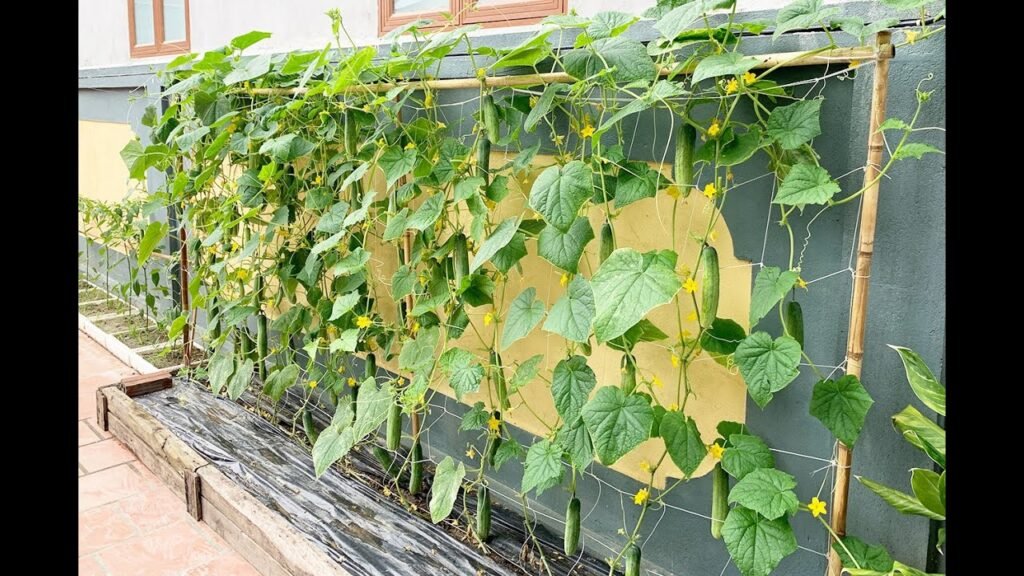
Cucumbers grow much better when given vertical support. A trellis reduces disease, improves airflow, and allows fruits to grow straight and clean.
Support ideas
- Bamboo trellis
- Netting
- Wooden stakes
- Rope climb
- Metal cages
Tie vines gently using soft ties. As they grow, they will naturally cling to the support.
Vertical growing increases yield by up to 60%.
🌼 Step 7: Fertilizing for Maximum Production
Cucumbers are fast feeders. They need regular nutrition for continuous fruiting.
Best fertilizers
- Compost tea
- Cow dung manure
- Vermicompost
- Seaweed extract
- Banana peel fertilizer
Apply fertilizer every 14–20 days.
When flowering starts
Switch to a high-potassium feed to improve fruit quality and quantity.
🐝 Step 8: Ensuring Proper Pollination
Cucumber plants produce male and female flowers.
- Male flowers appear first.
- Female flowers have small baby cucumbers behind them.
Bees usually pollinate naturally, but if you’re growing indoors or have fewer pollinators:
Hand Pollination
- Pick a fresh male flower.
- Remove petals.
- Gently dab pollen onto the female flower’s center.
This increases fruit set significantly.
🐛 Step 9: Managing Pests & Diseases Naturally
Common cucumber problems include:
Pests
- Aphids
- Whiteflies
- Spider mites
- Cucumber beetles
Natural solutions
- Neem oil spray weekly
- Soap water spray
- Garlic-chili spray
- Keep plants ventilated
Diseases
- Powdery mildew
- Leaf spot
- Root rot
Prevent by:
- Avoiding overhead watering
- Not crowding plants
- Keeping leaves dry
- Using disease-resistant varieties
🥒 Step 10: Harvesting at the Right Time
Harvesting cucumbers early encourages more growth.
How to know it’s ready
- Medium size (depending on variety)
- Firm and bright in color
- Skin glossy, not dull
- Seeds small and tender
Cut with scissors instead of pulling.
How often to harvest
- Every 2–3 days for maximum yield
A well-cared cucumber plant can produce up to 30–50 cucumbers in one season.
🏡 Final Tips for Massive Cucumber Harvest
- Never let soil dry out.
- Use vertical trellising for best results.
- Fertilize consistently.
- Remove old leaves to improve airflow.
- Harvest frequently.
With the right care, your home can become a cucumber paradise—balcony, terrace, or backyard!