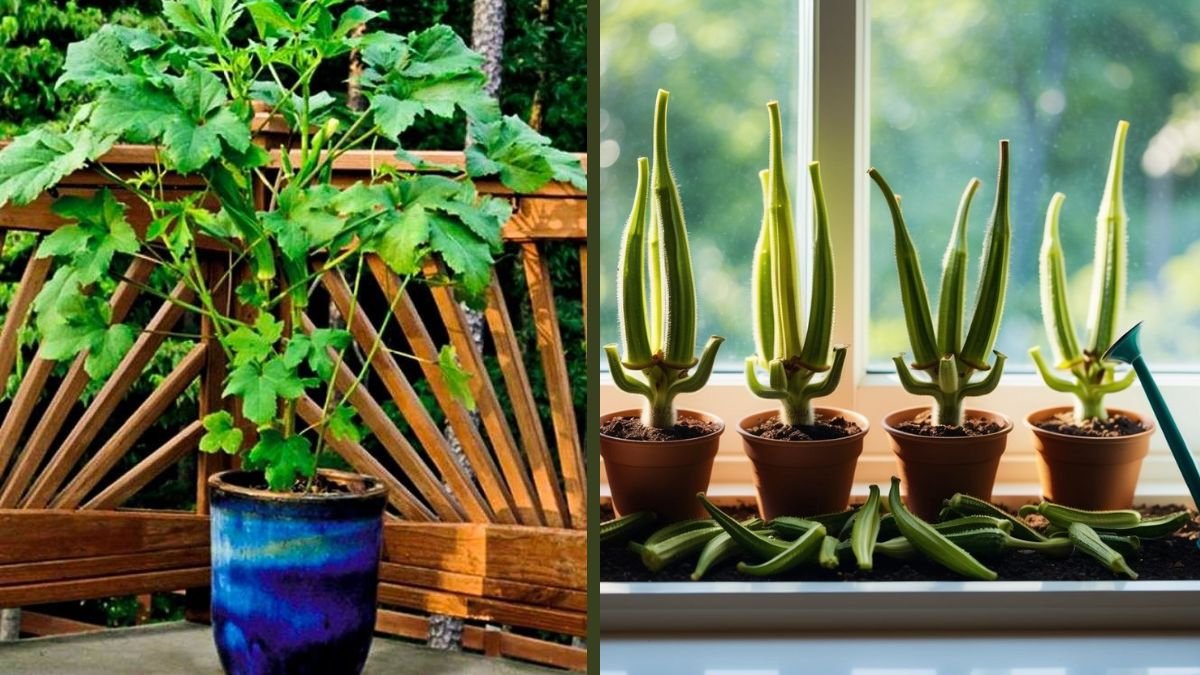
Introduction: Why Okra Is Perfect For Container Gardening
Okra is a fast-growing, heat-loving vegetable that adapts well to container gardening. Many people believe okra requires open fields, but containers work exceptionally well. Container-grown okra produces tender pods and stays manageable in size. This method suits balconies, terraces, and small gardens. Containers allow better control over soil, water, and pests. With proper care, okra grows tall and productive. This guide explains how to grow okra at home successfully. Even beginners can enjoy fresh okra harvests.
Understanding Okra Growth Habit
Okra grows as an upright plant with a deep taproot. It prefers warm temperatures and full sunlight. Flowers appear quickly after establishment. Pods form rapidly after flowering. Understanding growth stages helps identify healthy development. Okra grows fast when conditions are right. Containers allow easier observation. Growth habit knowledge improves care and yield.
Selecting The Right Container For Okra
Choose deep containers to support okra’s taproot. Containers should have proper drainage holes. Larger containers produce taller plants. Plastic or grow bags work well. Avoid shallow pots. Adequate depth ensures healthy root growth. Container size directly affects yield. Proper selection ensures strong plants.
Soil Mix Ideal For Container Okra
Use loose, fertile, well-draining soil. Mix garden soil with compost and sand. Avoid heavy clay soil. Organic matter improves moisture retention. Soil should remain moist but not soggy. Good soil supports strong stems. Healthy soil improves pod quality. Soil preparation is essential.
Planting Okra Seeds Correctly
Soak okra seeds overnight to improve germination. Plant seeds directly into containers. Space seeds properly to avoid overcrowding. Cover lightly with soil. Water gently after planting. Warm soil speeds germination. Healthy seedlings emerge quickly. Correct planting improves early growth.
Sunlight Requirements For Container Okra
Okra loves full sunlight. Place containers where they receive maximum light. Insufficient sunlight reduces flowering. Rotate containers if necessary. Good light strengthens stems. Healthy plants produce more pods. Sunlight affects taste and texture. Light management is crucial.
Watering Strategy For Strong Okra Plants
Water deeply but allow drainage. Avoid frequent shallow watering. Consistent moisture supports steady growth. Overwatering causes root problems. Morning watering works best. Container soil dries faster than ground soil. Monitor moisture regularly. Proper watering improves yield.
Feeding Okra For Continuous Pod Production
Feed okra with organic compost tea. Avoid excessive nitrogen. Balanced feeding supports flowering. Potassium improves pod development. Feed every two weeks. Overfeeding causes leafy growth. Proper nutrition increases productivity. Feeding timing matters.
Identifying Healthy Okra Growth Stages
Healthy seedlings have strong stems and green leaves. Flower buds appear early. Flowers open briefly and drop. Pods form quickly after flowering. Healthy pods grow straight and tender. Yellowing leaves indicate stress. Observing stages helps timely care. Identification improves success.
Table: Signs Of Healthy Vs Unhealthy Okra Plants
Indicator Explanation
Green leaves indicate good nutrition
Strong stems support heavy pods
Regular flowering shows plant health
Straight pods indicate proper watering
Yellow leaves signal nutrient issues
Pruning And Maintenance In Containers
Minimal pruning is required. Remove damaged leaves only. Avoid cutting main stems. Pruning improves airflow. Healthy airflow reduces disease. Container plants stay manageable. Maintenance is simple. Proper care supports long harvests.
Pest Control For Container-Grown Okra
Aphids and caterpillars may appear occasionally. Neem oil controls pests effectively. Hand removal works well. Containers reduce pest pressure naturally. Healthy plants resist insects. Avoid chemical sprays. Natural methods keep okra safe to eat.
Flowering And Pod Formation Process
Flowers appear within weeks. Each flower lasts one day. Pods form immediately after. Harvest pods young for tenderness. Delayed harvest reduces quality. Regular harvesting encourages more pods. Flowering indicates active growth. Pod timing is important.
Harvesting Okra At The Right Stage
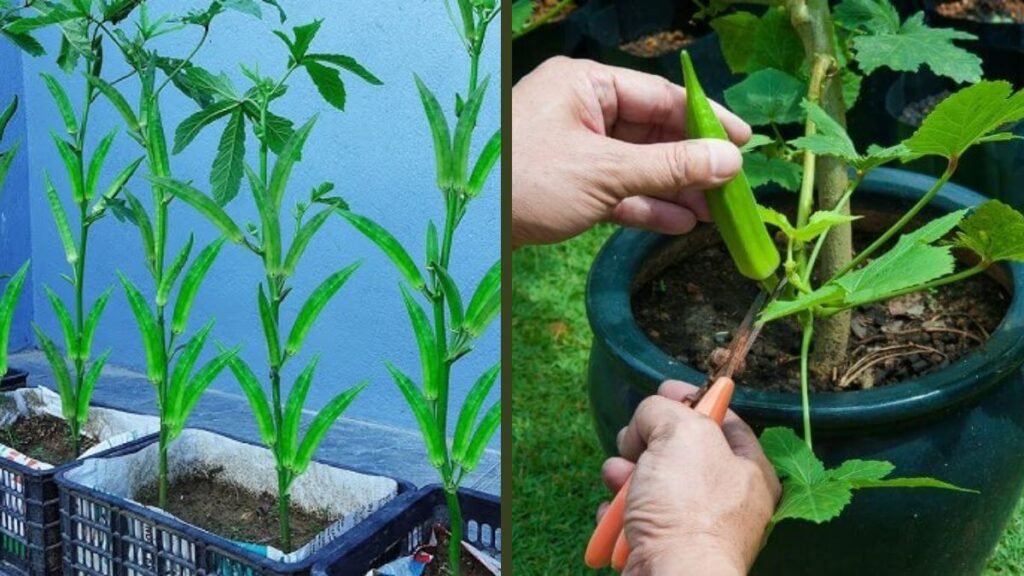
Harvest pods when they are young and tender. Use clean tools. Harvest regularly every few days. Overgrown pods become fibrous. Frequent harvesting increases yield. Gentle handling protects plants. Harvest timing affects taste. Proper harvesting ensures continuous production.
Common Mistakes In Container Okra Growing
Using shallow containers restricts roots. Poor sunlight reduces yield. Overwatering causes rot. Delayed harvesting reduces quality. Excess nitrogen limits pods. Learning from mistakes improves results. Small changes bring improvement.
Benefits Of Growing Okra In Containers
Containers save space and reduce weeds. Soil quality is controlled. Harvesting is easy. Pest pressure is lower. Plants grow cleaner. Suitable for urban spaces. Yield remains impressive. Container growing is efficient.
Seasonal Care Tips
Okra grows best in warm seasons. Protect from cold weather. Reduce watering during rainy periods. Increase feeding during peak growth. Seasonal adjustments improve productivity. Climate awareness ensures success.
Why Container Okra Produces Better Results
Containers provide controlled conditions. Roots stay healthy. Stress is reduced. Growth becomes consistent. Harvest quality improves. Maintenance is easier. This method suits home gardeners perfectly.
Final Thoughts On Growing Okra At Home
Growing okra in containers is simple and rewarding. With proper care, yields are excellent. This method suits beginners and experts alike. Fresh okra tastes better. Gardening becomes convenient. Start once and enjoy continuous harvests.