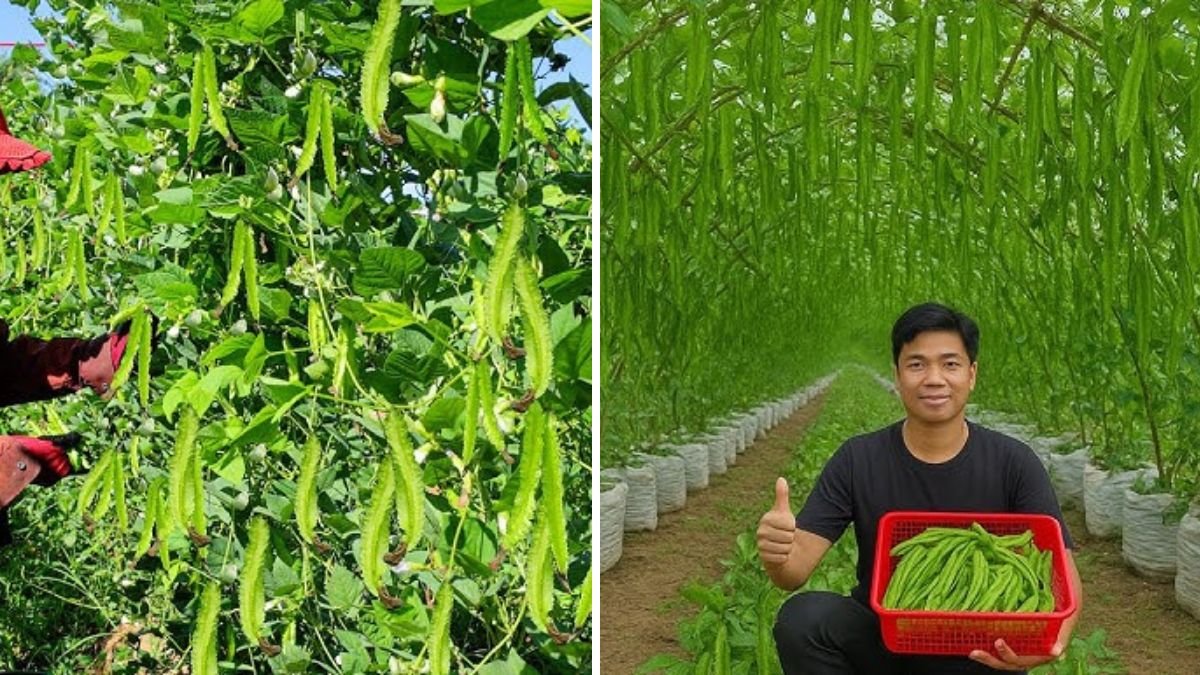
Wing beans, also known as Psophocarpus tetragonolobus, are a highly nutritious legume grown for their pods, leaves, flowers, and seeds. Rich in protein, vitamins, and minerals, wing beans are a staple in many tropical and subtropical cuisines. Their fast growth, high yield, and nitrogen-fixing ability make them an ideal choice for home gardeners and small-scale farmers alike.
But did you know that propagating wing beans is simple and highly productive? With the right technique, you can grow a healthy wing bean tree that produces abundant pods year after year. This article will guide you step by step, covering propagation methods, planting, care, and harvesting tips for maximum yield.
🌿 Why Propagate Wing Beans at Home?
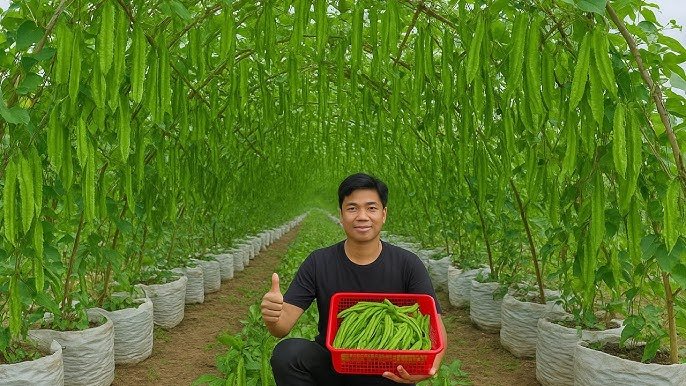
Home propagation of wing beans offers several advantages:
- High productivity: Each plant can produce pods for several months.
- Nutrient-rich food: Pods, leaves, and seeds are edible and packed with protein.
- Easy propagation: Wing beans grow well from seeds or cuttings.
- Space-efficient: Suitable for vertical gardens, trellises, or small backyards.
- Soil improvement: Wing beans enrich the soil by fixing nitrogen naturally.
By propagating your own plants, you can ensure healthy, chemical-free wing beans for your kitchen.
🌱 Step 1: Choosing Seeds or Cuttings
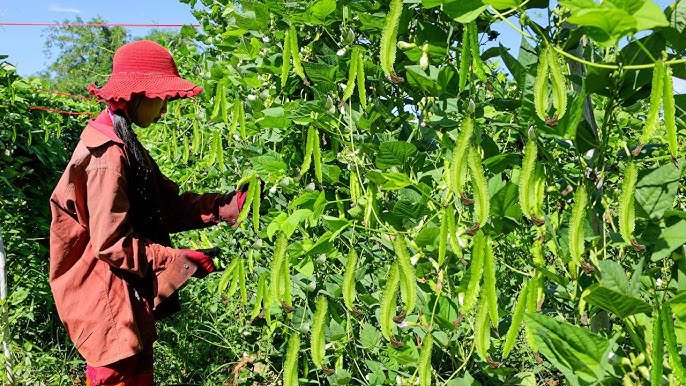
Wing beans can be propagated via seeds or stem cuttings.
For seeds:
- Select mature, healthy seeds from a trusted source or existing plants.
- Soak seeds in water for 24 hours to encourage germination.
For cuttings:
- Take a healthy stem segment with at least 3–4 nodes from an established plant.
- Remove lower leaves to expose nodes for rooting.
Both methods are highly effective, but seed propagation is most common for home gardens.
🪴 Step 2: Preparing Containers and Soil
Wing beans require well-draining soil rich in organic matter:
Soil mix recommendation:
- 2 parts garden soil
- 1 part compost or well-rotted manure
- 1 part sand for aeration
Containers:
- Use pots, polybags, or seed trays for initial growth.
- Ensure drainage holes to prevent waterlogging.
A proper soil mix and container setup promote strong root growth and healthy plants.
🌱 Step 3: Planting Seeds or Cuttings
For seeds:
- Fill containers with the prepared soil mix.
- Plant seeds 1–2 cm deep and cover lightly with soil.
- Water gently to moisten the soil.
- Maintain a warm, sunny location for germination.
For cuttings:
- Insert the cuttings 2–3 nodes deep into moist soil.
- Keep soil consistently damp but not soggy.
- Provide partial shade for the first 1–2 weeks to reduce transplant shock.
Germination typically occurs within 7–14 days, while cuttings root in 2–3 weeks.
🌞 Step 4: Sunlight and Temperature Requirements
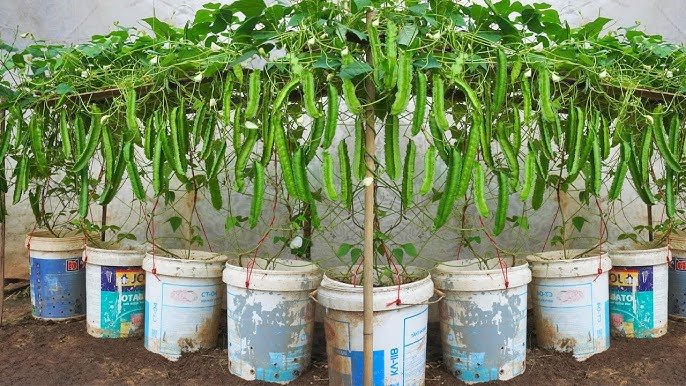
Wing beans thrive in warm, sunny conditions:
- Ideal temperature: 25–35°C (77–95°F).
- Ensure 6–8 hours of sunlight daily for optimal growth.
- Protect young plants from strong winds or heavy rain.
Proper sunlight encourages vigorous growth, flowering, and pod formation.
💧 Step 5: Watering and Moisture Control
Consistent moisture is critical for wing beans:
- Water plants regularly to keep soil evenly moist.
- Avoid waterlogging, which can cause root rot.
- Mulch around the base with dried leaves or straw to retain moisture and reduce weeds.
Adequate watering ensures fast growth and high yield.
🌿 Step 6: Providing Support
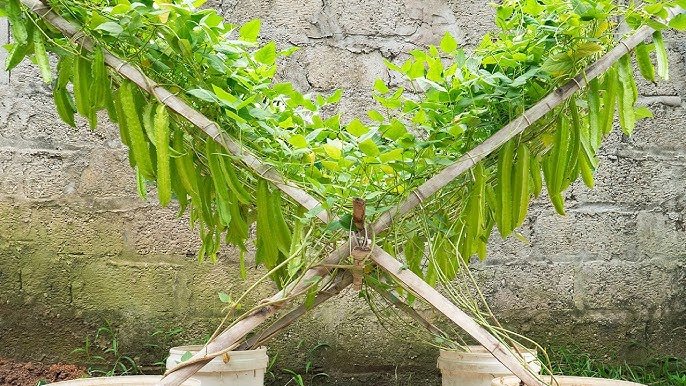
Wing beans are climbing plants and need vertical support:
- Use trellises, stakes, or wires for plants to climb.
- Tie vines gently as they grow to prevent breakage.
- Vertical growth allows better air circulation, sunlight exposure, and pod development.
Proper support also reduces disease incidence and makes harvesting easier.
🌱 Step 7: Fertilization and Soil Nutrition
Wing beans are moderately heavy feeders, despite being nitrogen-fixing:
- Apply compost or organic manure at planting and every 4–6 weeks.
- A balanced N-P-K fertilizer promotes leaf and pod growth.
- Avoid excessive nitrogen after flowering, which can reduce pod production.
Healthy fertilization ensures lush foliage and abundant pods.
✂️ Step 8: Pruning and Care
Regular care boosts yield and plant health:
- Remove yellowing or damaged leaves.
- Prune lateral shoots to encourage main vine growth.
- Monitor for pests such as aphids, caterpillars, or mites, and use natural remedies like neem oil.
- Ensure adequate spacing between plants to prevent overcrowding.
Consistent care maximizes flowering and pod formation.
🕒 Step 9: Flowering and Pollination
Wing beans produce beautiful, colorful flowers that develop into pods:
- Flowers appear 40–60 days after planting.
- Some varieties require insect pollination for fruit set.
- Hand-pollination can increase fruit production in indoor or terrace gardens.
Successful flowering is the key to high pod yield.
🍃 Step 10: Harvesting Wing Beans
Wing beans are ready to harvest 7–10 days after flowering, depending on variety:
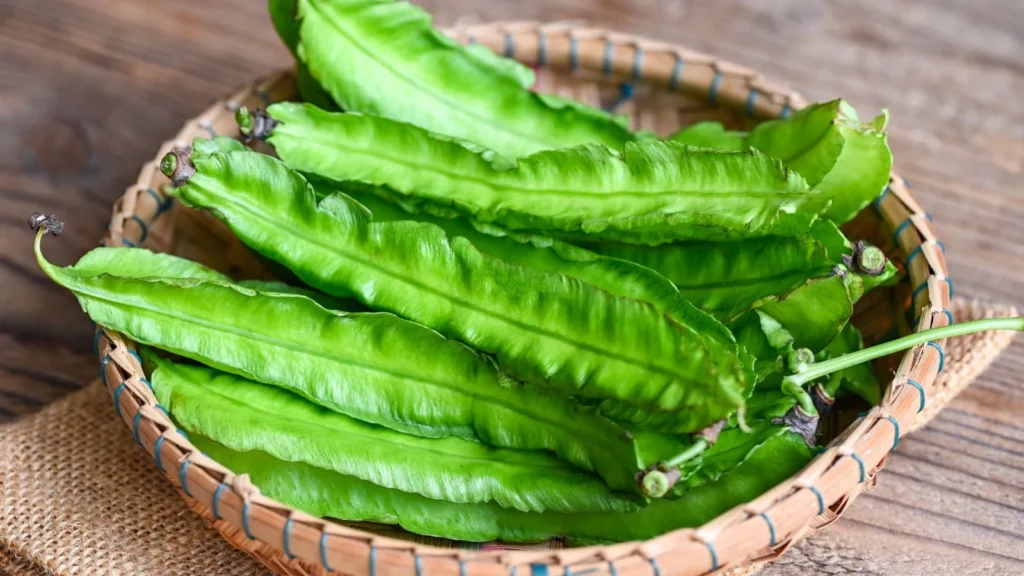
- Pods should be crisp, tender, and 8–12 inches long.
- Harvest frequently to encourage continuous production.
- Leaves and flowers can also be consumed as a nutritious green.
Proper harvesting ensures maximum yield from each plant.
🌟 Step 11: Propagation for Continuous Production
To maintain a continuous harvest:
- Save mature seeds for the next season.
- Take new cuttings from healthy vines for additional plants.
- Rotate planting areas or use pots to avoid soil-borne diseases.
Wing beans can provide food and nutrition year-round with proper propagation.
💡 Step 12: Tips for Maximum Yield
- Choose high-quality seeds or healthy cuttings.
- Provide trellises or vertical support for climbing.
- Maintain consistent watering and sunlight exposure.
- Fertilize with compost and balanced nutrients.
- Harvest regularly to encourage continuous pod formation.
Following these tips ensures fast-growing, productive wing bean plants.
🏡 Benefits of Propagating Wing Beans at Home
- Nutritious food: Pods, leaves, flowers, and seeds are edible.
- Space-efficient: Perfect for terrace gardens, pots, or small backyards.
- Sustainable: Fixes nitrogen and enriches the soil.
- High yield: Multiple harvests from a single plant.
- Low maintenance: Easy care and minimal disease issues with proper practices.
Growing wing beans at home is rewarding, eco-friendly, and highly productive.
🍀 Step 13: Conclusion – Your Wing Bean Garden
Propagating wing beans is an easy, efficient, and productive gardening project. By following these steps—from choosing seeds or cuttings, preparing soil, planting, and supporting vines, to fertilizing, caring, and harvesting—you can enjoy abundant pods and nutritious greens right at home.
Whether you’re a beginner or an experienced gardener, wing beans are fast-growing, resilient, and highly rewarding. Start today, propagate your plants, and enjoy a continuous supply of fresh, protein-rich wing beans for your family.
With proper care and dedication, your wing bean garden will flourish, giving you a bountiful harvest season after season.