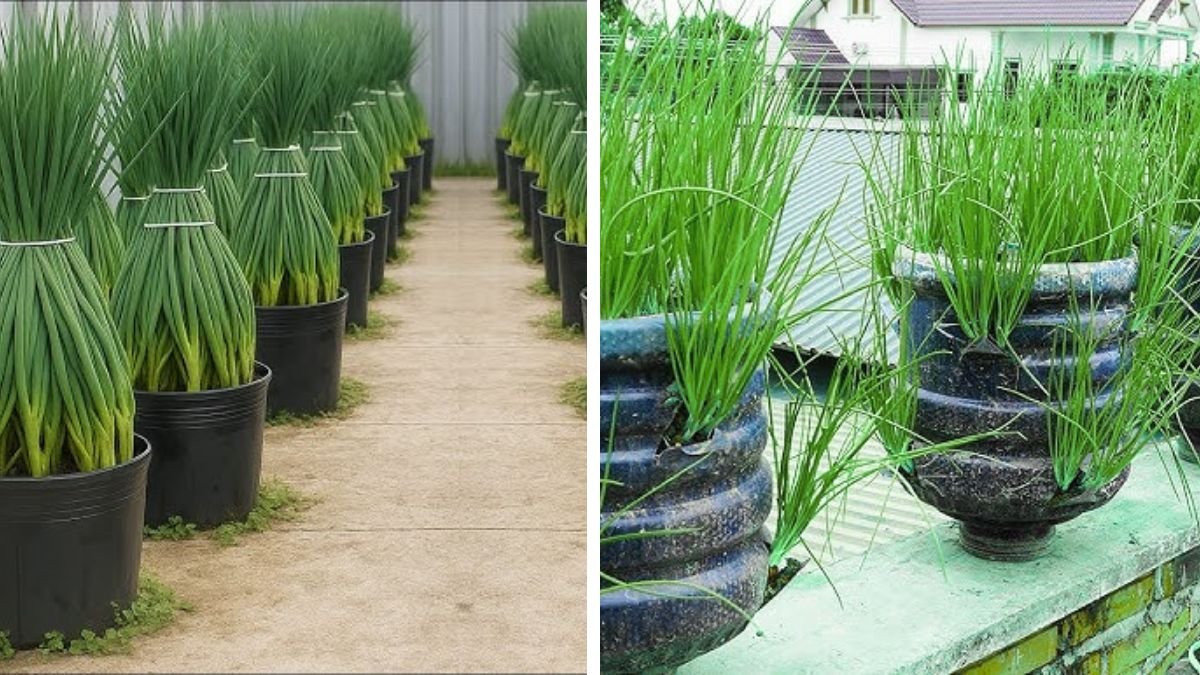
Introduction: Turning Waste into Fresh Food
Old plastic bottles are often thrown away without realizing their hidden value. With a little creativity, these bottles can become perfect containers for growing green onions at home. Green onions are one of the easiest vegetables to grow and require very little space. This method is ideal for balconies, windowsills, rooftops, and even kitchen corners. It reduces household waste while providing fresh, chemical-free food. Green onions grow quickly and can be harvested multiple times. The process is simple and beginner-friendly. Anyone can start with minimal effort and cost.
Why Plastic Bottles Are Perfect for Growing Green Onions
Plastic bottles are lightweight, durable, and easy to modify. They retain moisture well, which is essential for green onion growth. Bottles can be placed vertically or horizontally, saving space. They allow good root development when holes are made properly. Using bottles also promotes recycling and eco-friendly gardening. Unlike clay pots, plastic bottles do not break easily. They are available in almost every household. This makes them a practical gardening solution.
Understanding the Growth Nature of Green Onions
Green onions have shallow root systems and grow fast. They do not require deep soil or large containers. Their leaves regenerate after cutting, allowing repeated harvests. Green onions thrive in moderate sunlight and consistent moisture. They adapt well to container gardening. Even kitchen scraps can regrow into new plants. This makes them ideal for beginner gardeners. Understanding their growth habit ensures better yields.
Materials Required for Bottle Gardening
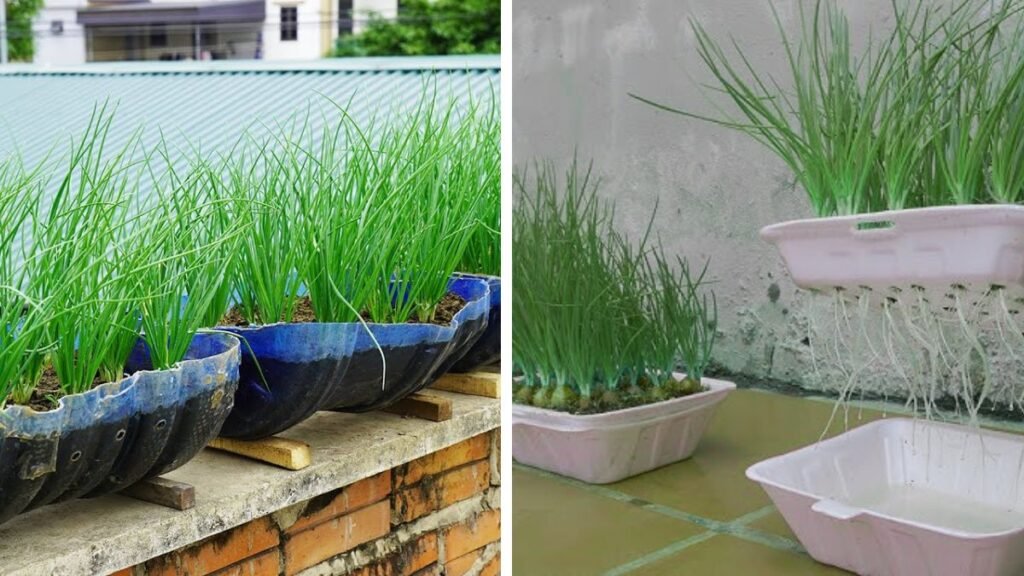
To begin, you need empty plastic bottles of any size. A sharp cutter or scissors is required to make holes. Good quality soil or coco peat is recommended. Green onion bulbs or kitchen scraps are needed. Clean water is essential for regular watering. Optional compost improves growth speed. A sunny location supports healthy leaves. All materials are affordable and easy to find.
Step-by-Step Bottle Preparation Process
Start by washing the plastic bottle thoroughly. Cut the bottle horizontally or make side holes depending on placement. Create small drainage holes at the bottom. Fill the bottle with loose, well-draining soil. Insert green onion bulbs with roots facing down. Press soil gently around them. Water lightly to settle the soil. Place the bottle in a bright location.
Best Placement for Faster Growth
Green onions need at least four to six hours of sunlight daily. A balcony railing or window ledge works well. Avoid extreme afternoon heat. Indoor placement near windows is suitable. Vertical hanging setups save space. Proper airflow prevents fungal issues. Regular rotation ensures even growth. Correct placement directly impacts yield.
Watering and Moisture Management
Green onions prefer consistently moist soil. Overwatering can cause root rot. Water lightly but frequently. Ensure excess water drains out. During hot weather, watering frequency increases. Avoid water stagnation inside bottles. Morning watering is ideal. Balanced moisture keeps leaves tender and green.
Nutrient Needs for Healthy Green Onions
Green onions are light feeders. Adding compost once every two weeks is sufficient. Liquid organic fertilizer boosts growth. Avoid chemical fertilizers for better taste. Yellow leaves indicate nutrient deficiency. Healthy soil ensures continuous regrowth. Proper feeding results in thicker stalks. Balanced nutrition improves flavor.
Harvesting Without Killing the Plant
Harvest only the outer leaves first. Use clean scissors for cutting. Leave the base intact for regrowth. Harvest every ten to fifteen days. This method allows continuous supply. Avoid pulling the entire plant. Gentle harvesting increases lifespan. Fresh leaves are always available.
Common Problems and Easy Solutions
Slow growth indicates low sunlight. Yellow leaves mean nutrient deficiency. Wilting suggests water imbalance. Mold on soil means excess moisture. Pest attacks are rare but manageable. Remove damaged leaves immediately. Improve airflow if issues appear. Early correction ensures healthy plants.
Table: Plastic Bottle Green Onion Growing Guide
| Aspect | Requirement | Best Practice |
|---|---|---|
| Container | Plastic bottle | Drainage holes |
| Soil | Loose mix | Compost added |
| Sunlight | Moderate | Morning light |
| Watering | Regular | Avoid flooding |
| Harvest | Repeated | Cut leaves only |
Advantages Over Store-Bought Green Onions
Homegrown green onions are fresher and tastier. They are free from chemicals. Cost savings increase over time. Waste plastic is reused effectively. Harvest is available anytime. No transportation pollution is involved. Nutritional value is higher. Gardening becomes rewarding.
Environmental Benefits of Bottle Gardening
This method reduces plastic waste. It promotes recycling at home. Less food packaging waste is produced. Urban green cover increases. Water usage is minimal. It supports sustainable living. Small efforts create big environmental impact. Eco-friendly habits develop naturally.
Suitable for Apartments and Small Homes
Bottle gardening requires very little space. Even renters can practice it. No permanent setup is needed. Bottles can be moved easily. Indoor growing is possible. It fits modern urban lifestyles. Children can participate safely. Gardening becomes accessible to all.
Scaling Up with Multiple Bottles
Multiple bottles can be arranged vertically. Wall-mounted setups maximize space. Staggered planting ensures continuous harvest. Different varieties can be grown together. Maintenance remains easy. Productivity increases significantly. Small setups feed entire families. Expansion is flexible.
Cost Analysis and Savings
Initial investment is almost zero. Seeds or scraps are inexpensive. Water usage is minimal. No pot purchase is required. Fertilizer cost is low. Long-term savings are high. Grocery bills reduce steadily. This method is budget-friendly.
Final Thoughts
Growing green onions in plastic bottles is simple and effective. It turns waste into food. Anyone can do it successfully. Maintenance is easy and rewarding. Results are quick and satisfying. Fresh greens are always available. This method supports sustainable urban gardening. It is perfect for beginners.