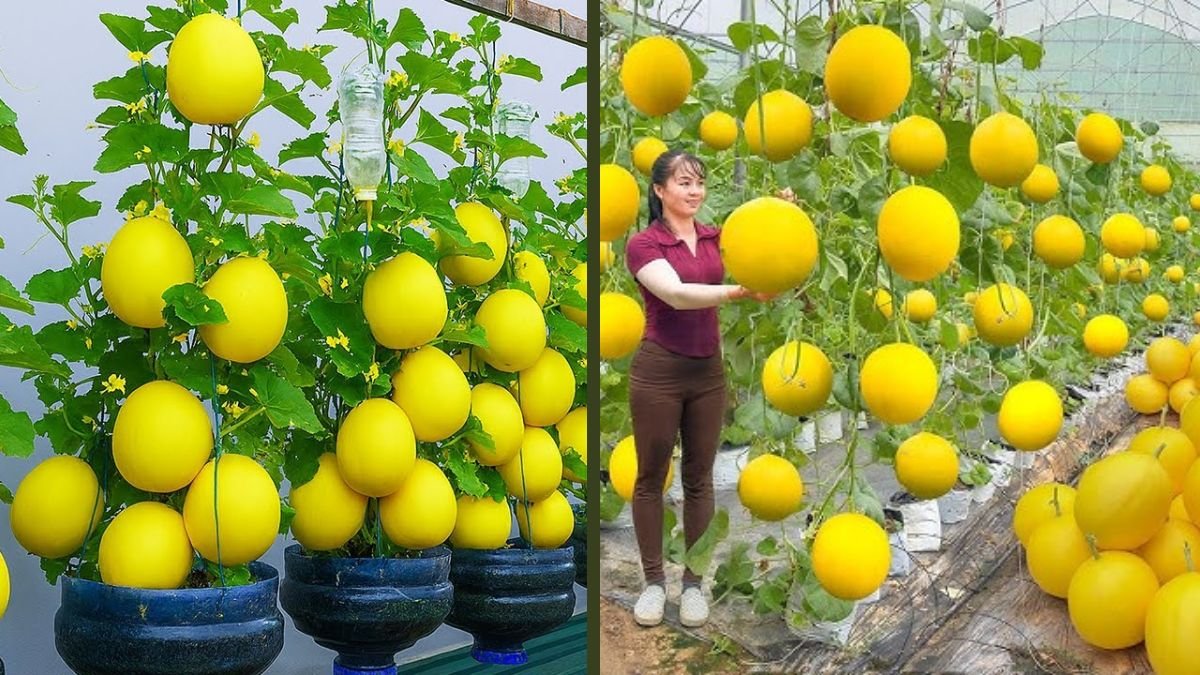
Introduction to Bucket-Grown Yellow Melons
Yellow melons are sweet, refreshing, and rich in nutrients. Many gardeners think melons need large fields, but they can grow well in buckets. Bucket gardening makes melon growing possible in small homes. With proper care, buckets can produce juicy fruits. This method is ideal for balconies and terraces. Controlled soil and watering improve fruit quality. Bucket growing reduces pests and diseases. Anyone can grow melons at home with this technique.
Why Buckets Are Perfect for Melons
Buckets provide deep root space. They are easy to move. Drainage can be controlled. Soil quality stays consistent. Buckets reduce soil-borne pests. Vertical support is easy to add. Buckets suit small spaces perfectly. This method increases success rate.
Choosing the Right Melon Variety
Select compact or bush varieties. Avoid large sprawling types. Choose disease-resistant seeds. Fast-maturing varieties work best. Proper variety ensures good fruit size. Correct selection improves sweetness. Variety choice affects yield and taste.
Preparing Buckets for Planting
Use buckets with drainage holes. Clean thoroughly before use. Buckets should be at least fifteen inches deep. Place stones at the bottom. Ensure stable placement. Proper preparation prevents root rot. Bucket setup supports healthy growth.
Soil Mix for Sweet Melons
Use fertile, well-drained soil. Mix compost, garden soil, and cocopeat. Add sand for drainage. Soil must be loose. Nutrient-rich soil improves sweetness. Good soil supports strong vines. Soil quality affects fruit size.
Seed Sowing and Germination
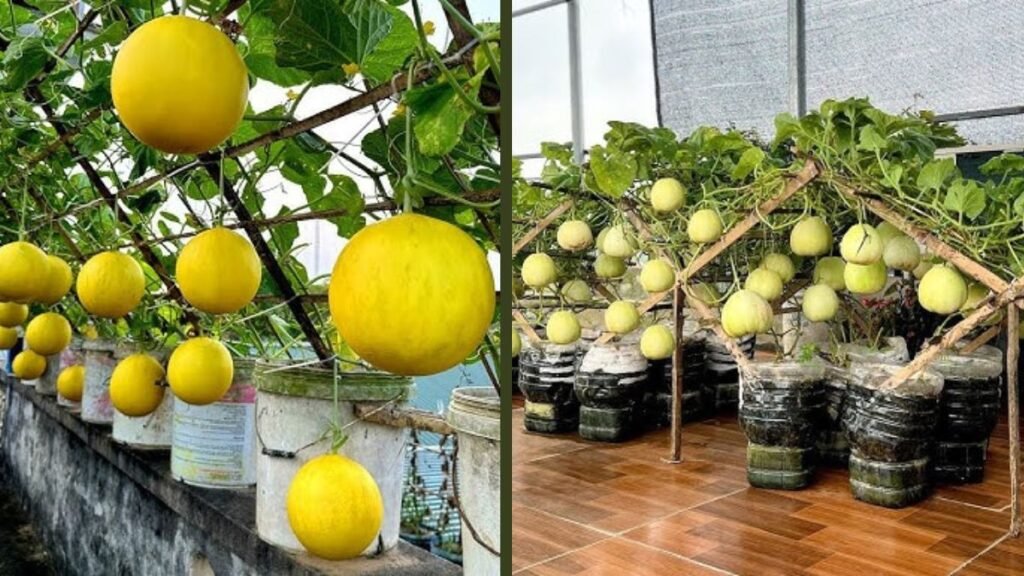
Sow seeds directly in buckets. Plant two seeds per bucket. Cover lightly with soil. Keep soil moist. Germination occurs within a week. Thin to one healthy plant. Proper sowing ensures strong growth.
Sunlight Requirements
Melons need full sunlight. Six to eight hours is ideal. Place buckets in sunny locations. Rotate if necessary. Insufficient light reduces sweetness. Sunlight improves fruit development. Proper exposure is essential.
Watering Techniques
Water deeply but infrequently. Avoid waterlogging. Consistent moisture is important. Reduce watering during fruit ripening. Morning watering is best. Proper watering improves flavor. Balanced moisture prevents cracking.
Fertilization Schedule
Melons are heavy feeders. Use organic compost. Apply liquid fertilizer every two weeks. Potassium improves sweetness. Avoid excess nitrogen. Balanced feeding supports fruiting. Nutrition affects quality and yield.
Training and Supporting Vines
Use vertical trellises. Tie vines gently. Support developing fruits. Vertical growth saves space. Improves airflow and sunlight. Prevents fruit rot. Proper support increases yield.
Pollination Techniques
Hand pollination improves fruit set. Identify male and female flowers. Pollinate in early morning. This ensures better fruit development. Pollination increases yield. Important for container gardening.
Fruit Development Stage
Reduce watering slightly. Support fruits properly. Avoid moving buckets. Healthy leaves feed fruits. Care during this stage is crucial. Proper management improves sweetness.
Pest and Disease Control
Use neem oil regularly. Remove damaged leaves. Maintain cleanliness. Good airflow prevents diseases. Early detection saves fruits. Organic methods protect quality.
Harvesting Yellow Melons
Harvest when skin turns yellow. Check aroma and softness. Cut fruits carefully. Avoid pulling vines. Proper harvesting ensures sweetness. Timely picking improves taste.
Post-Harvest Care
Store melons in cool place. Consume fresh for best flavor. Avoid stacking. Proper handling prevents damage. Homegrown melons taste superior.
Melon Growth Monitoring Table
| Factor | Best Practice | Benefit |
|---|---|---|
| Soil | Fertile and loose | Sweet fruits |
| Water | Balanced | Juicy melons |
| Sunlight | Full sun | High sugar |
| Support | Vertical | Healthy vines |
Common Mistakes to Avoid
Overwatering reduces sweetness. Poor sunlight lowers yield. Lack of pollination causes fruit drop. Weak support damages vines. Avoid these mistakes. Awareness ensures success.
Benefits of Bucket Melon Gardening
Fresh and chemical-free fruits. Space-saving method. Easy maintenance. High success rate. Cost-effective gardening. Ideal for beginners.
Seasonal Growing Tips
Grow melons in warm seasons. Protect from heavy rain. Adjust watering in summer. Seasonal planning improves results.
Maximizing Fruit Sweetness
Limit excess water during ripening. Ensure full sunlight. Balanced fertilization. Proper support. Healthy plants produce sweeter fruits.
Final Conclusion
Growing yellow melons in buckets is simple and highly rewarding. With proper soil, sunlight, watering, and care, even small spaces can produce sweet, juicy fruits. This method makes melon gardening accessible to everyone. Bucket gardening proves that lack of land is not a limitation.