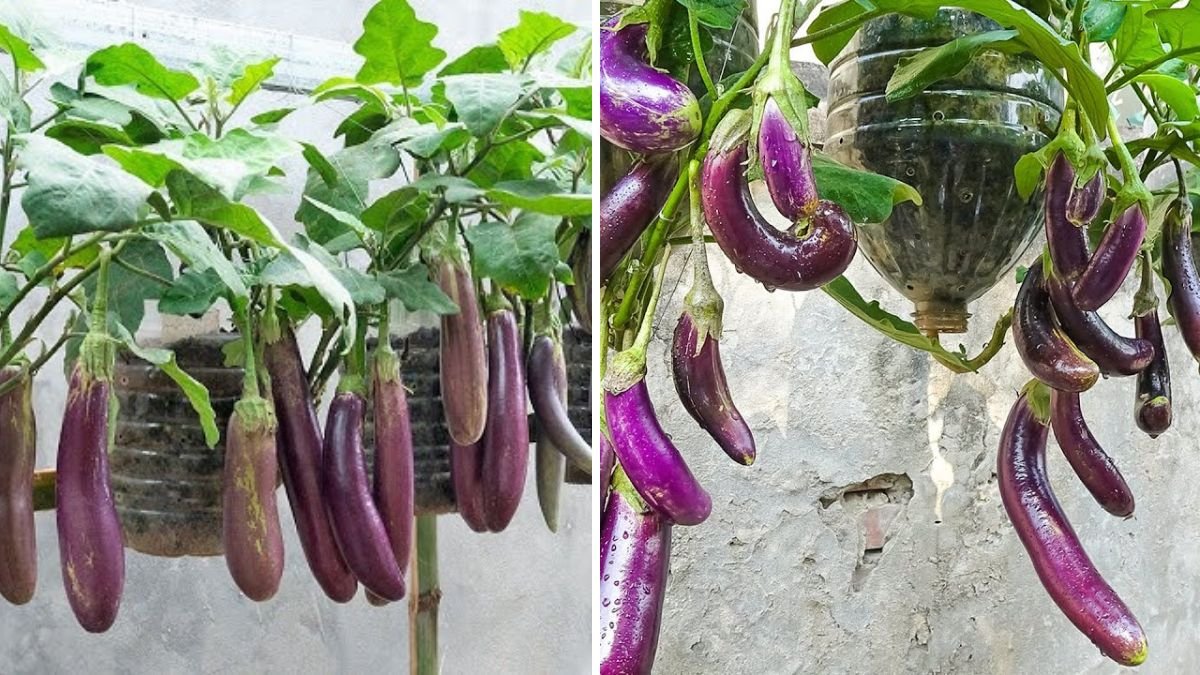
Eggplants (also known as brinjals) are a favorite in many kitchens worldwide. They are nutritious, versatile, and can thrive in home gardens if cared for properly. However, one of the biggest challenges home gardeners face is providing consistent water and nutrients to eggplants. Uneven watering can lead to poor growth, flowering issues, and smaller fruit yields.
The plastic bottle drip method is a simple, cost-effective solution that ensures slow, steady irrigation and optimal plant health. With this method, your eggplants can produce more flowers, healthier fruits, and higher yields—even in small spaces like balconies or terraces.
This guide will cover everything from setting up your drip system to caring for eggplants and maximizing productivity.
Why Use the Plastic Bottle Drip Method?
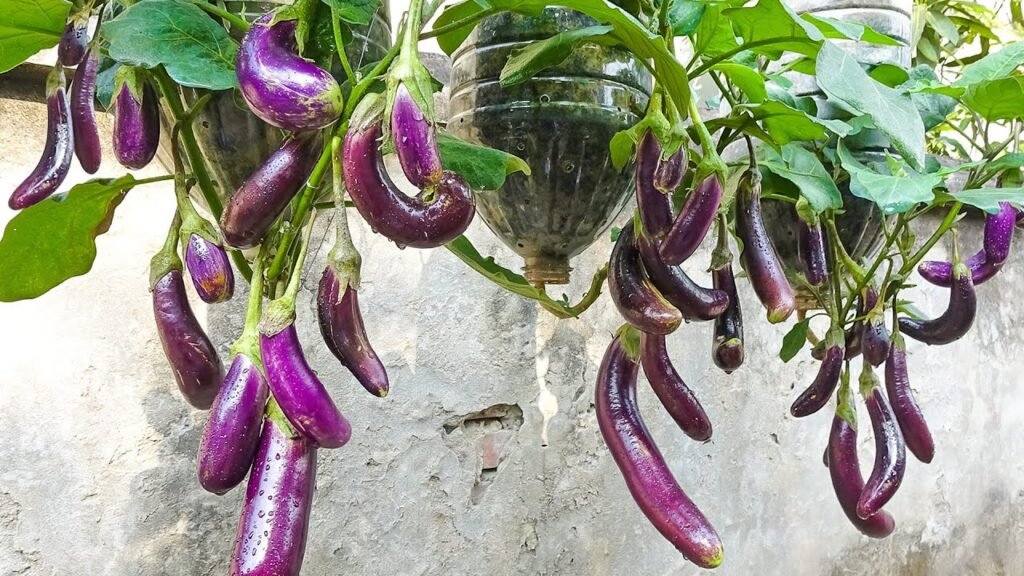
The plastic bottle drip system is an innovative way to provide slow, consistent watering to your plants. Here’s why it works so well for eggplants:
- Consistent Moisture: Prevents overwatering or drought stress
- Nutrient Efficiency: Fertilizer in water is absorbed gradually
- Reduces Leaf Diseases: Water goes directly to roots, keeping foliage dry
- Saves Water: Uses significantly less water than traditional watering
- Easy and Affordable: Requires only recycled plastic bottles
By adopting this method, you can boost eggplant growth and fruit production without complex irrigation setups.
Step 1: Selecting Eggplant Varieties
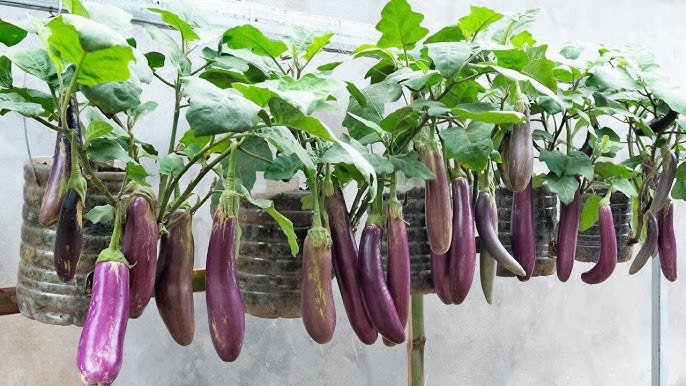
Choose eggplant varieties suited to your climate and container size:
- Classic Purple Eggplants: Large fruits, common for cooking
- Baby or Dwarf Eggplants: Compact, ideal for small pots or balconies
- Round Eggplants: Great for stuffing and curries
- Striped or Specialty Varieties: Attractive for unique dishes
Selecting the right variety ensures better flowering, fruiting, and adaptability to your growing conditions.
Step 2: Choosing Containers and Soil
Eggplants grow best in well-drained, nutrient-rich soil. You can plant them in:
- Large pots or plastic containers
- Recycled buckets
- Grow bags or terrace beds
Soil Mix
- 50% garden soil or topsoil
- 30% compost or organic matter
- 20% sand or cocopeat for drainage
Tips
- Fill containers ¾ full, leaving space for watering
- Mix soil thoroughly to ensure aeration
- Avoid compacting soil, allowing roots to expand
Healthy soil ensures strong roots, lush foliage, and robust fruit development.
Step 3: Preparing the Plastic Bottle Drip System
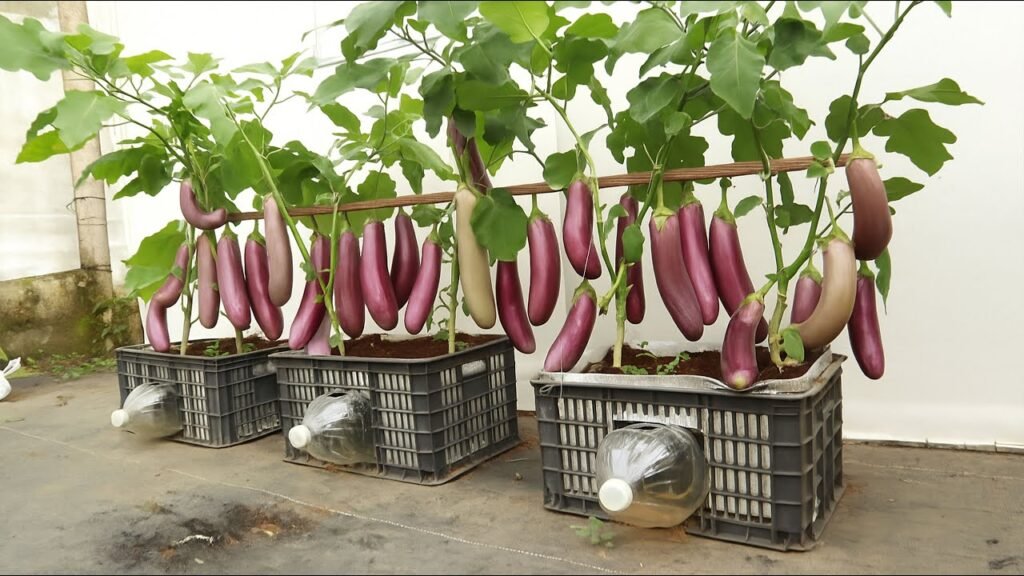
The heart of this method is a recycled plastic bottle that slowly delivers water to the plant roots.
Materials Needed
- 1–2 liter plastic bottle per eggplant
- Pin or small nail to make tiny holes in the bottle cap
- Sharp knife for cutting holes (optional)
- String or stick to secure the bottle above soil
Setting Up
- Wash bottles thoroughly
- Fill each bottle with water or diluted organic fertilizer solution
- Make 2–5 tiny holes in the cap to allow slow dripping
- Place the bottle upside down next to the plant, burying the cap slightly in soil
- Optionally, secure with a stick to prevent tipping
This system provides steady hydration directly to roots, which is crucial for eggplants.
Step 4: Planting Eggplants
Eggplants can be grown from seeds or seedlings:
- Seeds: Start indoors in seed trays, transplant after 4–6 weeks
- Seedlings: Directly plant in prepared containers or soil
Planting Tips
- Space plants 18–24 inches apart for large varieties
- Place seedlings gently in soil, cover roots, and water immediately
- Mulch around the base to retain moisture
Proper planting sets the stage for healthy growth and abundant fruiting.
Step 5: Watering and Drip Maintenance
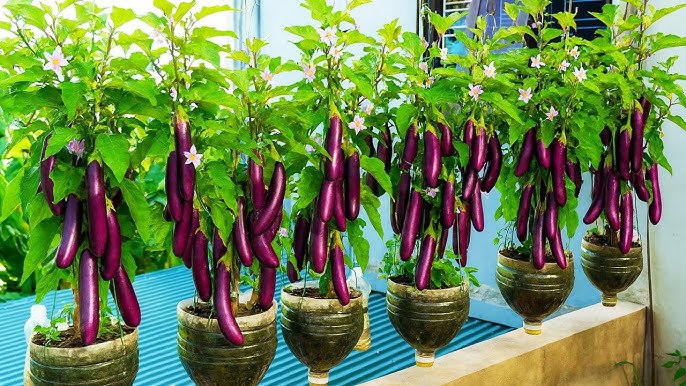
Eggplants need regular, consistent watering for optimal growth. The plastic bottle drip system makes this easy.
Watering Guidelines
- Keep soil evenly moist, not soggy
- Refill bottles as water drains completely
- Adjust holes if dripping is too fast or too slow
Fertilizer in Drip Water
- Mix liquid organic fertilizer in water bottles
- Provides continuous nutrient supply
- Encourages strong flowering and large fruits
With this method, water and nutrients reach roots gradually, preventing stress and improving yield.
Step 6: Supporting Eggplant Plants
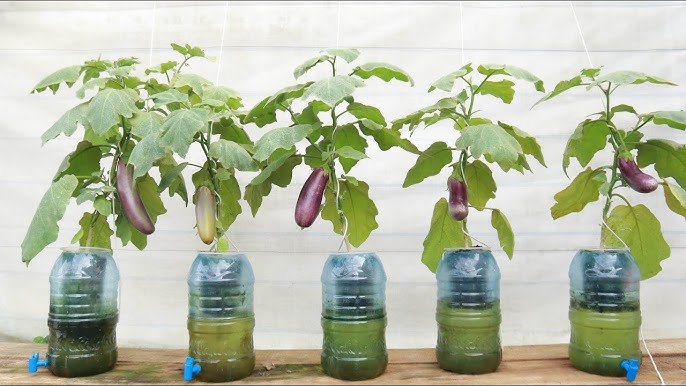
Eggplants are bushy plants that may need support as fruits develop:
- Use bamboo sticks or small trellises to support stems
- Tie stems gently to prevent breakage
- Prune lower leaves to improve airflow and reduce disease risk
Proper support ensures healthy growth and less damage from wind or heavy fruits.
Step 7: Sunlight and Location
Eggplants thrive in full sunlight:
- Provide at least 6–8 hours of direct sunlight per day
- For balcony or terrace gardens, place containers in sunny spots
- Rotate pots periodically for even growth and flowering
Sunlight is essential for strong stems, vibrant flowers, and better fruit set.
Step 8: Pollination for Maximum Fruit Production
Eggplants rely on flowers to produce fruits. In small setups, natural pollinators may be limited:
- Use a soft brush or gently shake flowers to transfer pollen
- Hand pollination increases fruit set and yield
- Pollinate in the morning when flowers are fresh for best results
Effective pollination ensures more flowers turn into healthy fruits.
Step 9: Pest and Disease Management
Even with proper watering, eggplants can face pests and diseases:
- Common pests: aphids, whiteflies, spider mites
- Diseases: leaf spot, fungal infections
- Solutions: organic sprays (neem oil, garlic solution), regular pruning, proper airflow
Vigilant care ensures strong, productive plants.
Step 10: Harvesting Eggplants
Eggplants are usually ready for harvest 8–12 weeks after planting, depending on variety.
Harvesting Tips
- Pick fruits when skin is shiny, firm, and fully colored
- Avoid overripe fruits, which can reduce overall plant productivity
- Cut stems gently to prevent damage
- Harvest regularly to encourage new fruiting
Consistent harvesting results in more flowers, better fruit quality, and continuous production.
Benefits of the Plastic Bottle Drip Method
- Saves Water: Slow, targeted irrigation reduces wastage
- Boosts Yield: Steady water and nutrients promote bigger fruits
- Reduces Disease: Keeps leaves dry, preventing fungal issues
- Cost-Effective: Uses recycled bottles and simple tools
- Ideal for Small Spaces: Perfect for balconies, terraces, or container gardens
This method makes eggplant gardening easy, efficient, and rewarding.
Creative Ideas for Bottle Drip Gardening
- Stacked Bottle Systems: Water multiple eggplants from a single reservoir
- Vertical Drip Gardens: Place plants in tiers with bottles above each row
- Mixed Container Gardens: Grow eggplants with peppers, tomatoes, or herbs in the same system
- Fertilizer Infusion: Use diluted organic fertilizers in bottles for continuous nutrition
These ideas allow you to maximize space and production while keeping care simple.
Final Thoughts: Make Eggplants Flourish at Home
The plastic bottle drip method is a game-changer for home gardeners. By using recycled bottles, you provide consistent water and nutrients directly to roots, boosting flowering, fruit set, and overall yield. This simple system is affordable, sustainable, and highly effective, making it ideal for beginners or urban gardeners.
With the right variety, proper care, and a little patience, your eggplants can produce more, larger, and healthier fruits, all thanks to a humble plastic bottle. Turn waste into productivity and enjoy homegrown, delicious eggplants all season long.