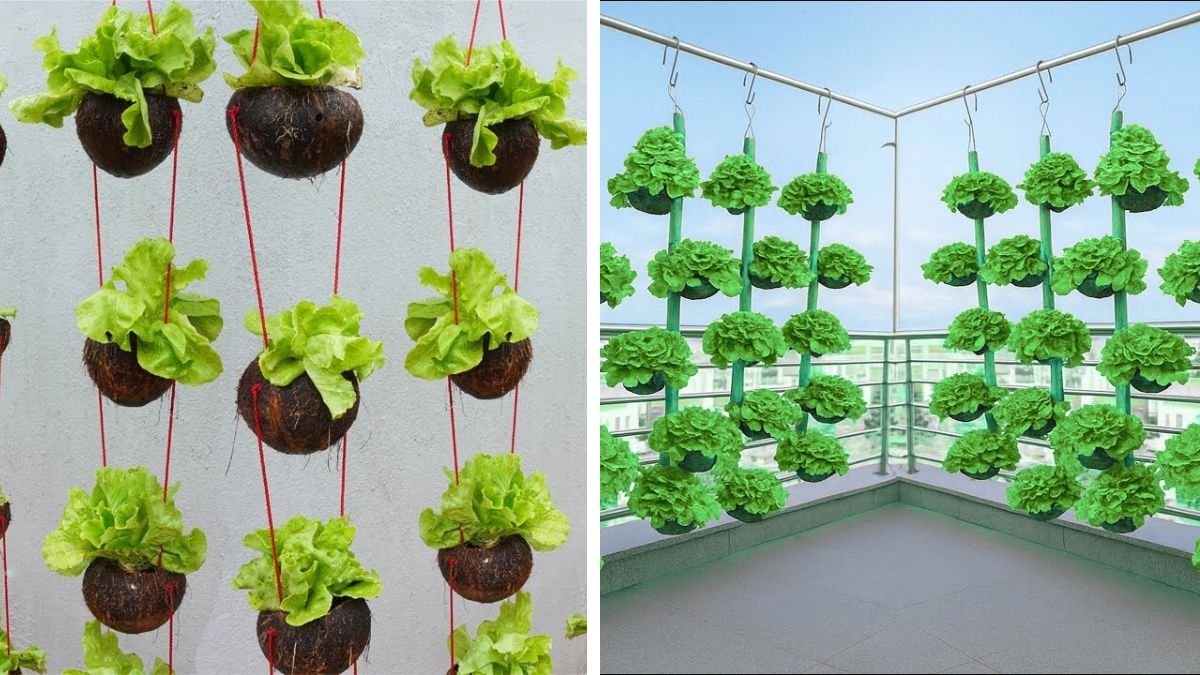
Introduction: Why Coconut Shell Gardening Is Trending
Coconut shells are often treated as waste, but they are perfect for gardening. Using coconut shells to grow lettuce is both eco-friendly and attractive. Lettuce has shallow roots and grows quickly. Coconut shells provide natural drainage and insulation. This method suits balconies and small spaces. It reduces plastic use. Gardening becomes sustainable and decorative. This guide explains how to turn coconut shells into a productive lettuce garden.
Advantages of Growing Lettuce in Coconut Shells
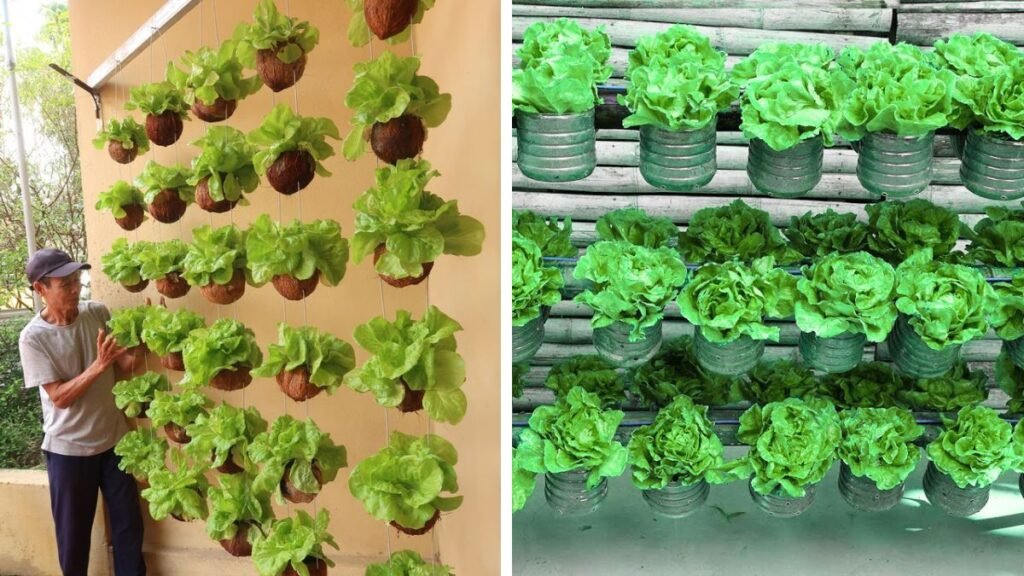
Coconut shells are biodegradable and natural. They regulate soil temperature well. Drainage is excellent, preventing root rot. Shells are lightweight and easy to move. They enhance balcony aesthetics. Lettuce grows clean and healthy. Pest issues are minimal. This method supports sustainable gardening.
Best Lettuce Varieties for Coconut Shells
Leaf lettuce varieties grow best. Butterhead lettuce adapts well. Loose-leaf types mature quickly. Avoid iceberg lettuce due to size. Heat-tolerant varieties suit balconies. Choose fast-growing types. Healthy seeds ensure success. Proper variety selection improves harvest.
Preparing Coconut Shells for Planting
Cut coconut shells into halves. Clean thoroughly to remove residue. Make small drainage holes at the bottom. Smooth sharp edges. Allow shells to dry. Proper preparation prevents mold. Strong shells support soil. Prepared shells last multiple seasons.
Soil Mix for Lettuce in Coconut Shells
Use light, nutrient-rich soil. Mix garden soil, compost, cocopeat, and sand. Lettuce prefers moisture-retentive but airy soil. Organic matter improves leaf growth. Avoid heavy soil. Healthy soil supports fast growth. Proper mix ensures tender leaves. Soil quality affects taste.
Planting Lettuce in Coconut Shells
Sow seeds directly or transplant seedlings. Plant shallowly. Cover lightly with soil. Water gently after planting. Avoid overcrowding plants. Proper spacing improves airflow. Gentle planting prevents stress. Healthy starts ensure quick growth.
Watering Requirements
Lettuce needs consistent moisture. Water lightly and frequently. Coconut shells drain quickly. Check soil daily. Morning watering is best. Avoid wetting leaves at night. Balanced watering prevents bitterness. Proper hydration ensures tender leaves.
Sunlight Needs
Lettuce prefers partial sunlight. Four to five hours of sun is sufficient. Morning sunlight works best. Protect from harsh afternoon heat. Move shells if necessary. Partial shade prevents bolting. Proper light improves leaf color. Sun management ensures quality harvest.
Fertilizing Lettuce Naturally
Feed lettuce weekly with liquid compost. Organic fertilizers work best. Nitrogen promotes leafy growth. Avoid overfeeding. Balanced nutrition prevents bitterness. Organic feeding improves flavor. Regular feeding increases yield. Healthy plants grow faster.
Temperature and Seasonal Care
Lettuce grows best in cool temperatures. Protect plants from extreme heat. Use shade cloth if needed. Coconut shells insulate roots. Cool nights improve leaf quality. Seasonal awareness improves results. Proper care extends harvest. Climate management is essential.
Pest and Disease Control
Lettuce pests include aphids and snails. Inspect leaves regularly. Handpick pests when possible. Neem oil spray is effective. Good airflow reduces disease. Remove affected leaves immediately. Healthy plants resist pests. Preventive care protects crops.
Supporting and Arranging Coconut Shells
Arrange shells on racks or hang them. Ensure stability. Proper spacing improves airflow. Vertical arrangements save space. Easy access simplifies care. Organized layouts enhance appearance. Balcony gardening becomes decorative. Good arrangement improves growth.
Harvesting Lettuce Leaves
Harvest outer leaves first. Avoid cutting the center. Continuous harvesting encourages regrowth. Harvest in the morning. Use clean scissors. Proper harvesting extends production. Fresh leaves taste better. Correct cutting protects plants.
Regrowing Lettuce for Continuous Harvest
After harvesting leaves, continue watering and feeding. New leaves grow quickly. Coconut shells support regrowth. Avoid overharvesting. Healthy roots ensure multiple harvests. Continuous care ensures steady supply. Regrowing saves money. Sustainable gardening benefits homes.
Growth Overview Table
| Growth Stage | Time Period | Care Focus |
|---|---|---|
| Germination | One week | Moist soil |
| Leaf Growth | Two to three weeks | Feeding |
| Harvest | Continuous | Leaf cutting |
| Regrowth | Ongoing | Water & care |
Common Mistakes to Avoid
Overwatering causes root problems. Too much sun causes bolting. Crowding limits airflow. Skipping feeding slows growth. Using heavy soil reduces yield. Poor drainage leads to rot. Avoiding mistakes ensures success. Proper care gives tender lettuce.
Why Coconut Shell Gardening Works
Natural drainage improves root health. Eco-friendly materials support sustainability. Lightweight shells suit balconies. Temperature regulation benefits plants. Visual appeal enhances spaces. Controlled care improves growth. Coconut shells are versatile. Results are reliable.
Benefits of Balcony Lettuce Gardening
Fresh lettuce anytime. No garden land required. Chemical-free produce. Cost-effective growing. Eco-friendly recycling. Decorative gardening method. Ideal for beginners. Encourages healthy eating.
Final Conclusion
Turning coconut shells into a lettuce garden is a smart, sustainable solution for balcony gardeners. With proper care, simple shells can produce fresh, tender lettuce continuously. This method saves space, reduces waste, and enhances home aesthetics. Perfect for urban living, coconut shell gardening brings nature closer to home.