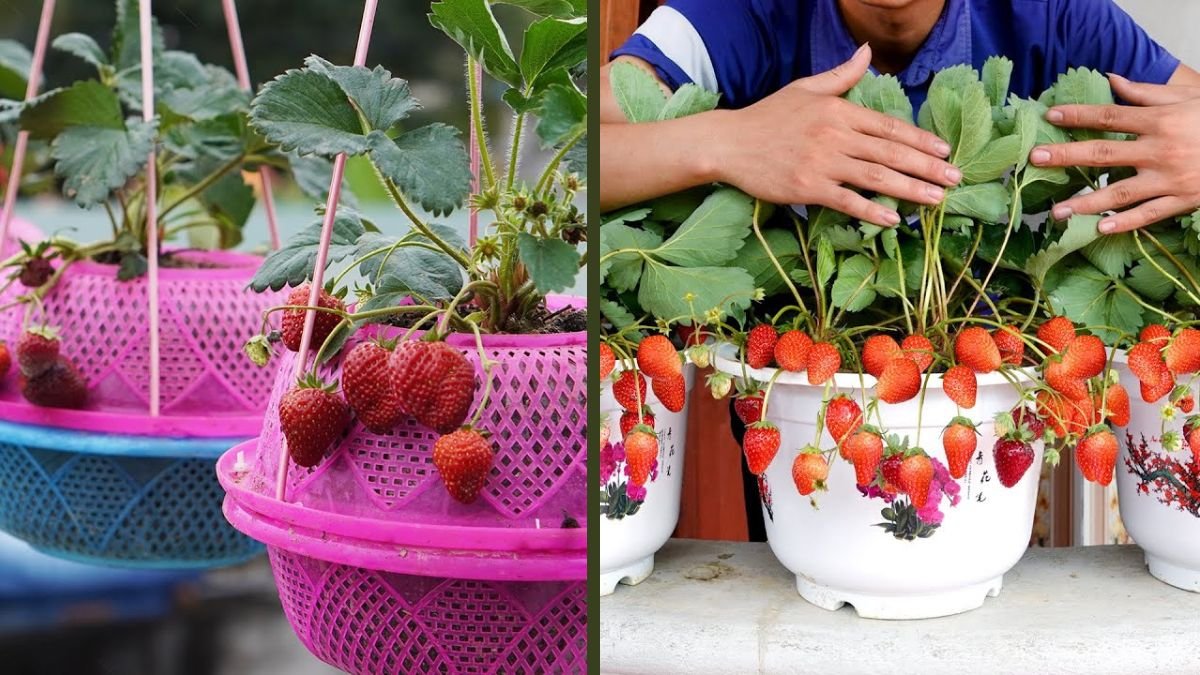
Introduction: A Small Balcony with a Big Dream
Living in a small apartment never stopped my love for gardening. I always dreamed of harvesting fresh fruits at home, but space was a big challenge. One day, I decided to experiment with strawberries on my tiny balcony. I had no garden bed, no backyard, and very limited sunlight. Still, I believed strawberries could grow with the right care. This decision completely transformed my balcony into a green paradise. Today, it produces bowls of sweet, juicy strawberries every season.
Why I Chose Strawberries for Balcony Gardening
Strawberries are compact plants with shallow roots. They grow well in containers and do not need deep soil. Their fast growth and quick harvest make them perfect for beginners. Strawberries also look beautiful with green leaves and red fruits. My family loves eating them fresh, making them a rewarding choice. They thrive well in balconies with proper sunlight. This made strawberries my first fruit gardening success.
Understanding My Balcony Conditions
Before planting, I studied my balcony carefully. It received about five to six hours of sunlight daily. Wind movement was good, which helped airflow. The balcony size was small, so space optimization was necessary. Temperature stayed moderate most of the year. These conditions were suitable for strawberries with a little adjustment. Understanding the environment helped me avoid mistakes later.
Selecting the Right Strawberry Variety
Choosing the right variety changed everything. I selected everbearing strawberry varieties because they produce fruits continuously. These plants give multiple harvests instead of just one season. They adapt well to containers and balconies. Compact growth made them easier to manage. High-quality runners ensured healthy plants. This step laid the foundation for success.
Choosing Containers for Maximum Yield
I used medium-sized pots and hanging containers. Containers had proper drainage holes to avoid waterlogging. Lightweight pots made rearranging easy. Hanging pots saved floor space and improved airflow. Each container allowed enough space for roots to spread. Good container selection improved growth and fruit quality.
Preparing the Perfect Soil Mix
Strawberries need loose and nutrient-rich soil. I mixed garden soil, compost, and cocopeat evenly. Vermicompost was added for organic nutrition. The soil remained airy and well-drained. Healthy soil encouraged strong roots and faster growth. This mix also improved moisture retention. Good soil made a noticeable difference in plant health.
Planting Strawberries the Right Way
Planting depth was very important. I kept the crown slightly above soil level. Roots were spread gently to avoid damage. Plants were spaced properly to allow airflow. After planting, I watered lightly. I kept plants in shade for two days. This prevented transplant shock and helped quick establishment.
Managing Sunlight on a Small Balcony
Sunlight management was crucial. I placed pots where they received morning sun. Hanging baskets were rotated regularly. This ensured even growth on all sides. Insufficient light reduces sweetness and yield. Adequate sunlight improved flowering and fruit color. Balanced exposure resulted in better harvests.
Watering Strategy for Juicy Strawberries
Strawberries need consistent moisture. I watered daily during hot days. In cooler weather, watering was reduced. Excess water drained out easily. Overwatering was avoided to prevent root rot. Early morning watering worked best. Proper watering kept fruits juicy and sweet.
Organic Fertilization for Continuous Harvest
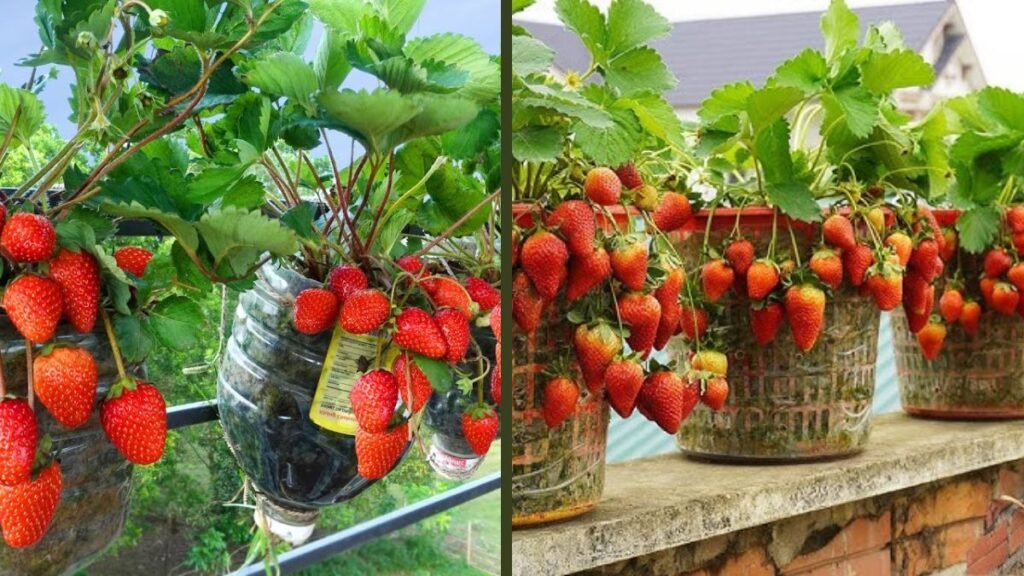
I used liquid compost every ten days. During flowering, potassium-rich organic fertilizer was applied. Nitrogen was kept moderate to avoid excessive leaves. Organic feeding improved fruit size and taste. Regular feeding ensured continuous flowering. Balanced nutrition resulted in repeated harvests.
Pollination Tips for Better Fruit Set
Strawberries self-pollinate, but airflow helps. I gently shook plants during flowering. This improved pollination. More flowers turned into fruits. Proper pollination gave well-shaped strawberries. This simple step increased yield significantly.
Pruning and Runner Management
Strawberries produce runners that drain energy. I removed excess runners regularly. Old and yellow leaves were trimmed. This improved airflow and reduced disease. Pruning helped plants focus on fruit production. Healthy plants produced bigger berries.
Pest and Disease Prevention
Balcony gardening reduced pest problems naturally. Neem oil spray was used weekly. Infected leaves were removed immediately. Good airflow prevented fungal diseases. Clean surroundings kept plants healthy. Prevention worked better than treatment.
Mulching for Moisture and Clean Fruits
I used dry straw and coco husk mulch. Mulching retained soil moisture. It protected fruits from soil contact. Temperature remained stable. Mulching improved fruit cleanliness and quality.
Harvesting Sweet Strawberries
Strawberries were harvested when fully red. Morning harvesting preserved freshness. Fruits were handled gently. Regular picking encouraged new fruits. Fresh harvest tasted incredibly sweet.
Storage and Usage
Fresh strawberries were eaten immediately. Some were refrigerated for short periods. Washing was done only before use. Homegrown strawberries had superior flavor. Storage was minimal due to high demand at home.
Common Mistakes I Avoided
Overwatering was strictly avoided. Plants were not overcrowded. Sunlight was carefully managed. Poor soil was never used. Avoiding these mistakes ensured success.
Table: Balcony Strawberry Growing Guide
Container size – Medium depth with good drainage
Sunlight – Five to six hours daily
Soil mix – Loose, compost-rich, airy
Watering – Regular but controlled
Fertilizer – Organic liquid feed
Harvest cycle – Continuous
Conclusion: From Tiny Balcony to Strawberry Paradise
My small balcony proved that space is not a limitation. With proper planning and care, strawberries thrive beautifully. This journey was rewarding and inspiring. Anyone can turn a small balcony into a strawberry paradise. All it takes is patience and love for gardening.