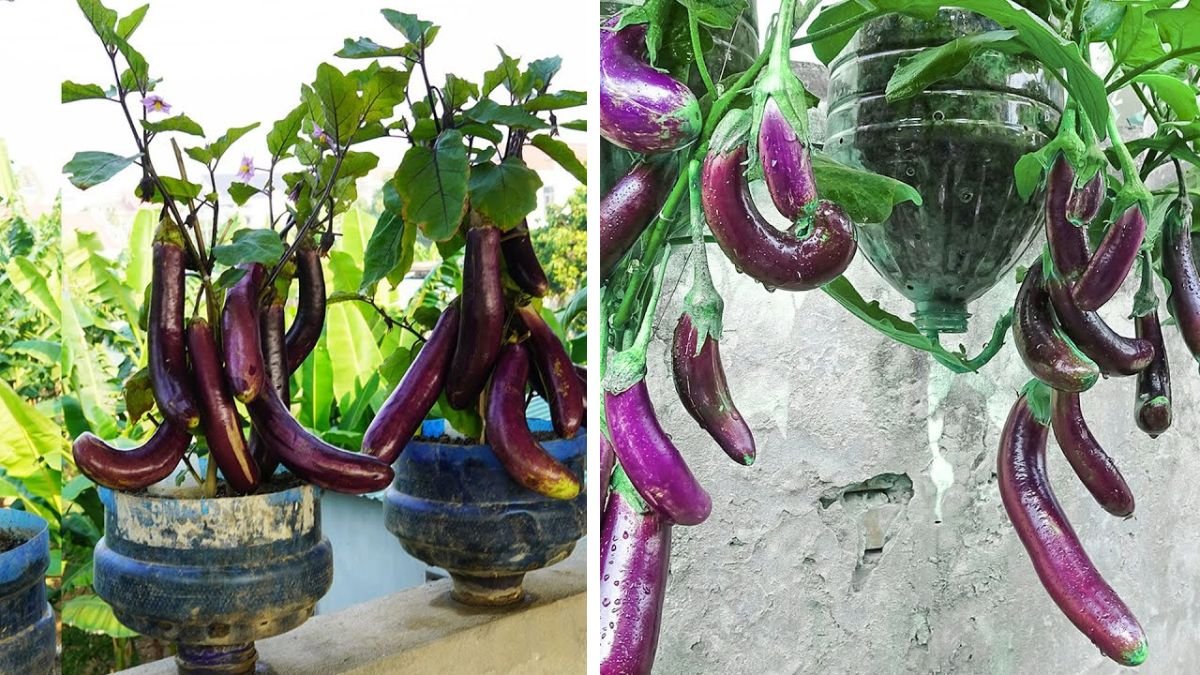
Introduction: Turning Waste Into Fresh Food
Many people throw away old plastic buckets without realizing their value. With a little creativity, an old bucket can become a powerful gardening tool. Eggplants are perfect for container gardening. They grow well in limited spaces when given proper care. This method is ideal for balconies, terraces, and rooftops. Even beginners can succeed easily. Growing food from waste containers feels rewarding. This technique saves money and space while producing healthy vegetables.
Why Eggplants Are Ideal for Bucket Gardening
Eggplants have strong but compact root systems. They adapt well to containers. Unlike spreading vegetables, eggplants grow vertically. They respond quickly to good nutrition and sunlight. One plant can produce many fruits. Bucket gardening reduces soil-borne diseases. This makes eggplants safer and easier to manage. Their adaptability makes them perfect for small homes.
Choosing the Right Old Bucket
Not every bucket is suitable for planting. The bucket should be strong and deep. A minimum depth of eighteen to twenty inches works best. Cracks must be avoided. Several drainage holes should be made at the bottom. Proper drainage prevents root rot. Cleaning the bucket thoroughly is important. This step ensures a healthy start for the plant.
Preparing the Perfect Soil Mix
Soil quality determines success in container gardening. A loose and fertile mix is required. Garden soil, compost, cocopeat, and vermicompost are mixed well. Sand improves drainage and root airflow. Heavy clay soil should be avoided. Rich soil supports strong root growth. Healthy roots lead to more flowers and fruits. This preparation step is essential.
Selecting Healthy Eggplant Seeds or Seedlings
Good planting material ensures better results. Hybrid or local varieties can be chosen. Seedlings save time and effort. If using seeds, soak them overnight. This improves germination speed. Healthy seedlings establish quickly. Strong starts reduce plant stress. This choice directly impacts yield and growth speed.
Planting Eggplants in the Bucket
Only one eggplant should be planted per bucket. Overcrowding reduces yield. The seedling is placed gently in the center. Soil is pressed lightly around roots. Immediate watering helps settle the soil. The bucket is kept in shade for two days. This reduces transplant shock. After recovery, growth begins rapidly.
Sunlight Needs for Bucket Eggplants
Eggplants love sunlight. Six to eight hours of direct sun is ideal. The bucket should be placed in an open area. Poor sunlight causes weak plants and fewer fruits. Regular rotation ensures even growth. Adequate sunlight improves flowering. Bright light results in glossy, healthy eggplants. This factor cannot be ignored.
Watering Technique for Best Results
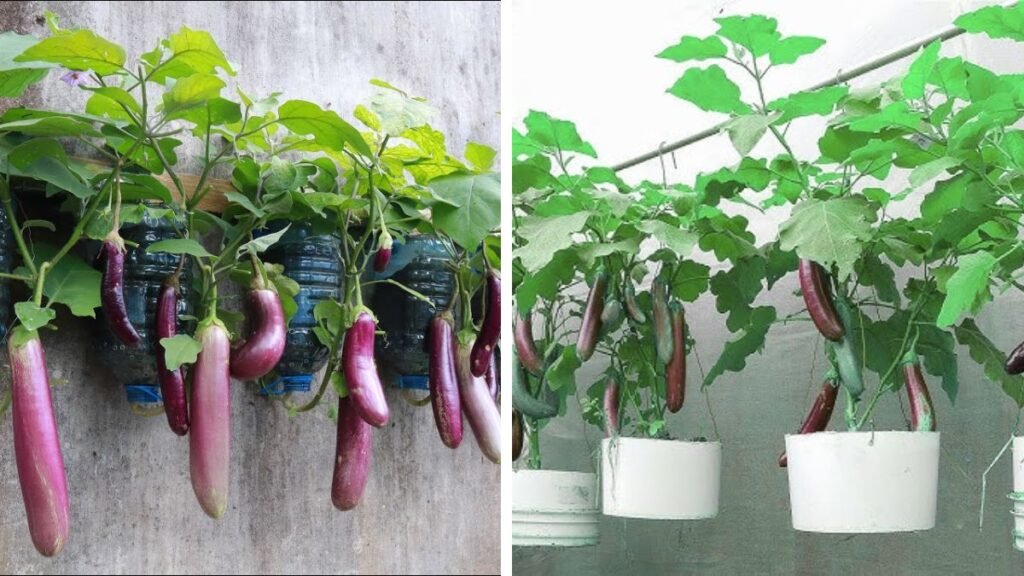
Consistent watering is important. The soil should stay moist but not soggy. Deep watering encourages strong roots. Excess water must drain freely. During hot weather, watering frequency increases. Dry soil leads to flower drop. Balanced watering keeps plants stress-free. This directly increases fruit production.
Fertilizing for Continuous Harvest
Eggplants are heavy feeders. Organic compost is added every two weeks. Liquid fertilizers improve nutrient absorption. Nitrogen helps leafy growth. Phosphorus supports flowering. Potassium improves fruit size. Balanced feeding ensures continuous harvest. Organic nutrition keeps soil healthy long term.
Supporting the Plant as It Grows
As eggplants grow taller, support is needed. A wooden stick or bamboo pole works well. The stem is tied loosely. Support prevents bending and breakage. Heavy fruits need stability. This helps the plant focus energy on fruiting. Proper support improves overall plant health.
Flowering and Fruit Formation
Healthy plants produce many flowers. Not all flowers turn into fruits naturally. Adequate nutrition and watering improve fruit set. Gentle shaking helps pollination. Avoid stress during flowering. Successful flowering leads to continuous harvesting. Observing this stage is very satisfying.
Managing Pests Naturally
Container gardening reduces pest problems. Neem oil spray controls insects naturally. Regular leaf inspection is important. Removing affected leaves prevents spread. Avoid chemical pesticides. Healthy soil builds plant immunity. Natural methods keep produce safe for family consumption.
Harvesting Eggplants at the Right Time
Eggplants should be harvested when shiny and firm. Overripe fruits become bitter. Regular harvesting encourages more production. Cutting the fruit carefully avoids damage. Freshly harvested eggplants taste better. Timely harvesting improves plant productivity. This is a rewarding stage for gardeners.
Yield Expectation From One Bucket
One bucket can produce many eggplants. Yield depends on care and variety. Regular feeding increases production. Even small spaces can provide continuous harvest. This proves bucket gardening efficiency. Many gardeners are surprised by the output. This method maximizes space usage.
Taste and Quality of Homegrown Eggplants
Homegrown eggplants are fresh and chemical-free. Texture is tender and flavorful. Cooking quality is excellent. Family members notice the difference. Growing your own food improves diet quality. This adds emotional satisfaction to gardening. Taste is always superior to store-bought produce.
Common Mistakes to Avoid
Using small buckets restricts roots. Poor drainage causes root rot. Inconsistent watering stresses plants. Ignoring sunlight reduces yield. Overfertilizing damages roots. Avoiding these mistakes ensures success. Learning from errors improves gardening skills.
Table: Bucket Eggplant Growing Guide
Container depth – Minimum eighteen to twenty inches
Sunlight requirement – Six to eight hours daily
Soil type – Loose, fertile, and well-drained
Watering frequency – Regular and deep
Fertilization – Organic compost and liquid feed
Harvest period – Sixty to ninety days
Why This Method Works in Small Spaces
Controlled soil improves nutrition. Limited space reduces competition. Easy pest control is possible. Mobility allows sunlight adjustment. This makes bucket gardening efficient. Even apartments can produce vegetables. Space limitation is no longer a barrier.
Conclusion
Old buckets can transform into productive gardens. Growing eggplants this way is simple and effective. Even small spaces can yield fresh vegetables. This method is budget-friendly and beginner-friendly. Anyone can start today with minimal resources. Bucket gardening truly changes urban food production.