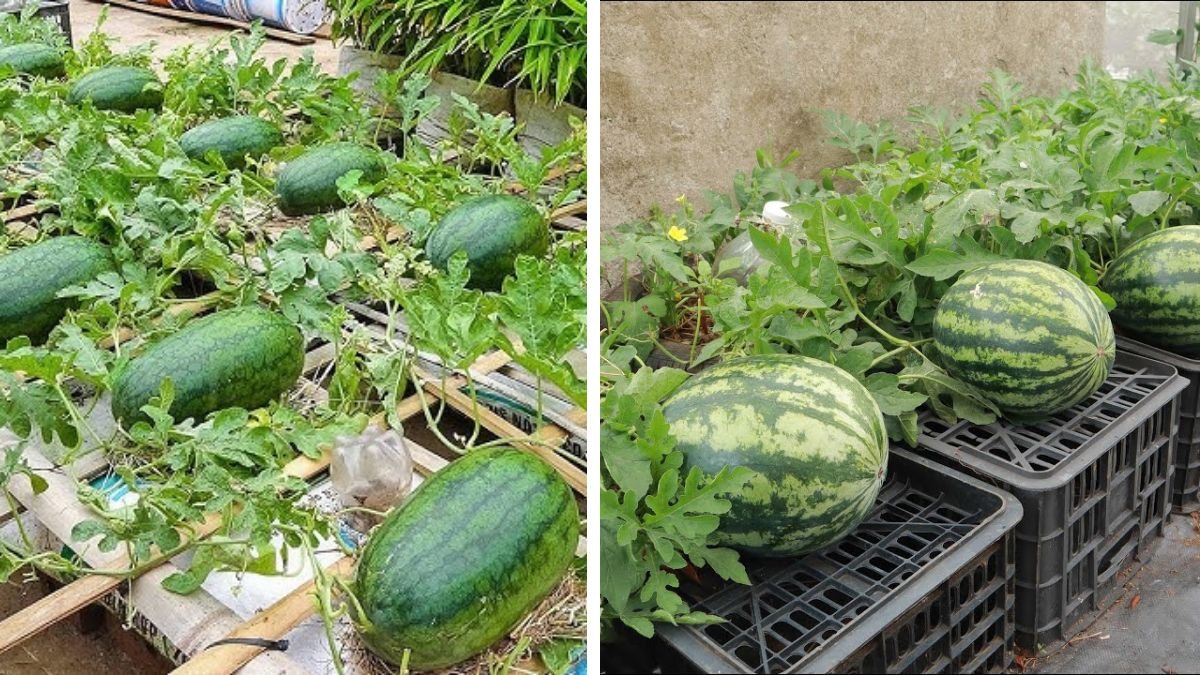
Introduction: Why Fast-Growing Watermelons Surprise Home Gardeners
Watermelons are often seen as slow and space-hungry plants, but the right method changes everything. Many gardeners are shocked when vines grow faster and fruits become noticeably larger. The secret lies in root care, water management, and nutrient timing. With a smart growing approach, watermelons mature earlier than expected. This method works in backyards, rooftops, and even large containers. It improves fruit size, sweetness, and overall plant health. Beginners and experienced gardeners both benefit. Understanding the science behind fast growth makes success repeatable.
Understanding How Watermelon Plants Really Grow
Watermelon plants focus most of their energy on root and vine development early on. Strong roots mean better water and nutrient absorption. Once flowering begins, the plant redirects energy toward fruit growth. Poor root systems limit fruit size. Healthy vines support better pollination. Balanced growth stages are critical. When each stage is managed correctly, growth accelerates naturally. Knowing this growth pattern helps gardeners intervene at the right time.
The Key Technique That Boosts Growth Speed
The most effective trick is deep but controlled watering combined with loose soil structure. This encourages roots to grow deeper instead of spreading weakly on the surface. Deep roots access moisture even during hot days. Mulching keeps soil temperature stable. Controlled feeding prevents excess leaf growth. This balance pushes energy toward fruit formation. The result is faster flowering and earlier fruit set. This technique works consistently across climates.
Choosing the Right Watermelon Variety
Not all watermelon varieties grow at the same speed. Hybrid and early-maturing varieties perform best for fast results. Sugar Baby grows quickly in containers. Crimson Sweet produces larger fruits with proper care. Local climate-adapted varieties resist stress better. Seed quality directly affects vigor. Choosing disease-resistant seeds saves time and effort. The right variety ensures predictable growth. Selection is the first success step.
Soil Preparation for Rapid Root Development
Loose, well-draining soil is essential. Compacted soil slows root expansion. Mixing compost improves nutrient availability. Sand or coco peat increases aeration. Raised beds warm up faster. Soil pH should remain slightly acidic to neutral. Proper preparation allows roots to breathe freely. Healthy soil equals fast growth. This foundation determines final fruit size.
Watering Strategy That Creates Big Fruits
Watermelons love water but hate waterlogging. Deep watering two to three times a week works best. Light daily watering weakens roots. Consistent moisture prevents fruit cracking. Reducing water slightly before harvest improves sweetness. Morning watering minimizes disease risk. Proper drainage is essential. Smart watering directly influences fruit size. This strategy makes a visible difference.
Sunlight Requirements for Maximum Growth
Watermelons require full sunlight for rapid growth. At least six to eight hours daily is ideal. Insufficient light delays flowering. Strong sunlight boosts sugar production. Vines grow stronger under direct light. Shade reduces fruit size significantly. Open locations perform best. Sunlight fuels photosynthesis and sweetness. Never compromise on light exposure.
Fertilizer Timing That Accelerates Results
Early growth needs nitrogen for vines. Flowering stage needs phosphorus. Fruit development requires potassium. Overfeeding nitrogen delays fruiting. Organic compost tea works well. Liquid feeding allows faster absorption. Feeding every ten to fifteen days is sufficient. Balanced nutrition prevents stress. Correct timing multiplies growth speed.
Pollination and Its Role in Fruit Size
Poor pollination leads to small or misshapen fruits. Bees play a major role outdoors. Hand pollination increases success. Male flowers appear first. Female flowers have tiny fruits behind petals. Transferring pollen improves fruit set. Good pollination ensures uniform shape. More seeds mean larger fruits. Pollination is often overlooked but critical.
Table: Fast Watermelon Growth Essentials
| Factor | Requirement | Best Practice |
|---|---|---|
| Variety | Early hybrid | Climate adapted |
| Soil | Loose | Compost mixed |
| Watering | Deep | Two to three times |
| Sunlight | Full sun | Eight hours |
| Feeding | Balanced | Stage based |
Training Vines for Better Growth
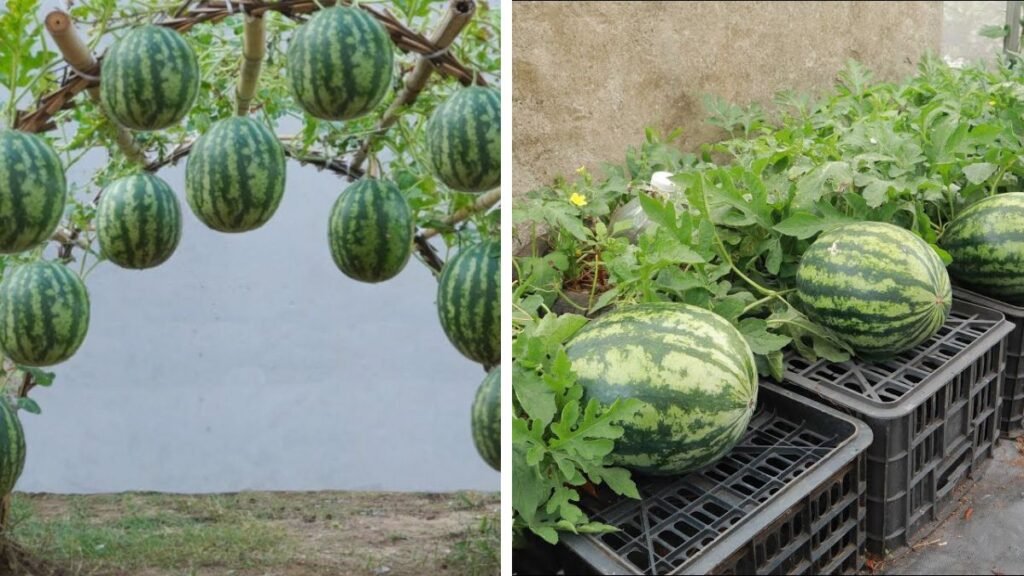
Guiding vines prevents overcrowding. Proper spacing improves airflow. Fruits receive more sunlight. Trellising saves ground space. Supporting fruits prevents rot. Vine training improves overall health. Organized growth reduces disease. This technique is especially useful in small gardens.
Common Mistakes That Slow Growth
Overwatering causes root rot. Excess nitrogen delays fruiting. Poor sunlight reduces sweetness. Ignoring pollination reduces yield. Crowded vines compete for nutrients. Harvesting too early affects taste. Avoiding these mistakes improves results. Simple corrections bring big improvements.
Growing Watermelons in Containers
Large containers can grow watermelons successfully. Choose containers with strong drainage. Use lightweight soil mixes. Dwarf varieties perform best. Support vines properly. Water more frequently than ground plants. Container growing suits rooftops. Results can be surprisingly good.
Pest and Disease Prevention
Healthy plants resist pests naturally. Neem oil controls insects. Good airflow reduces fungal issues. Avoid wet leaves at night. Crop rotation prevents soil diseases. Early detection saves plants. Preventive care is easier than treatment. Healthy growth stays uninterrupted.
Signs Your Watermelons Are Growing Fast
Rapid vine expansion is the first sign. Large leaves indicate good nutrition. Early flowering shows plant maturity. Fruits increase size weekly. Deep green skin indicates health. Strong tendrils show vigor. These signs confirm success. Monitoring helps adjust care.
Harvest Timing for Best Flavor
Harvesting too early reduces sweetness. Tendrils near fruit dry when ripe. Skin becomes dull, not shiny. Hollow sound indicates readiness. Proper timing ensures sweetness. Late harvesting risks cracking. Knowing harvest signs is important. Perfect timing completes the process.
Yield Expectations with This Method
Plants produce fewer but larger fruits. Average fruit weight increases significantly. Harvest occurs earlier. Quality improves noticeably. Sweetness level rises. Overall yield becomes more satisfying. This method focuses on quality over quantity. Results impress most growers.
Environmental Benefits of Efficient Growing
Less water is wasted. Fertilizer runoff is reduced. Healthy plants need fewer chemicals. Efficient growing saves space. Home production reduces transport pollution. Sustainable practices improve soil health. Environmental impact is minimized. Smart gardening benefits nature.
Why This Method Works So Well
It aligns with natural plant behavior. Roots grow strong and deep. Nutrients reach fruits efficiently. Stress is minimized throughout growth. Balanced care supports every stage. Results are consistent and repeatable. This method is reliable. It transforms watermelon growing.
Final Conclusion
Watermelons can grow faster and bigger with the right method. Proper soil, water, and nutrients change everything. Growth becomes predictable and efficient. Fruits become sweeter and larger. Beginners achieve impressive results. This approach saves time and effort. Homegrown watermelons reach a new level. Success becomes unbelievable yet achievable.