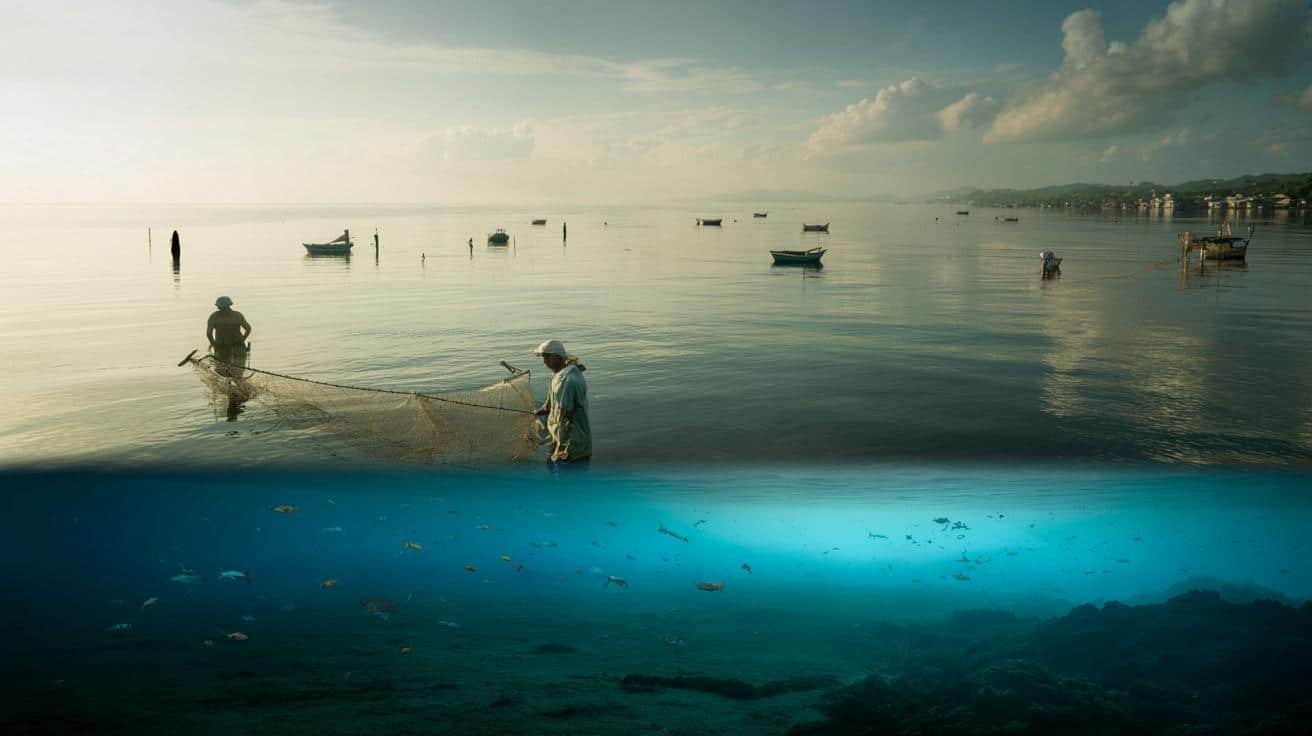
Each dry season, cold deep waters usually well up into the Gulf of Panama, feeding plankton blooms, cooling coral reefs and sustaining small-scale fisheries. In early 2025, research teams realised that this familiar pattern had simply not appeared, hinting at a fragile climate balance shifting in real time.
The missing season that nobody expected
Oceanographers had grown used to the reliability of the Gulf of Panama’s upwelling. From December to April, trade winds from the north push the sun‑warmed surface waters offshore. Cold, nutrient‑rich water then rises from depth, transforming the gulf into a biological hotspot that rivals better‑known systems off California or Peru.
Satellites normally show the signature of that process very clearly: a sharp drop in sea‑surface temperature and a bright streak of chlorophyll as microscopic plants erupt into life. Ships and coastal stations have confirmed that pattern for at least four decades.
In 2025, those signals vanished. Sea‑surface temperatures stayed stubbornly warm. Chlorophyll levels remained unusually low. Instruments on board the research vessel S/Y Eugen Seibold failed to detect the vertical mixing that should mark the onset of upwelling.
For the first time in at least 40 years, Panama’s coastal engine of cold, fertile water simply stalled.
An international team led by the Smithsonian Tropical Research Institute and the Max Planck Institute pieced the story together in a study published in the Proceedings of the National Academy of Sciences. Their conclusion: the system did not fade gradually; it failed abruptly.
How weakened winds shut down the ocean’s ‘natural fertiliser’
A disruption in the trade winds
The researchers traced the breakdown to an unusual pattern in the atmosphere. The usually robust northerly trade winds that drive Panama’s upwelling arrived weak, irregular and short‑lived in early 2025.
Those winds normally act like a conveyor belt, pushing surface waters away from the coast and allowing heavier, colder water to rise. Without steady winds, the pressure differences that trigger this vertical movement never fully formed.
High‑resolution weather and ocean sensors on the S/Y Eugen Seibold showed a near‑complete absence of that vertical motion. Rather than a churning, layered water column, the gulf looked more stratified: a warm cap sitting on top of deeper waters that stayed trapped below.
Climate variability or a warming‑driven shift?
Why the winds slackened remains an open question. Climate scientists involved in the study point to two main suspects:
- natural decadal swings in Pacific wind and pressure patterns, such as the Pacific Decadal Oscillation
- human‑driven climate change altering the structure and position of tropical wind belts
Atmospheric simulations used by the team show a strong link between unusual pressure anomalies in the eastern Pacific and the weak winds over Panama. The pattern looks less like a random blip and more like part of a broader rearrangement of the tropical climate system.
If that interpretation holds, Panama may be an early case study of how subtle shifts in winds can rapidly transform coastal oceans that millions of people depend on.
When the base of the food web thins out
A quiet ocean is bad news for fisheries
Upwelling zones rank among the most productive marine areas on Earth because they inject nutrients into the sunlit surface. Those nutrients fuel phytoplankton, which feed zooplankton, small fish, then larger predators. Shut off the nutrient supply and the entire pyramid loses strength.
In 2025, satellite maps of chlorophyll around Panama stayed unusually blue, indicating poor phytoplankton growth. Fisherfolk targeting sardines, mackerel and squid reported lower catches and had to travel further offshore, burning more fuel for less reward.
The collapse of a seasonal plankton bloom turned almost overnight into a squeeze on coastal livelihoods.
For many small communities along Panama’s Pacific coast, income from these seasonal fisheries pays for school fees, fuel and basic food. A single failed season does not automatically trigger a crisis, but it erodes already thin safety margins in a region facing rising fuel prices and more frequent marine heatwaves.
Promoted Content
Coral reefs lose their natural “cooling fan”
The absence of upwelling also removed a subtle but crucial line of defence for nearby coral reefs. During typical dry seasons, the arrival of cool deep water blunts extreme heat at the surface and gives corals a short thermal reprieve.
In 2025 that cooling pulse never arrived. Coral communities along parts of the Panamanian coast instead endured prolonged, above‑average temperatures. Researchers reported increased bleaching, as stressed corals expelled the symbiotic algae that nourish them and give them their colour.
Repeated bleaching can kill coral colonies and transform vibrant reefs into flattened rubble fields. Without the periodic cooling effect of upwelling, reefs in the region face additional stress on top of acidifying waters and pollution from land.
Hidden risks: disease, oxygen loss and food security
Warm, stagnant surface waters also favour bacteria and parasites that struggle in cooler, well‑mixed conditions. The study warns that such years may bring higher risks of disease outbreaks affecting fish, invertebrates and possibly humans who consume contaminated seafood.
At the same time, reduced mixing can trap low‑oxygen water at depth. If that low‑oxygen layer creeps upward, bottom‑dwelling species like crabs, snails and some fishes can suffocate or flee, reshaping entire seafloor communities.
| Aspect of the system | Normal upwelling year | Year without upwelling (2025) |
|---|---|---|
| Surface temperature | Noticeable cooling during dry season | Stays warm, closer to heatwave levels |
| Phytoplankton productivity | Strong seasonal bloom | Muted growth, low chlorophyll |
| Small‑scale fisheries | High catches of small pelagic fish | Reduced yields, longer trips offshore |
| Coral reef stress | Partial cooling relief in dry months | Longer exposure to thermal stress, more bleaching |
An early warning from a poorly monitored ocean
A tropical blind spot in climate observation
Researchers highlight a striking irony: a breakdown of this scale almost slipped past unnoticed. Compared with major upwelling regions in temperate latitudes, tropical coastal systems receive far fewer ship surveys, moored instruments and dedicated monitoring programmes.
If the Eugen Seibold cruise had not been in the right place at the right time, the failure of the upwelling would likely have stayed a local anecdote instead of a documented climate warning.
Climate models heavily used by governments and industry struggle to reproduce such abrupt regional shifts if they lack dense, long‑term data. Without frequent observations, these tropical margins remain one of the least constrained parts of the global climate system, despite hosting dense coastal populations and critical biodiversity.
The Panama case shows how quickly an apparently stable seasonal pattern can falter. It also underlines a practical gap: fisheries managers and local authorities received no early signal that the usual productive season would fail. That left little time to arrange support measures or adjust catch expectations.
Why the Panama event matters far beyond Central America
Upwelling zones ring much of the tropics and subtropics. West Africa, parts of India’s west coast, Central America and sections of Indonesia all rely on similar wind‑driven nutrient pulses to support fish stocks. Subtle shifts in trade winds or pressure patterns could push several of these areas towards the kind of disruption seen in Panama.
For climate scientists, the 2025 breakdown acts as a natural experiment, revealing how close some systems may sit to thresholds. If trade winds weaken further under global warming, more of these regions could experience skipped or shortened upwelling seasons, with direct consequences for food security.
What scientists want to see happen next
From occasional cruises to continuous watch
The teams involved call for a step change in how the world watches tropical oceans. They argue for more moored buoys measuring temperature, currents, oxygen and nutrients; more regular research cruises targeting key seasons; and better integration of satellite data with observations collected at sea.
Such monitoring would not just serve science. It would also feed into seasonal outlooks for coastal governments, similar to agricultural forecasts on land. Accurate early warnings of weak upwelling years could shape temporary fishing rules, tourism planning and reef management measures.
Better data would also sharpen climate models, reducing the uncertainty around how trade winds and upwelling might respond to further warming. That matters not only for regional planning but for projections of how much carbon the ocean can absorb and how marine food webs will shift.
Looking ahead: possible futures for Panama’s coastal engine
Several scenarios now concern researchers and local communities. One possibility is that 2025 sits at the extreme edge of natural variability: a rare combination of atmospheric conditions that may not repeat for decades. In that case, upwelling could return, though potentially with slightly altered timing or intensity.
A more worrying scenario sees 2025 as the first of several weak seasons, signalling a gradual decline in the reliability of the system. Under this pathway, fisheries might need to shift target species, diversify incomes or reduce effort to cope with more frequent lean years.
Researchers also speak of a threshold case, where chronic wind changes push the region into a different regime altogether, with sporadic or highly localised upwelling. That would reshape ecosystems more profoundly and could trigger lasting changes in who can make a living from the sea.
For now, the Gulf of Panama offers a live lesson in how delicately tuned the coastal ocean can be. A shift of a few millibars in pressure and a weakening of seasonal winds have rippled down through microscopic plankton, corals, fishing boats and entire communities. Similar coastal engines around the world may already sit on the edge of comparable shifts, waiting for the next subtle nudge in the climate system.