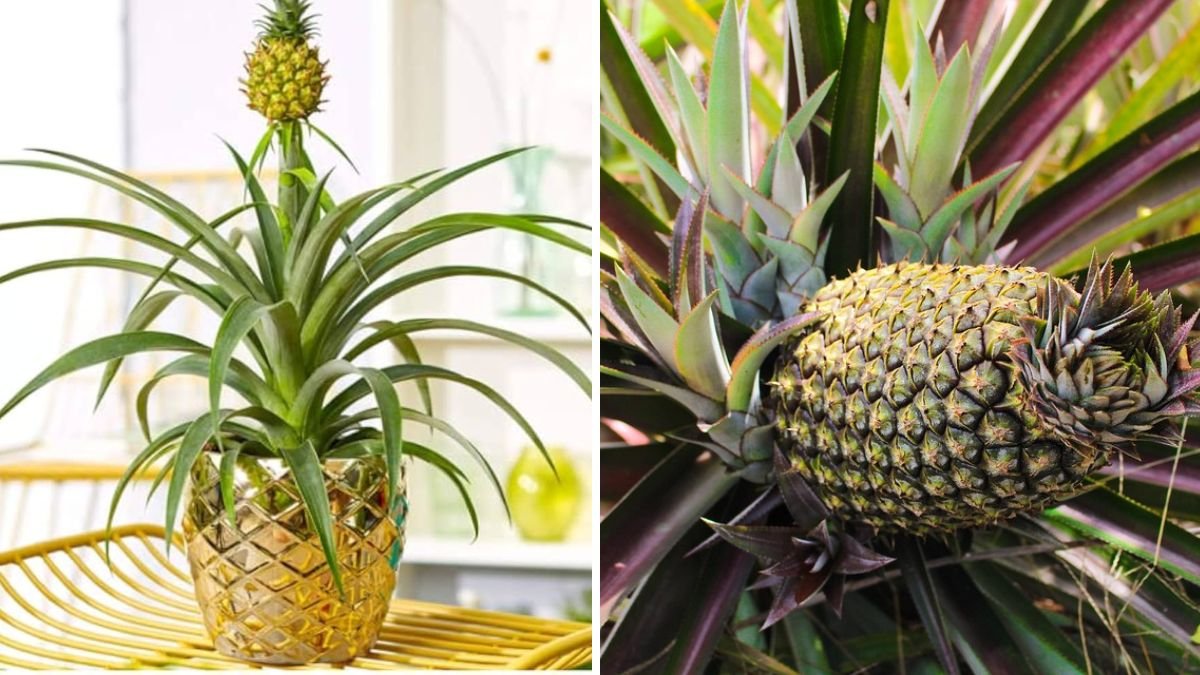
Growing pineapples at home might sound exotic or difficult, but the truth is—pineapples are one of the easiest tropical fruits you can grow in pots. Whether you live in a warm region or a cooler place, a container-grown pineapple can thrive beautifully on your balcony, patio, terrace, or sunny windowsill.
With minimal care, no complicated tools, and just a leftover pineapple crown, you can grow your own plant and eventually harvest a sweet, golden fruit. This guide will walk you through everything you need to know—from choosing the right pot to caring for your pineapple plant all the way through fruiting.
🌱 Why Grow Pineapples in Pots?
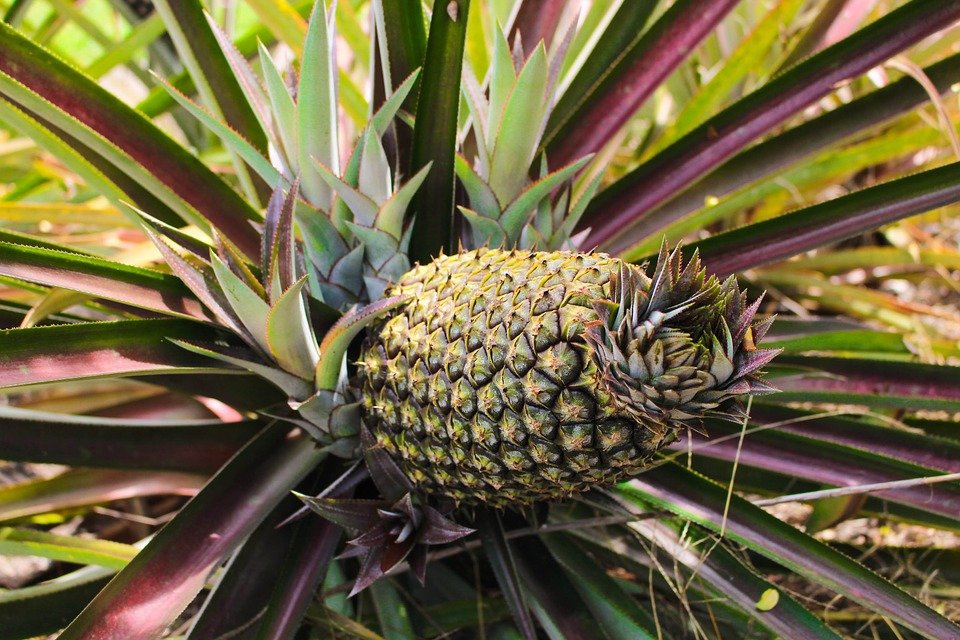
Here are the top reasons pineapple-in-pot gardening is becoming so popular:
✔ Perfect for small spaces
Pineapple plants don’t require huge garden beds. They grow comfortably in medium-sized containers.
✔ Low maintenance
They need very little watering and are resistant to most pests.
✔ Beautiful ornamental plants
Their long, spiky leaves make them decorative plants for indoors and outdoors.
✔ Grow from kitchen scraps
All you need is the crown (top) of a store-bought pineapple!
✔ Rewarding harvest
Home-grown pineapples are sweeter and more fragrant than store-bought ones.
🍍 Step 1: Choose the Right Pineapple and Prepare the Crown
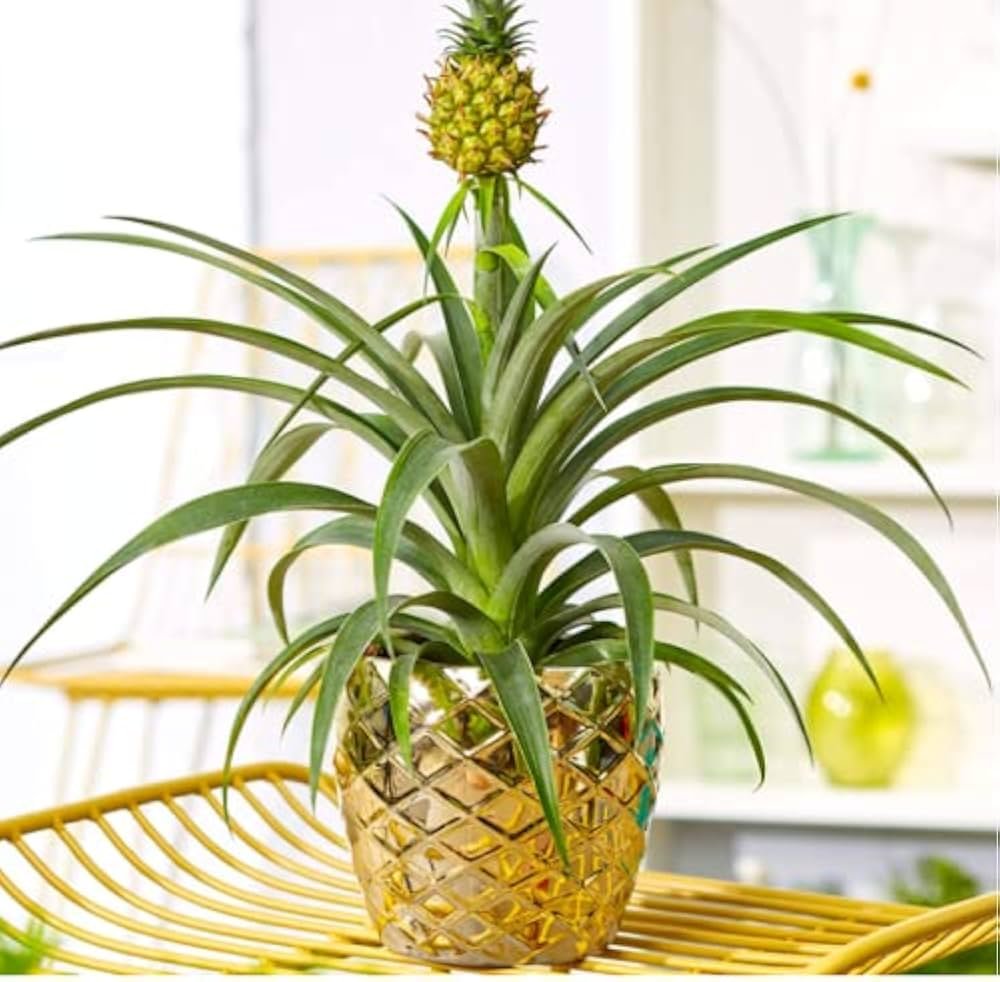
Growing a pineapple starts with the leafy crown at the top of the fruit. Make sure to choose a fresh, healthy pineapple.
How to Select the Best Pineapple:
- Leaves should be green and firm, not dry or brown.
- The fruit should not be overripe.
- Avoid pineapples with soft or rotting tops.
Preparing the Crown:
- Grab the leafy top firmly.
- Twist and pull it off the fruit.
- Remove any remaining fruit flesh from the base to prevent rotting.
- Peel off the bottom 5–10 small leaves to expose the tiny root nubs.
- Let the crown dry for 24–48 hours.
- This helps form a callus and prevents rot when planted.
Now your pineapple crown is ready for rooting!
💧 Step 2: Rooting Your Pineapple Top
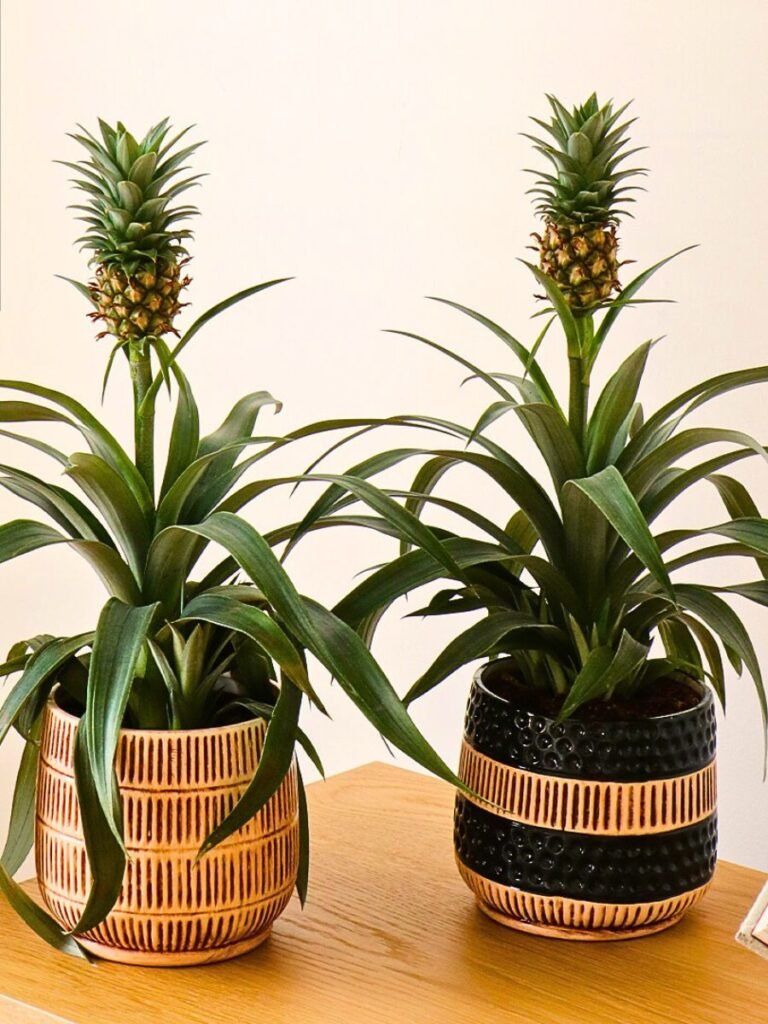
There are two methods: soil rooting and water rooting. Both work well.
Method 1: Root in Soil (Recommended)
- Prepare a pot with light, fast-draining soil (cactus mix + compost is ideal).
- Plant the dried crown about 2–3 inches deep.
- Water lightly.
- Place the pot in bright, indirect sunlight.
Roots will start forming in 2–4 weeks.
Method 2: Root in Water
- Place the crown in a glass so only the base touches the water.
- Change water every 2 days.
- After roots reach 2–3 inches long, transplant into soil.
This method lets you watch the roots grow, but soil rooting is still faster.
🪴 Step 3: Choose the Perfect Pot and Soil
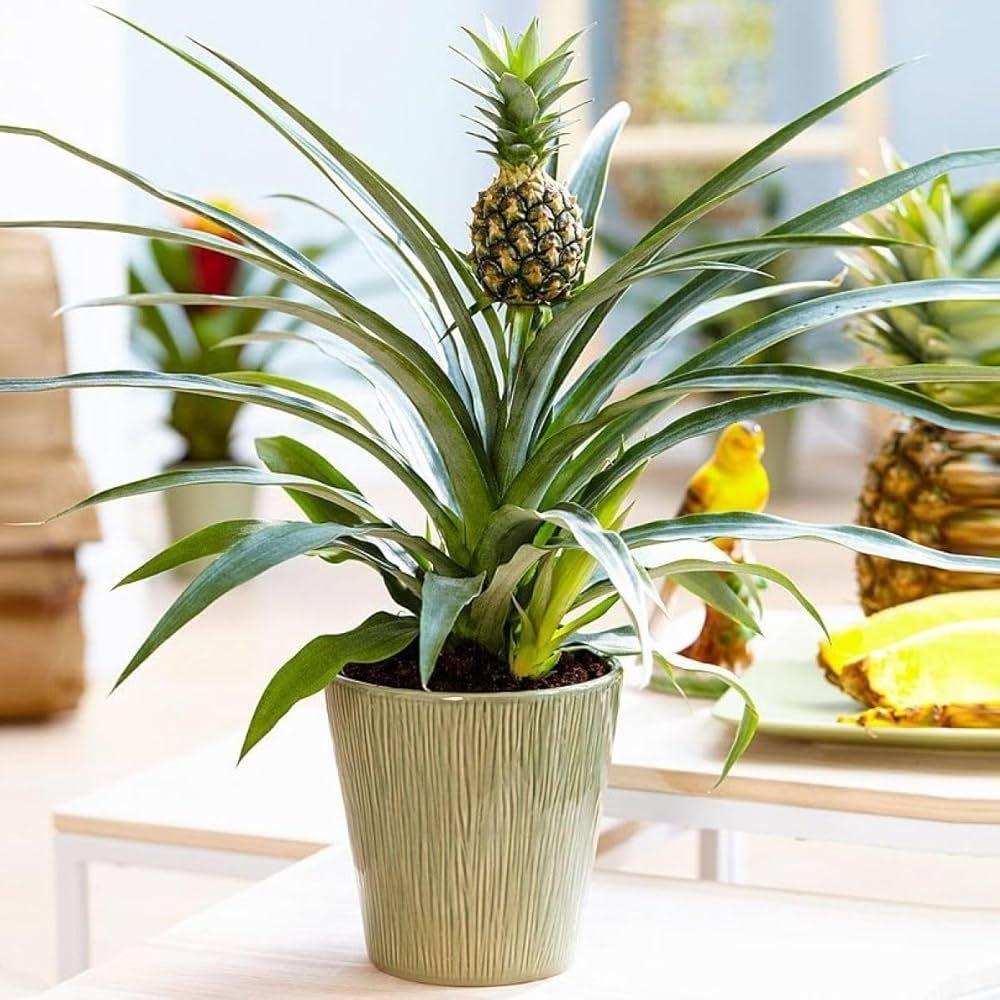
Ideal Pot Size
- Minimum: 10–12 inches wide
- Material: Plastic, clay, or ceramic
- Must have drainage holes
Pineapples have shallow roots, so they don’t need deep pots—but width is important.
Best Soil Mix
Pineapples hate soggy soil. Use:
- 50% well-draining potting mix
- 25% sand/perlite
- 25% compost
This ensures strong root growth and prevents rot.
☀️ Step 4: Provide the Right Light and Temperature
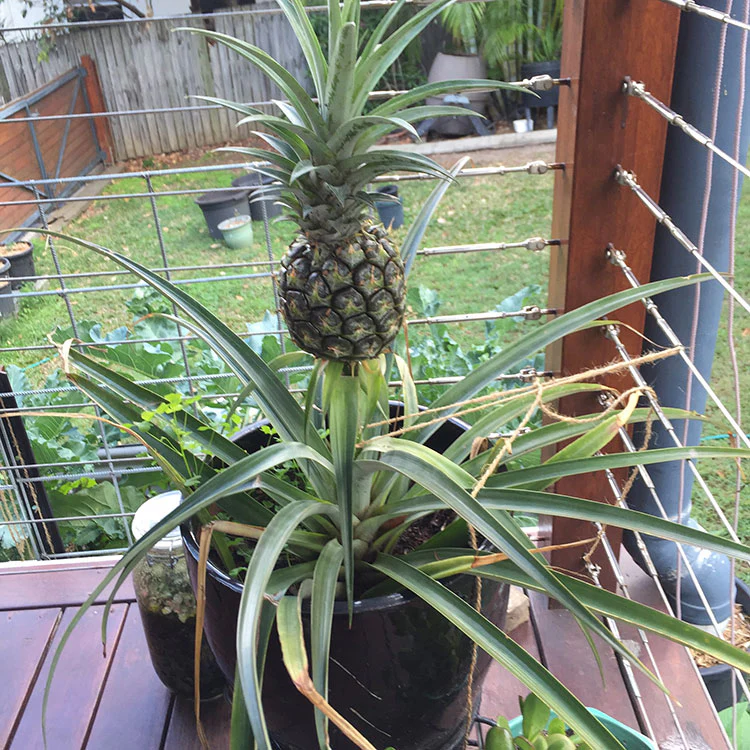
Pineapples LOVE sunlight—they are tropical plants.
Sunlight Requirements
- 6–8 hours of direct sunlight daily
- Indoors: place near a south-facing window
- Outdoors: protect from extreme afternoon heat
Temperature
- Ideal range: 18–32°C (65–90°F)
- Protect from frost—pineapples are not cold tolerant.
If you live in a cooler climate, bring the pot indoors during winter.
💦 Step 5: Watering Your Pineapple Plant
Pineapples are drought-tolerant, but they still need proper watering.
Watering Tips:
- Water only when the top 2 inches of soil are dry.
- Pour water at the soil level—not directly into the leaf cup.
- Avoid overwatering; it is the most common cause of failure.
A pineapple plant prefers slightly dry conditions over wet ones.
🌾 Step 6: Fertilizing for Faster Growth
Pineapple plants benefit from regular feeding.
Best Fertilizers:
- Compost
- Cow dung manure
- A balanced liquid fertilizer (NPK 10-10-10)
- Banana peel fertilizer
- Mustard cake fertilizer (diluted)
Feeding Schedule
- Feed once every 4–6 weeks during the growing season.
- Avoid heavy nitrogen—too much will grow leaves but delay fruiting.
🌱 Step 7: Growth Timeline – What to Expect
Growing pineapples is slow but rewarding.
Timeline Overview:
- 2–4 months: New leaves appear (rooting successful)
- 6–12 months: Plant grows larger and fuller
- 18–24 months: Plant matures
- 24–36 months: Flowering begins
- After flowering: Pineapple fruit forms and ripens in 4–6 months
Yes—growing pineapples requires patience, but the result is worth every day!
🌸 Step 8: How to Encourage Flowering Faster
Sometimes pineapples take long to bloom. You can trigger flowering naturally.
Ethylene Gas Method (Traditional Trick)
- Place an apple inside a plastic bag with the pineapple plant.
- Cover the plant loosely for 3–4 days.
- Remove the bag.
The ethylene gas stimulates blooming within 6–8 weeks.
This method works like magic!
🍍 Step 9: Harvesting Your Pineapple
Your pineapple is ready to harvest when:
✔ The fruit turns golden yellow
✔ It smells sweet and fragrant
✔ Leaves on the fruit become loose
✔ The fruit feels slightly soft when pressed
Cut the fruit with a sharp knife, leaving about 1 inch of stem.
And enjoy your home-grown, super-sweet pineapple!
🪴 Step 10: Grow New Plants From the Offshoots
After fruiting, your plant will produce pups or suckers.
These small baby plants grow from the base of the main plant.
To propagate:
- Gently pull or cut off the pups.
- Plant them in small pots.
- They grow faster than the original crown.
This way, one pineapple plant can give you many more!
🌟 Final Thoughts: Anyone Can Grow Pineapples in Pots!
Whether you’re a beginner or an experienced gardener, growing pineapples in pots is fun, rewarding, and surprisingly easy. With sunlight, good soil, occasional watering, and patience, you’ll soon be enjoying fresh, sweet pineapples right from your balcony or garden.
Pineapples grow slowly—but the excitement of watching your plant develop from a simple crown to a juicy fruit is truly unforgettable.