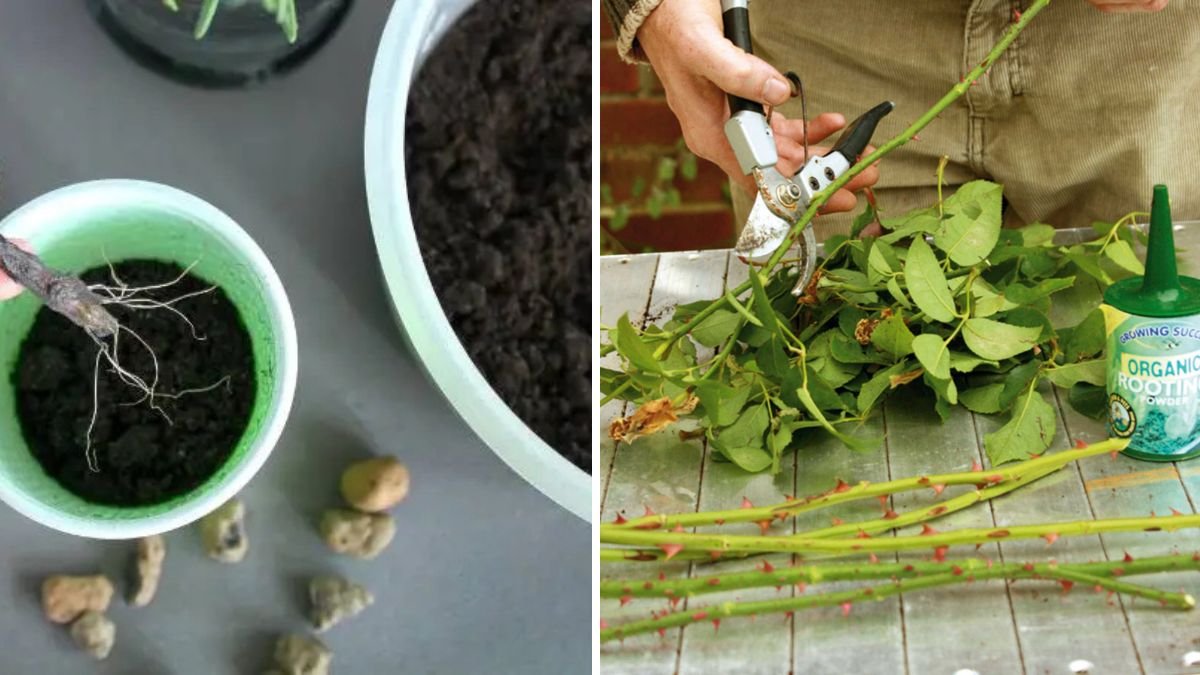
Roses are one of the most loved flowers in the world—symbols of love, beauty, and elegance. Many gardeners dream of having a garden full of vibrant roses in different colors. But buying new rose plants can be expensive, especially if you want several varieties. The good news? You can grow beautiful, healthy rose plants right at home from simple cuttings!
Growing roses from cuttings is a natural, cost-effective, and satisfying method. It allows you to clone your favorite rose plant—ensuring that the color, fragrance, and growth pattern remain exactly the same as the parent plant. Even beginners can master this method easily with the right steps.
In this article, you’ll learn how to grow roses from cuttings—the easiest and most successful technique, including preparation, rooting methods, soil mix, watering, care tips, and troubleshooting.
Let’s grow a garden full of roses!
🌹 Why Grow Roses from Cuttings?
Growing roses from cuttings is the most practical and popular method. Here’s why:
✔ Saves money
One parent plant can give you several new plants.
✔ Guaranteed quality
The new rose plant will produce the same color, fragrance, and size as the parent.
✔ High success rate
If you follow the correct method, most cuttings root easily.
✔ Fast results
Cuttings root much faster than growing rose plants from seeds.
✔ Perfect for home gardeners
You need minimal equipment and very little space.
If you want a rose garden quickly and affordably, cuttings are your best option.
✂️ When Is the Best Time to Take Rose Cuttings?
The ideal seasons are:
🌱 Spring – high growth phase
🌞 Early summer – strong stems
🍂 Monsoon – naturally moist atmosphere
Avoid taking cuttings in extremely cold or very hot seasons.
✂️🌿 How to Select the Perfect Rose Cutting
For best results, choose the right branch:
✔ Medium-thick stem
✔ 6–8 inches long
✔ Semi-hardwood (not too soft, not too woody)
✔ Healthy, disease-free
✔ Mature stem with 3–4 nodes
Avoid stems that are:
- Too soft
- Too young
- Flowering branches (these root poorly)
Once you have the right branch, follow these steps:
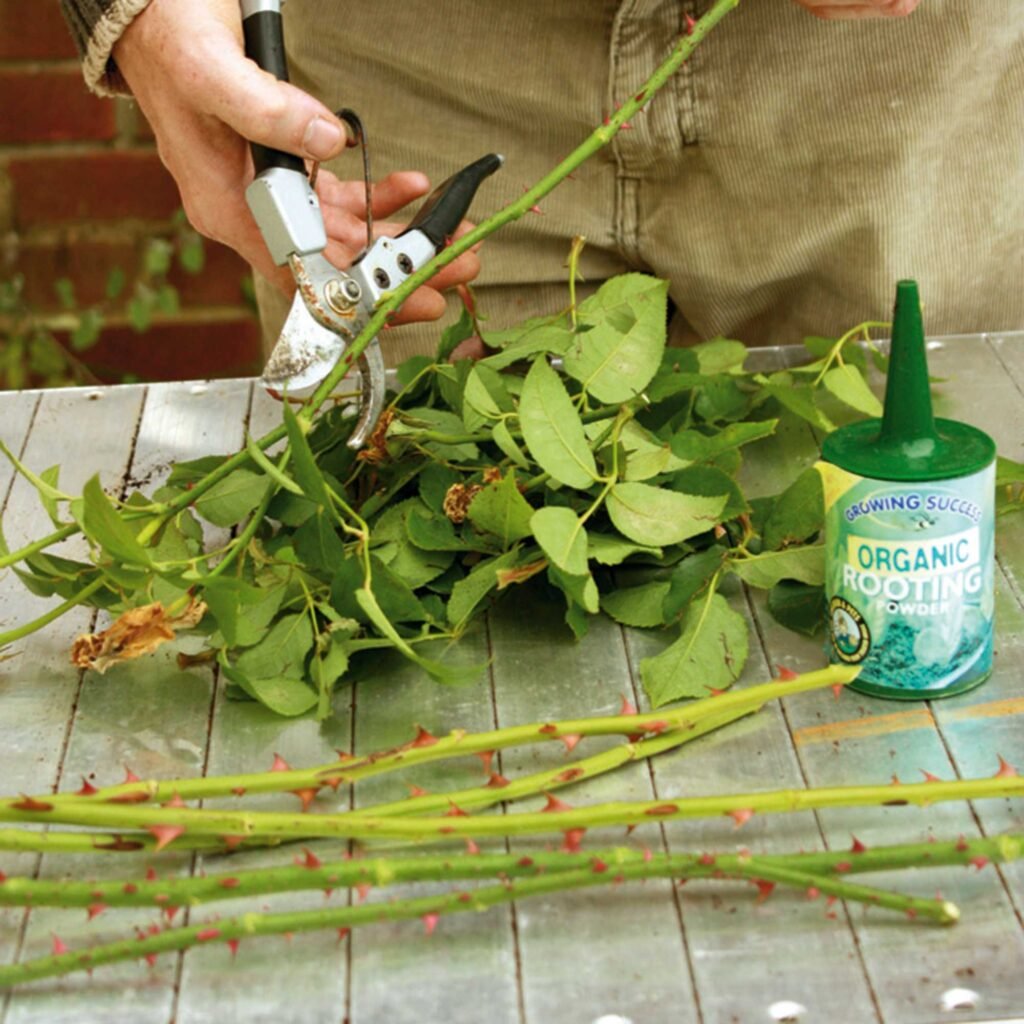
- Cut the stem at a 45-degree angle just below a node.
- Remove all lower leaves.
- Keep only the top 1–2 leaves.
- Remove flowers or buds, if any.
Your cutting is now ready to plant.
🧪 Optional: Dip in Rooting Hormone
Rooting hormones increase the success rate.
- You can use rooting powder, gel, or even natural options like aloe vera gel, cinnamon, or honey.
- Dip only the bottom 1–2 inches of the cutting.
This step is optional but highly recommended.
🌱 Best Soil Mix for Rose Cuttings
Roses love well-draining, nutrient-rich soil.
A perfect soil mix:
- 40% garden soil
- 30% sand or perlite
- 20% cocopeat
- 10% compost or vermicompost
This keeps the soil airy, moist, and ideal for root formation.
🪴 Method 1: Growing Rose Cuttings in Pots (Most Common)
Follow these steps:
- Fill a small pot with your soil mix.
- Make a small hole in the center.
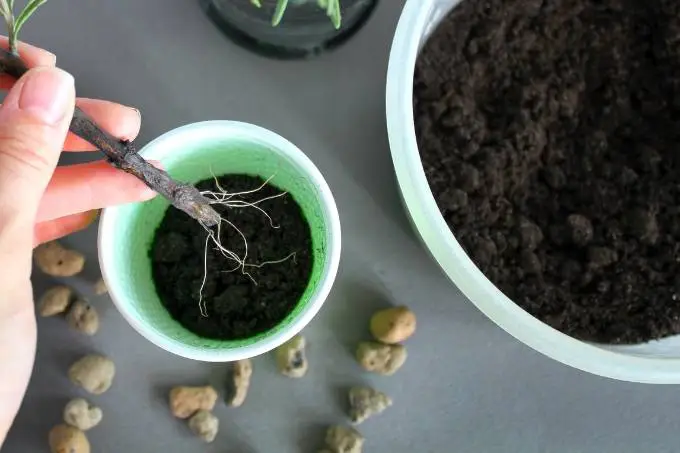
- Insert the cutting 2–3 inches deep.
- Press the soil gently to stabilize it.
- Water lightly until soil becomes moist.
- Cover the pot with a plastic bag or bottle to create a mini greenhouse.
This helps retain moisture and encourages faster rooting.
🪴 Method 2: Growing Rose Cuttings in Water
This method is simple and effective:
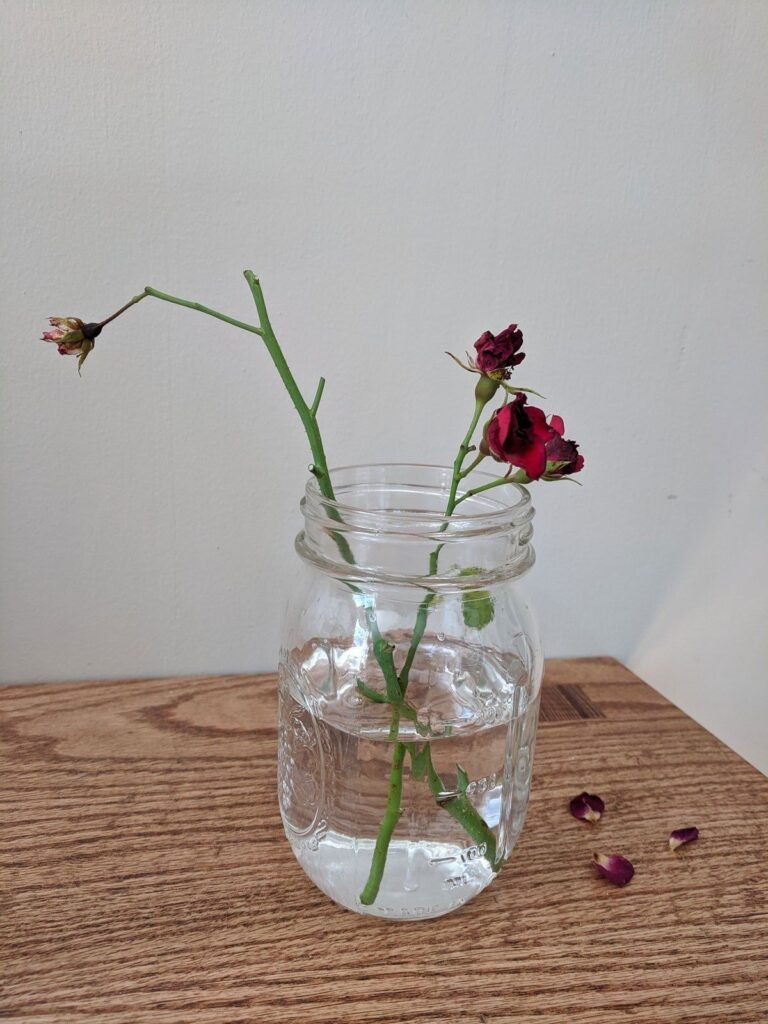
- Place the cutting in a glass of clean water.
- Change water every 2–3 days.
- Keep the glass in indirect sunlight.
Roots appear in 10–18 days.
Once roots reach 1–2 inches, transfer them to soil.
🪴 Method 3: Growing in a Plastic Bottle or Bag
This is great for higher humidity:
- Fill bottom of a plastic bottle with soil.
- Insert the cutting.
- Seal the bottle or bag from above.
- Make small holes for airflow.
High humidity gives excellent rooting results.
🌧️ Watering Tips for Rose Cuttings
- Keep the soil moist but never soggy.
- Water lightly every 2–3 days.
- Ensure good drainage.
- Avoid watering leaves directly.
Too much water causes fungal infection.
🌞 Where to Keep the Pot?
Place the cutting in:
- Bright indirect sunlight
- Avoid harsh afternoon sun
- Avoid deep shade
Balanced light helps the cutting root faster.
🌱 How Long Does It Take for Roots to Develop?
Root development usually takes:
- 10–20 days in warm season
- 20–30 days in cooler climates
You can check by gently pulling the stem—if it resists, roots have formed.
🪴 Transplanting the Rooted Cutting
Once your rose cutting shows new leaves or visible roots:
- Prepare a bigger pot (12–14 inches).
- Fill with nutrient-rich potting mix.
- Plant the cutting carefully.
- Water gently.
- Keep in semi-shade for 3–4 days.
After that, move to full sunlight gradually.
🌿 How to Care for Your New Rose Plant
✔ Sunlight
Roses need 5–6 hours of direct sun daily.
✔ Fertilizing
Feed every 20–30 days with:
- Compost
- Vermicompost
- Banana peel fertilizer
- Seaweed solution
- Mustard cake fertilizer (liquid)
✔ Pruning
Remove dry or weak branches to encourage new growth.
✔ Pests Control
Common pests: aphids, mealybugs, spider mites
Natural solutions:
- Neem oil spray
- Soap water spray
- Garlic-chili spray
Use once a week if needed.
🌺 When Will the New Rose Plant Bloom?
Roses grown from cuttings usually start blooming in:
- 3–6 months for fast-growing varieties
- 6–12 months for others
With proper care, your plant will flower beautifully and continuously.
🚫 Common Problems & Easy Fixes
❌ Cutting turns black
✔ Too much water—reduce watering.
❌ Leaves drying
✔ Not enough humidity—cover with plastic dome.
❌ No roots forming
✔ Cutting too old or too soft—select medium hardwood stems.
❌ Fungus in soil
✔ Add cinnamon powder or neem powder.
Following these tips will dramatically increase your success rate.
🌹💖 Final Thoughts: Growing Roses from Cuttings Is Easier Than You Think
Growing roses from cuttings is one of the most rewarding garden projects. With just a single healthy stem, you can create a whole new rose plant that will bloom year after year. It’s inexpensive, easy, and perfect for beginners or home gardeners with limited space.
By choosing the right cutting, preparing good soil, maintaining moisture, and giving proper sunlight, you can root roses successfully and enjoy your very own blooming rose garden.
Whether you love red, pink, yellow, white, or multicolored roses—this method lets you grow them all affordably!